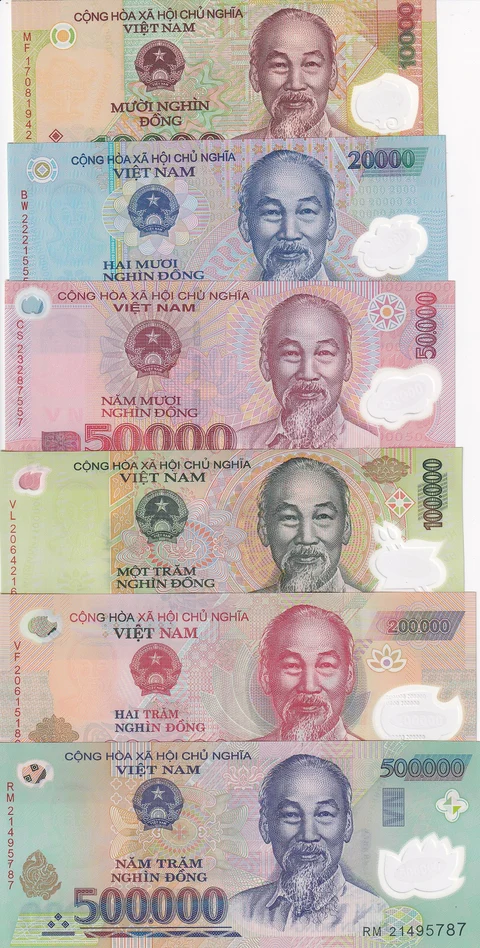
The key things to know are: ( 1 ) some of the currencies are in the thousands, ( 2 ) cash is king, and ( 3 ) coins aren’t used often, aside from the 10 and 5 Thai Baht coins in Thailand.
There are mobile payment apps, connected to local bank accounts or ride-hailing app wallets, in which you scan QR codes to pay. But, if you do not have a long-term visa, then don’t mess with those. Cash works everywhere, anyway.
The cash bills in Southeast Asia are colorful, and it all seems like playful-monopoly-money, at first. You’ll like how each bill has it’s own color, which makes it very easy to recognize the difference between the numbers (bill size).
Tip
After getting cash from an ATM, go inside the bank and break your bills – exchange the cash for smaller bills. ATMs will give larger denominations, and you’ll have to continually be concerned about getting change.
Small bills are best for taxi rides (use a ride-hailing app, btw), local food, and general purchases. Basically, all things that are in the local price range.
Warning
Always count your cash after withdrawing from and ATM. Sometimes the ATM miscounts. If so you want to be counting it in front of the camera so that the bank will oblige in assisting you with the mistake.
Inspect your cash carefully, if you are withdrawing USD in Cambodia (the country has 2 official currencies – the USD and Khmer Reil). Worn-out and/or damaged USD bills are known to not be accepted by local merchants. The bank will own-up to the mistake and replace them for you.
Currencies By Country
Cambodia 🇰🇭
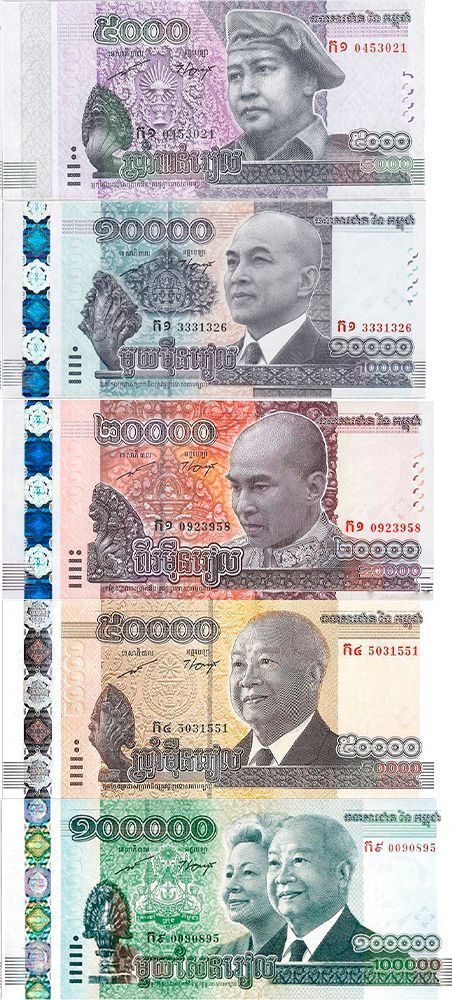
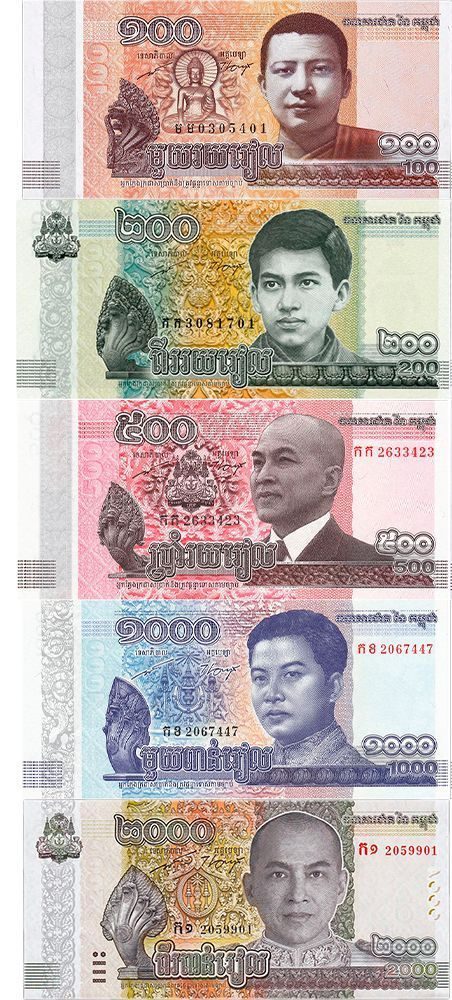
Cambodia uses the Riel(KHR) and US Dollar (USD). The “KH” in KHR stands for Khmer.
Currency (Riel) is in the thousands.
All cash bill currency, no coins (for Riel).
50,000
20,000
10,000
5,000
2,000
1,000
500
200
100
Note
Cambodia has two official currencies, KHR and USD, which are used interchangeably. If you want, you can pay in both, mix-matching KHR and USD cash together at the same time.
This appears confusing, but it is simple – 1,000 Riel is colloquially equated to $0.25 USD (1 US quarter coin) — 4,000 Riel is therefore worth $1.00 USD. There is some nuance – the nicer the place the more often they will go by the official exchange rate of the day, set by the government. This rate is not exactly 4,000 to $1.
At the ATM you can takeout Riel (KHR) or US Dollars (USD). GemsOfTravel recommends just to use Riel, and you’ll have less problems. This is because the locals are strict about the condition of the US Dollar bills, and there are some fakes going around.
Riel is mostly used for smaller cost purchases, and USD used for large purchases of $50 or higher. However, you can express interest in using Cambodia Riel over USD for higher purchases and people will accept Riel.
Tip
Use up all of your Cambodian Riel (same as for Lao Kip) or exchange it before leaving the country. For free, the bank will exchange Riel to USD cash. Do this before you leave Cambodia, since Riel won’t be easily exchanged outside of the country – it is not a preferred currency.
For daily purchase, use Cambodian Riel – they are always accepted in Cambodia regardless of their condition. Do not bother with USD for anything above $5 or $10 bills.
*For simplicity sake, use the Riel as the USD can be denied for any reason and there are schemers who try to give you unusable USD bills as change. There are fake USD bills, and the larger bills are held to high scrutiny – any wear or bend on a large USD bill and the merchant will reject it.
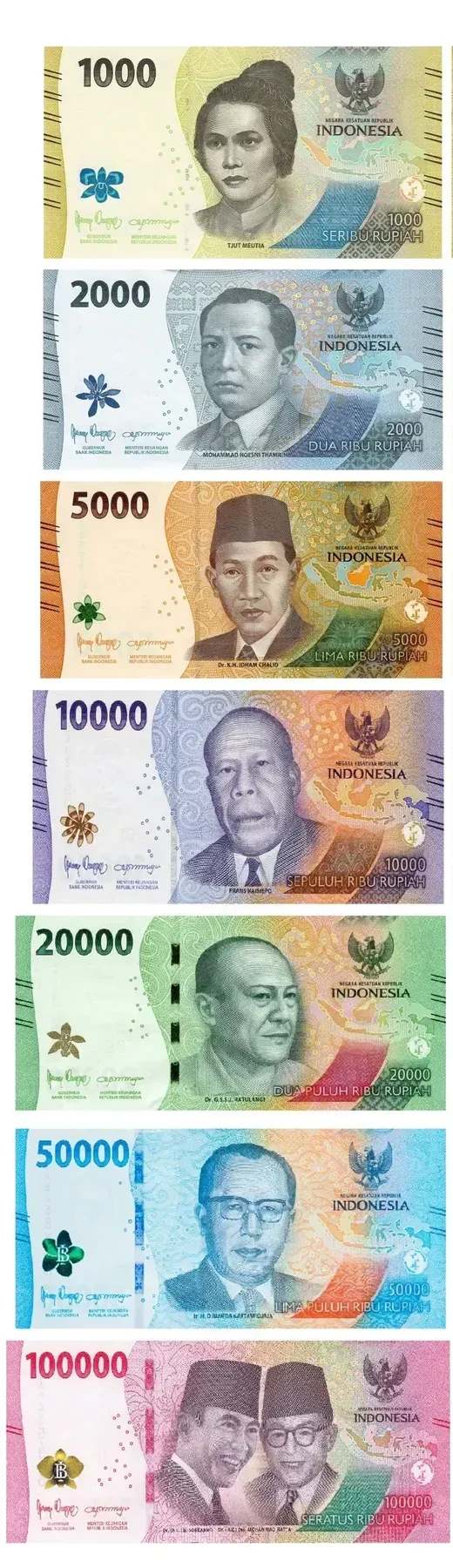
Indonesia 🇮🇩
Indonesia uses the Rupiah (IDR). This is not to be confused with the Rupee – that is Indian!
Currency (Rupiah) is in the thousands.
All cash bill currency, no coins.
100,000
50,000
20,000
10,000
5,000
2,000
1,000

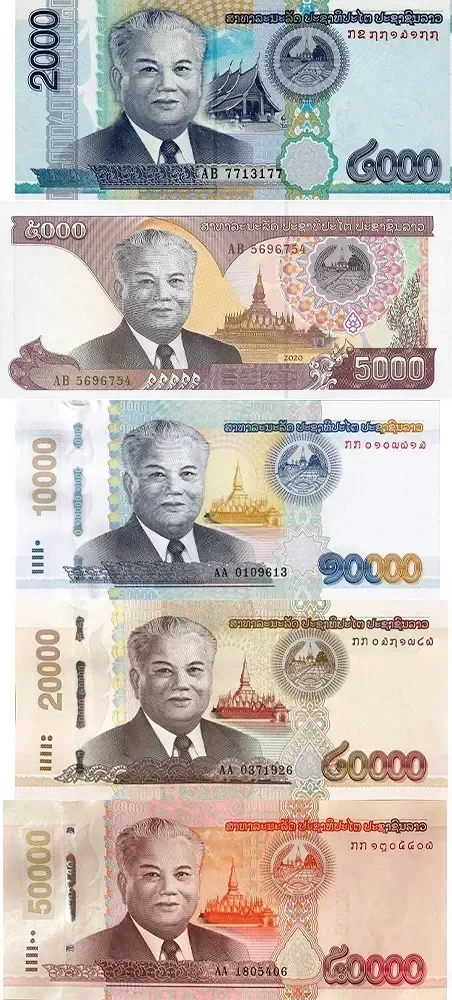
Laos 🇱🇦
Laos uses the Kip (LAK).
Currency (Kip) is in the thousands.
All cash bill currency, no coins.
100,000
50,000
20,000
10,000
5,000
2,000
1,000
500
Tip
Use up all of your Lao Kip (same as for Cambodian Reil) or exchange it before leaving the country. Exchange booths will not accept it outside of Laos as it is not a preferred currency.
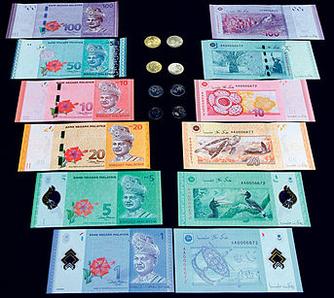
Malaysia 🇲🇾
Malaysia uses the Ringgit (MYR).
Cash and coins, both.
100
50
20
10
5
1
0.50 (coin)
0.20 (coin)
0.10 (coin)
0.05 (coin)
Philippines 🇵🇭
Philippines uses the Peso (PHP).
Cash and coins, both.
1,000
500
200
100
50
20
20 (coin)
10 (coin)
5 (coin)
1 (coin)
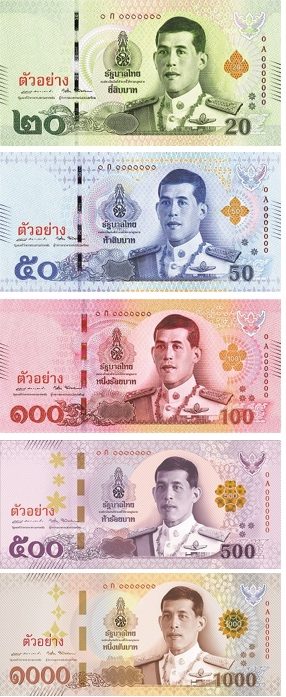
Thailand 🇹🇭
Thailand uses the Baht (THB).
Cash and coins, both.
1,000
500
100
50
20
10 (coin)
5 (coin)
2 (coin)
1 (coin)
Vietnam 🇻🇳
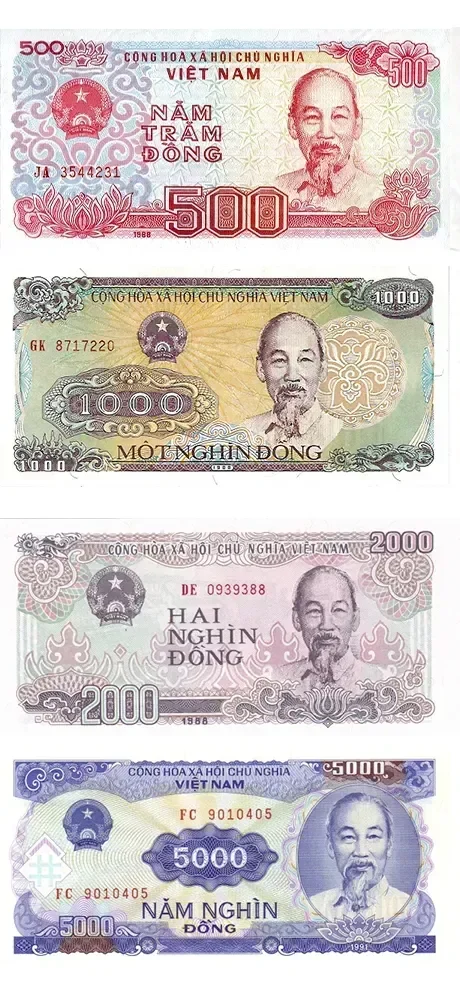
Vietnam uses the Dong (VND).
Currency (Dong) is in the thousands.
Note
The currency has “.” (Americans use a “,”) to clearly show the difference in thousands. This makes it easier to distinguish the bills. Thank-you Vietnam!
All cash bill currency, no coins.
500,000
200,000
100,000
50,000
20,000
10,000
5,000
2,000
1,000