
Tether & lock-up your bags!
Bag sitting in your hotel room? Tether it to an anchor + put a lock on the zippers.
Travel days where others could have access to your bag without you noticing? Put a lock on the zippers. Get it? Got it? Good!
This seems like it would be an inconvenient hassle, but it’s not at all once you get used to it. Don’t be a victim – the “trust no-one” approach is the only guaranteed way to ensure you never loose your belongings. Unfortunately, there are countless stories of cleaning ladies coming into the room and stealing things from a tenant’s bag. The truth is you can’t prove who did it or what happened. With a lock & tether, you’ll live worry-free, and avoid all that theft hassle.
If you have a safe or locker in your room, then also consider using that. There are times when the locker is too small, or it is broken and not worth using. Inspecting it and making a judgement call is up to you.
Travel Locks
There are a lot of baggage locks to choose from. GemsOfTravel will make this simple for you – see “Buy This”, below. Keep reading for quantity of locks, the hostel locker caveat, and reasons why we recommend the lock as mentioned in “Buy This”.
Buy This
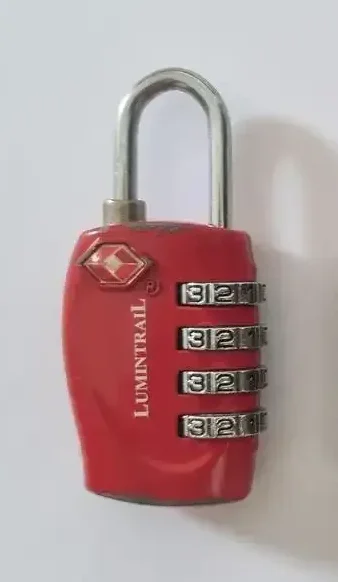
Get a small (normal-sized) 4 pin combination TSA-approved lock with a metal (not cable) shackle.
FYI: the shackle/shank is the the hook part of the lock. Some locks come as plastic or metal alloy (the lock itself, not the shackle/hook). We have both, and have no issues with either. However, the metal locks are heavier.
Note
You can set your own pin for these combination locks.
Change the pin every once in a while, or if you suspect someone saw it.
Changing the pin combination (the lock password, essentially) is really easy, and you can change it at any time. See the directions on the packaging of the lock that you buy.
Quantity
In basic, have 1 for each bag. Plus, having an extra or two is helpful.
One lock can connect 2 or 3 sets of zippers together, so you do no need a lock for each zipper pocket.
Note
[*see pictures, below for reference*]
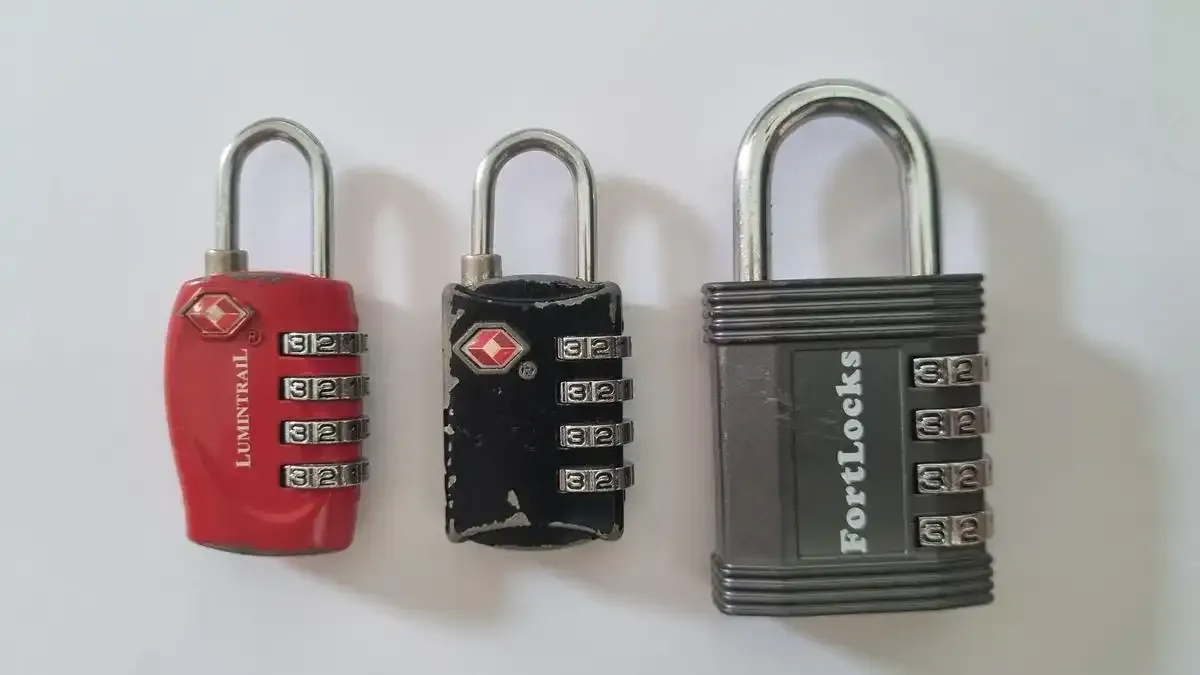
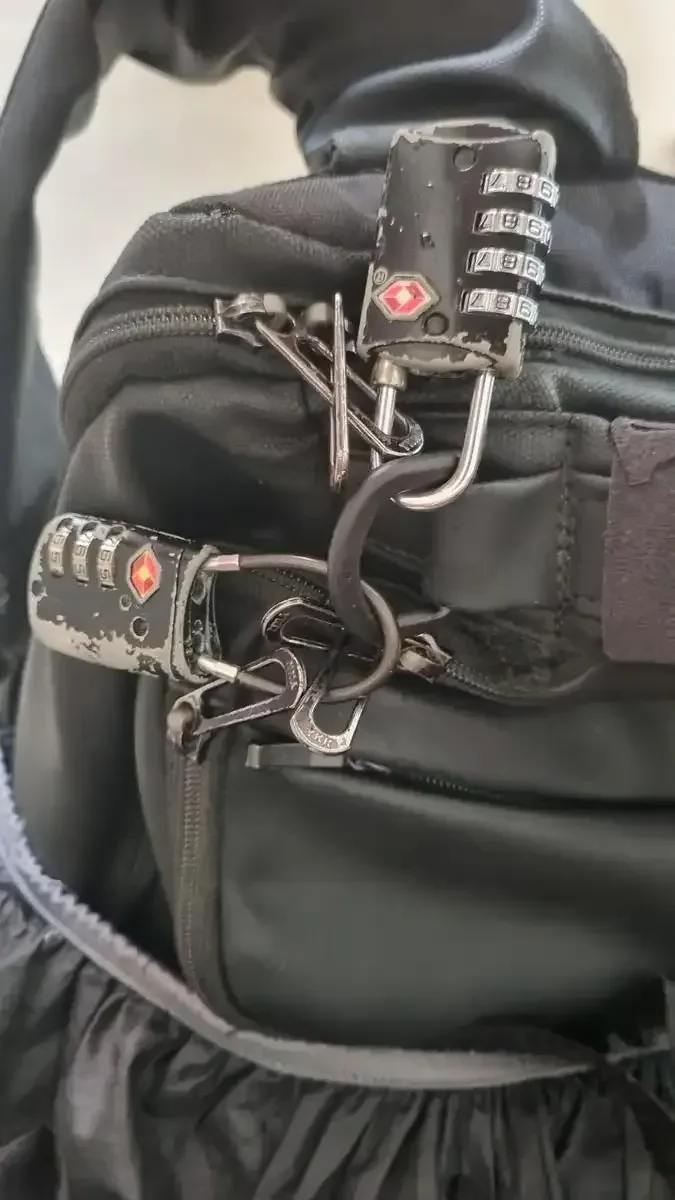
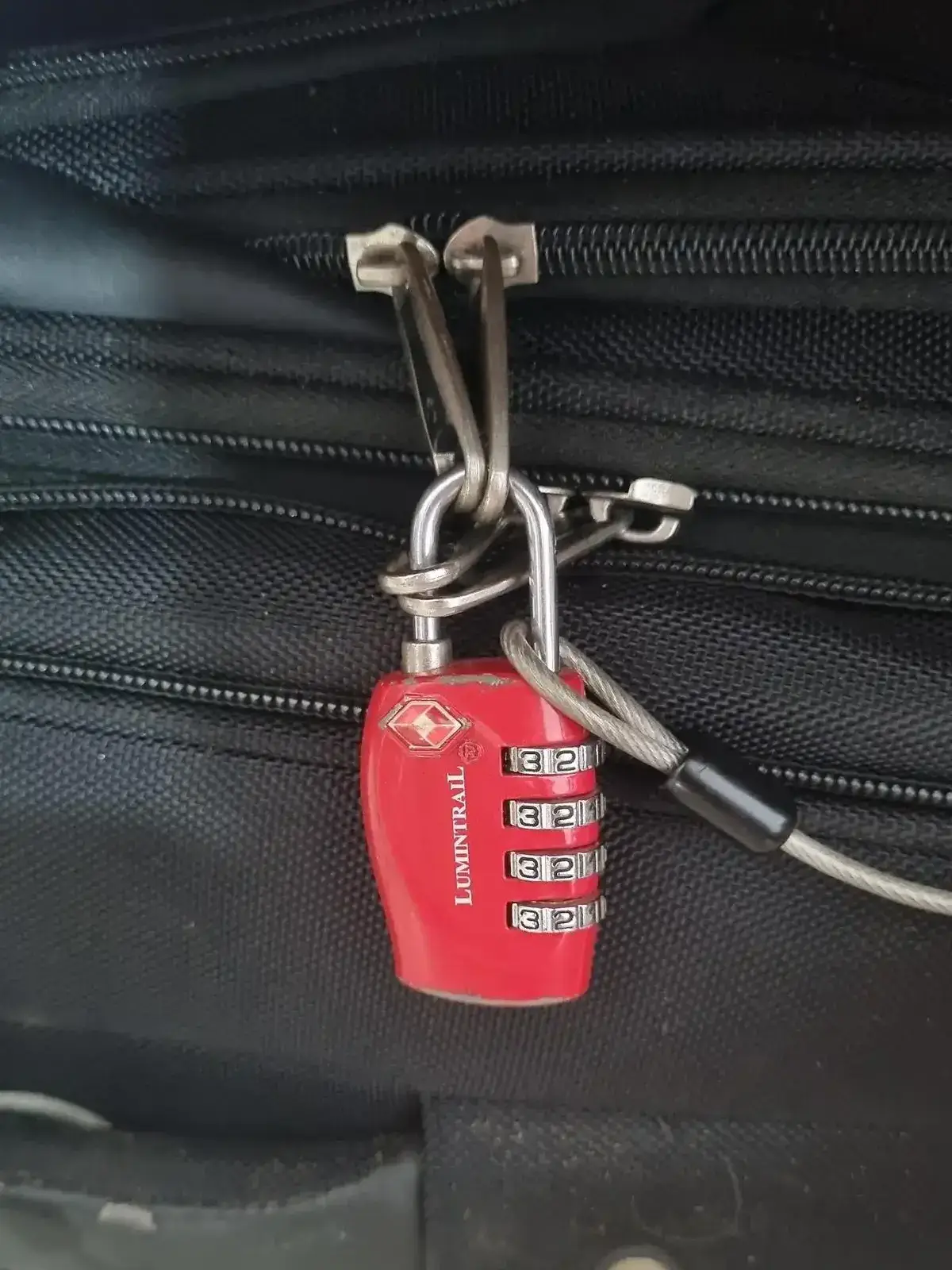
Bag #1: GemsOfTravel uses 1 lock (metal shackle) to lock 2 pairs of zippers together.
Bag #2 has 1 lock (metal shackle) to lock the main pocket with our passport and waterproof wallet with cards & cash inside. Also on bag #2, 1 lock (cable shackle) is used to connect multiple zipper pairs for pocket with things like clothes and random stuff inside. The cable-shackle is flexible, and it fits tightly since it reaches between the zippers. For locking a hostel locker a metal-shackled lock is always used, same for when when using a chain to lock a cabinet or door.
In the images below, note how (1) the lock connects multiple zipper pairs, (2) the cable-shackle is flexible, and it fits tightly since it reaches between the zippers, (3) the red lock has a tether cable attached to it (see more about this, below).
Hostels
For security, always use a metal-shackled lock on a hostel locker, because the metal shackle is not flexible. However, the cable shackle is flexible, so the locker door can be opened just enough to stick a hand inside [and steal stuff].
Large-sized Baggage Lock : Some hostels have really big lugs on the locker, and the normal-sized baggage lock will not fit. Oh, no! For this purpose, it’s good to have a large-sized baggage lock, which has a slightly longer shackle.
Unfortunately, it is heavier and larger. And, it won’t fit through you zippers, so you can’t use it for locking your bag.
Below is an image of the big lock next to the smaller locks for size comparison.
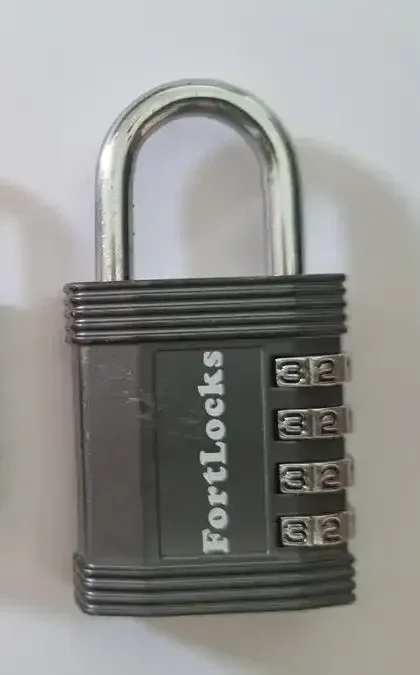
However, the hostel might have locks on-site that you can borrow, but you cannot rely on that being the case. Only a small amount of hostels provide locks.
Most hostels (but not all) you can use your normal-sized lock just fine.
It’s always best to use your own lock. Our least favorite is when you cannot use your own lock – the lock is integrated into the locker door and the hostel provides a key (if they haven’t all been lost).
Locks That Come On The Bag
Some luggage companies include locks built onto the bag. GemsOfTravel emphasizes to have individual locks that can be used for other bags, lockers, and other locking methods as discussed later in this post.
Lock Design & Variations
–
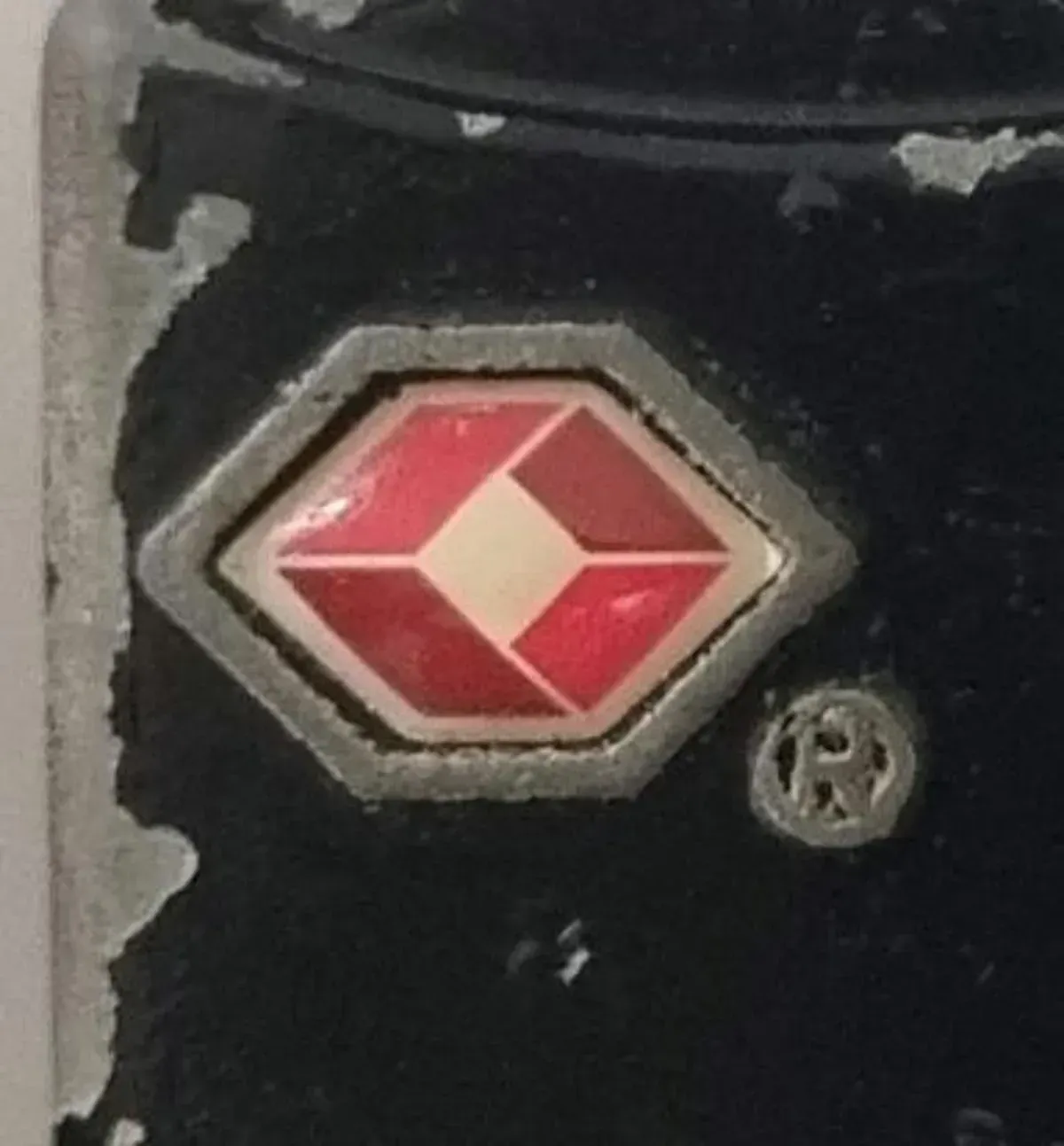
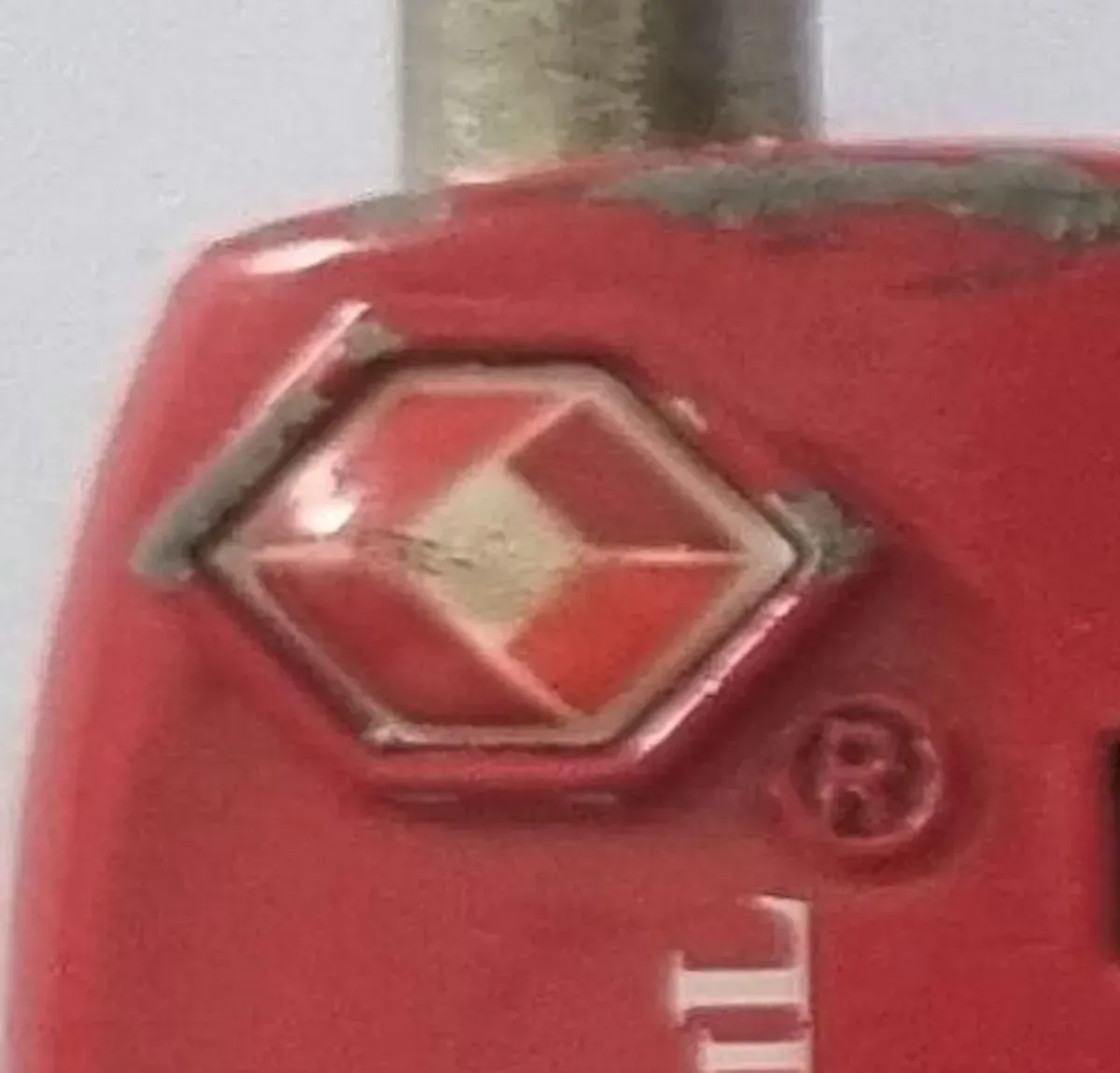
TSA – approved
This is a travel requirement by the TSA – they need to be able to unlock your checked-in baggage if needed. It is arguable that all legitimate and high-quality locks will be TSA approved.
–
Type
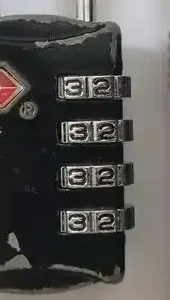
Locks come with combination pins or keys. We argue that combination pins are better than ones with keys, which can (and do!) get lost.
Number Of Pins : 4 pin is better than 3 pin locks. GET A 4 PIN COMBINATION LOCK, NOT 3 PIN. The 3 pin is less secure, having less number of combinations. It seems that the cheaper and lower quality locks will always be 3 pin (never 4 pin), but not all 3 pin locks are low quality. High-quality manufacturers also make 3 pin combination locks. Anyway, just get a 4 pin and move-on with that decision.
Key : Keys are easy to loose. This makes it impossible to get inside + you will have a hard time finding someone who can cut the lock open for you. “But, I won’t loose it. I’ve never lost a key before”, you say? Up to you. It’s a risk we are not willing to take, being locked out of our valuables.
–
Shackle
Metal and cable locks are sold. We are referring to the shackle/shank part of the lock. USE A METAL SHACKLED LOCK, not a cable. Metal-shackles are strong and sturdy, they do not flex. However, there are cases to use the cable-shackle. The cable locks are good for flexing & stretching, having the ability to connect multiple zippers together. This issue is that they can easily bend & flex, thus easily stretch and make an open space to reach into your bag. Furthermore, there are short-cable and long-cable versions. The long cable ones are the worst, because they allow a thief to stretch the lock open extra wide!
–
Size
Small (normal-size) : Most luggage locks are this size.
Big : We mentioned using these for hostels in which have lockers with big lugs that are too big for using a normal-sized lock. This “big lock” has a longer shackle, allowing it to fit on a locker with big lugs. Other than this purpose, this lock is not really needed – it will not fit through your zippers, so you cannot lock your bag with it. And, it’s much heavier. But, consider it a requirement if you visit many hostels in Southeast Asia.
–
Casing
You don’t need to worry about this too much, honestly, unless if you have a certain preference.
Locks come in plastic and metal alloy casing. We have both, and have no issues with either. However, the metal locks are heavier.
–
Individual Or Integrated
Some locks come are built onto the bag and cannot be removed (integrated).
The locks you purchase are individual locks that can be taken off and used for other bags, on lockers, and other locking methods. Oh, an they can be set aside and lost, too.
Cables
These travel cables are for tethering & locking your bag to prevent theft (follow that link for some really good tips). Trust us, you can never be too cautious with your belongings – prevent opportune thief.
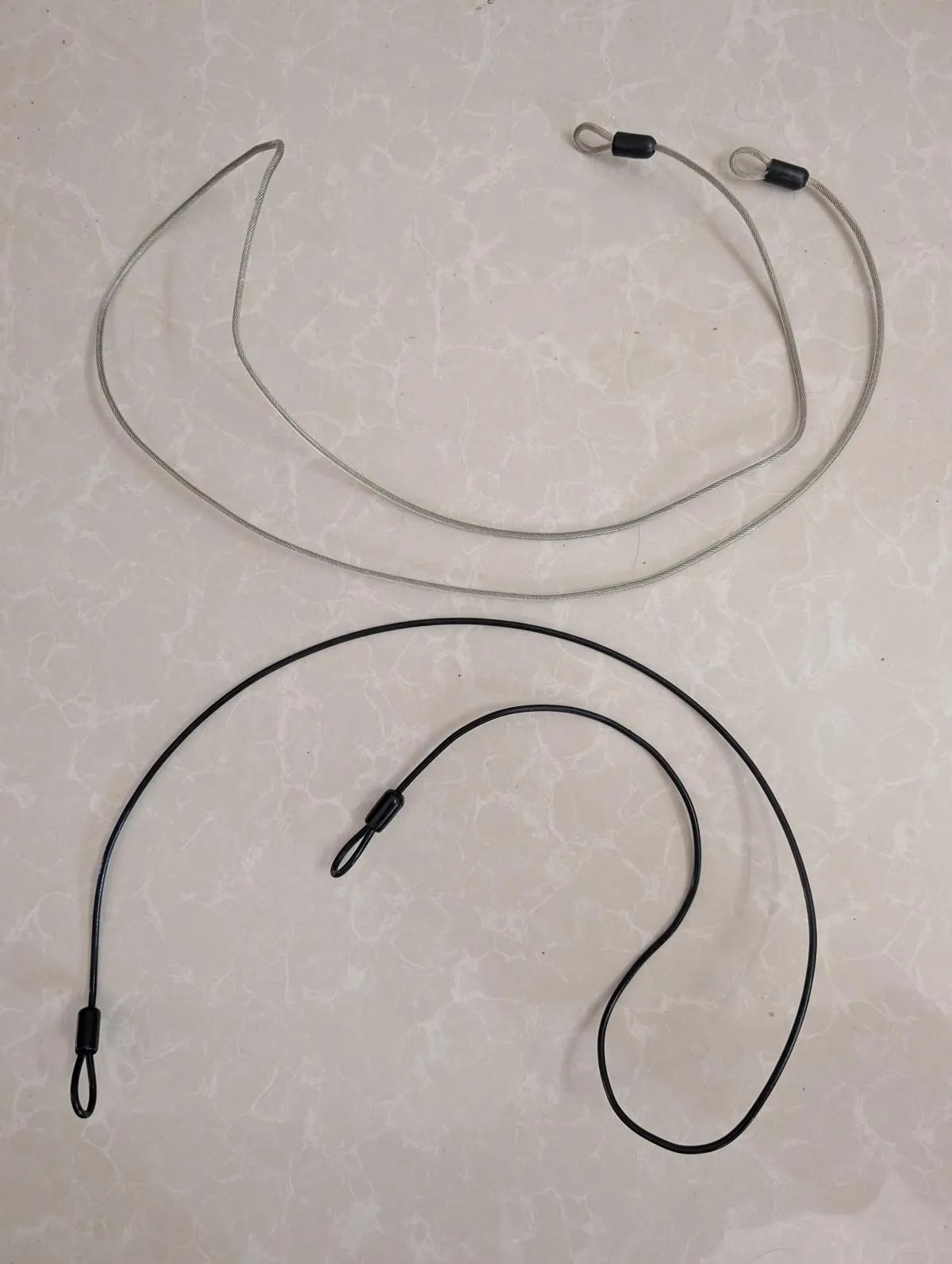
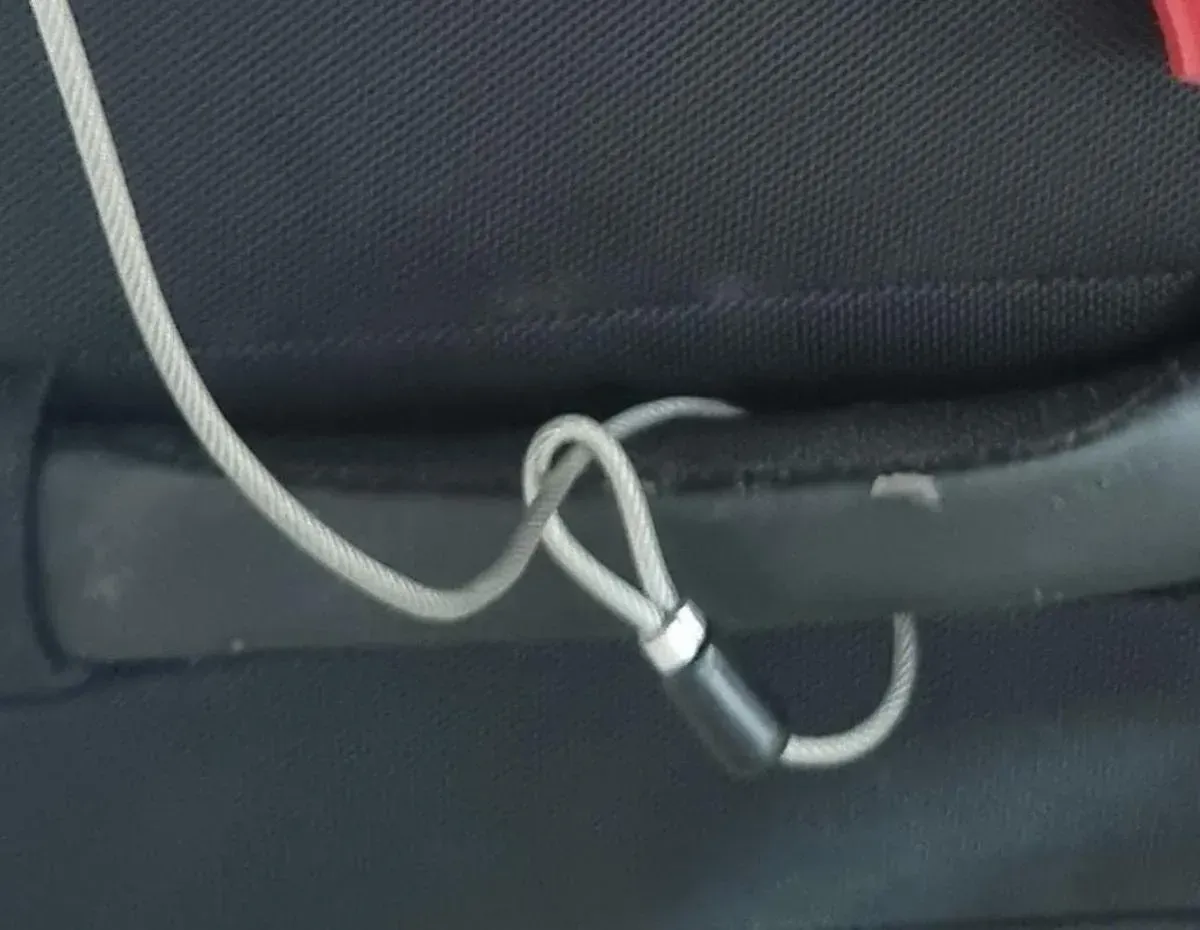
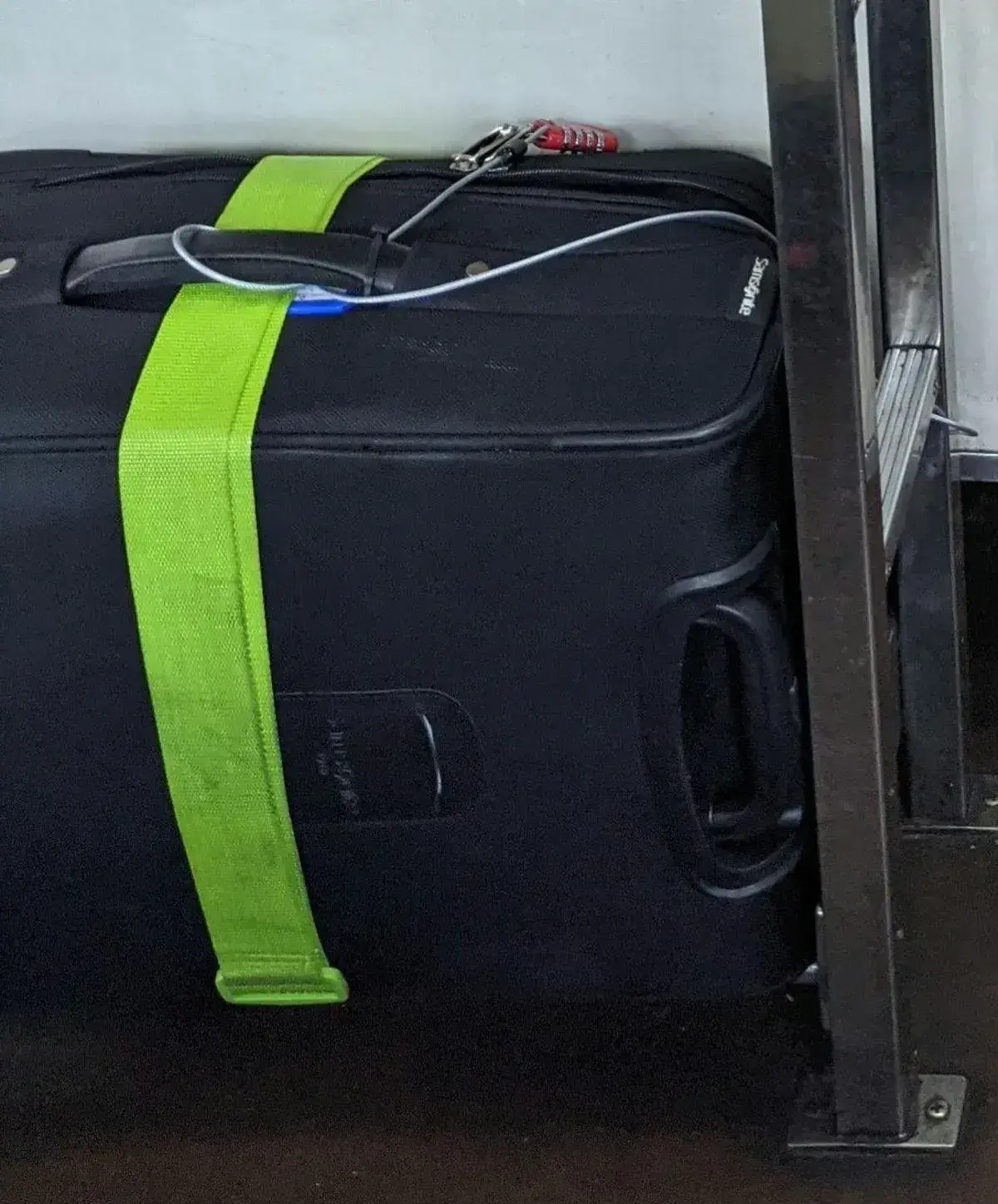
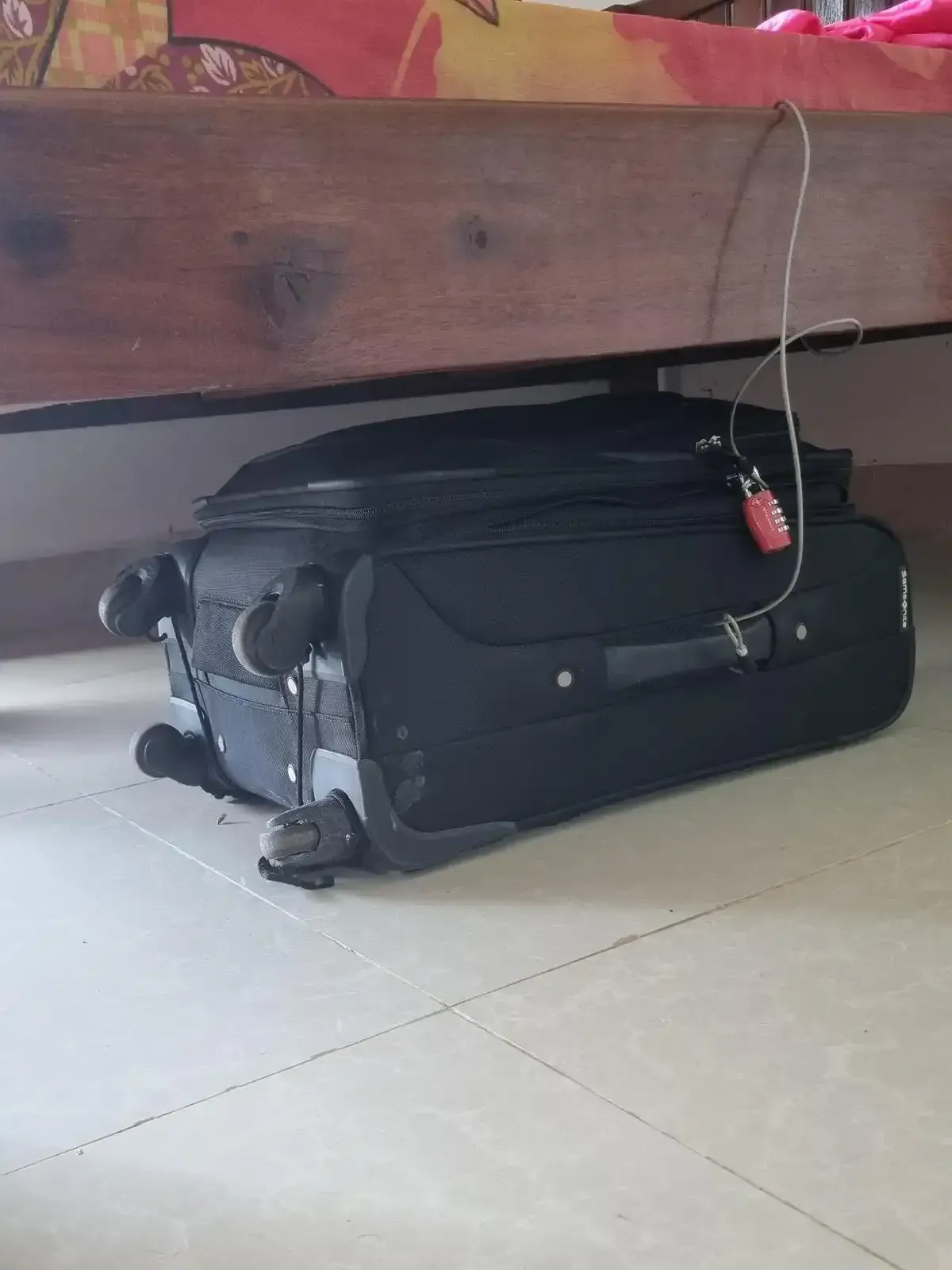
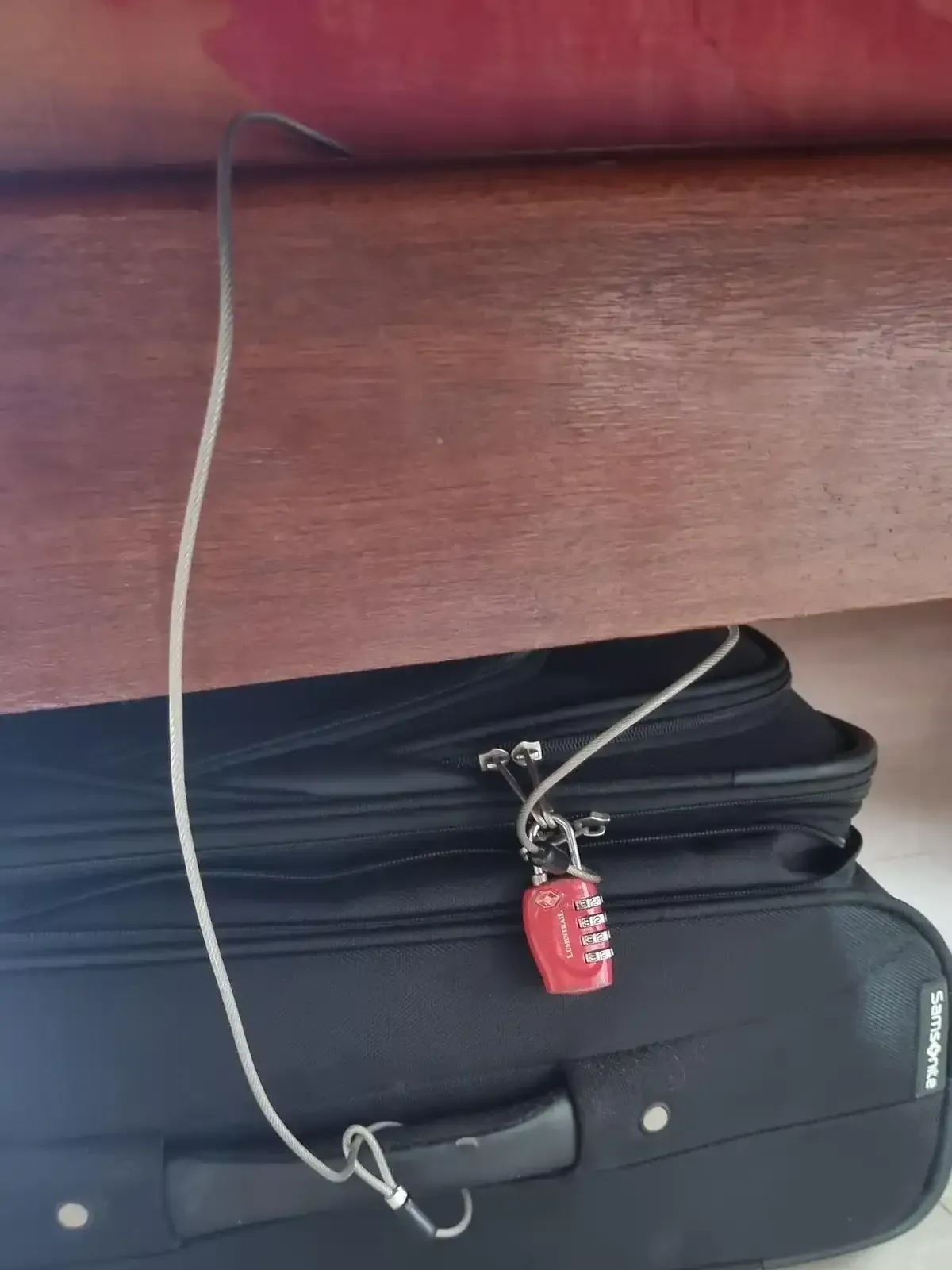
This is a good habit, regardless if you are traveling, nomading, or living long term in Southeast Asia. SE Asia is safe, but loosing your valuables quickly puts you in a vulnerable situation when you are far from home. You don’t have time for that nonsense!
GemsOfTravel highly recommends having 3 or 4 of these travel cables – see this link for pictures. They are 3 foot (1 meter) in length. One cable for each bag is preferred.
What they are -> a rubber-wrapped metal cable that cannot be cut or broken easily. And, they have loops on both sides to hook your lock onto. They are so small and light weight!
We love these things! And, they can be used for other purposes such as a make-shift close line to hang dry clothes.
Metal Chain
GemsOfTravel carries both of these chains. The small chain is best, but the big chain is sold more commonly in shops throughout SE Asia.
Uses For A Chain:
(1) Bike lock
(2) Door lock: Lock a closet or dresser handle can be locked to secure your valuable inside. This would be using it like a locker.
(3) Room Door lock: Lock your room door before you leave for a long period of time. You can use a chain + luggage lock to lock it from the outside. This is to prevent anyone with a spare key to come inside, if you have that concern. Some doors don’t lock well, and have play in the latch that can easily be popped open without a key. This might be overkill for most situations, but if you are leaving for an extended period of time then consider using this method.
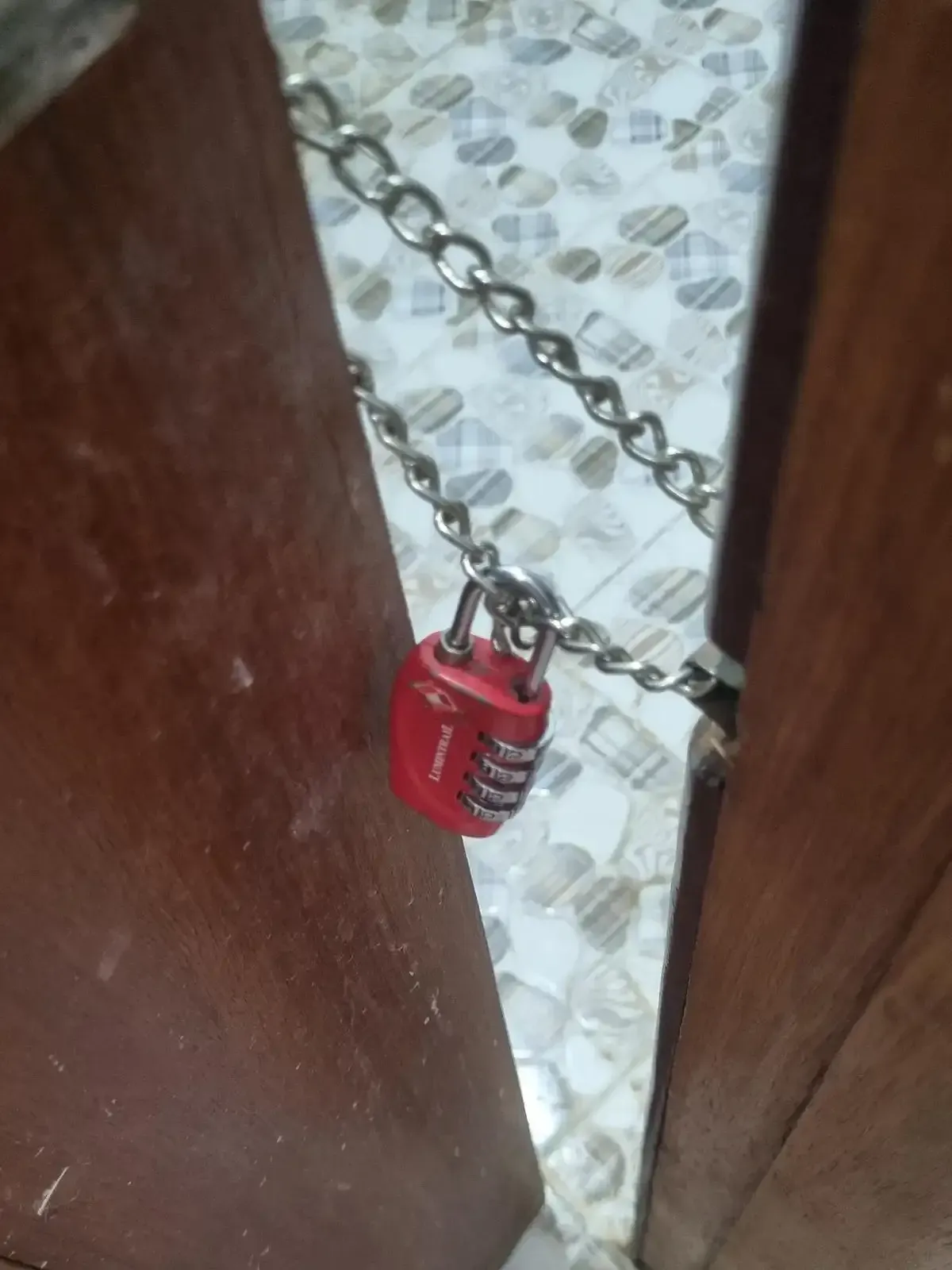
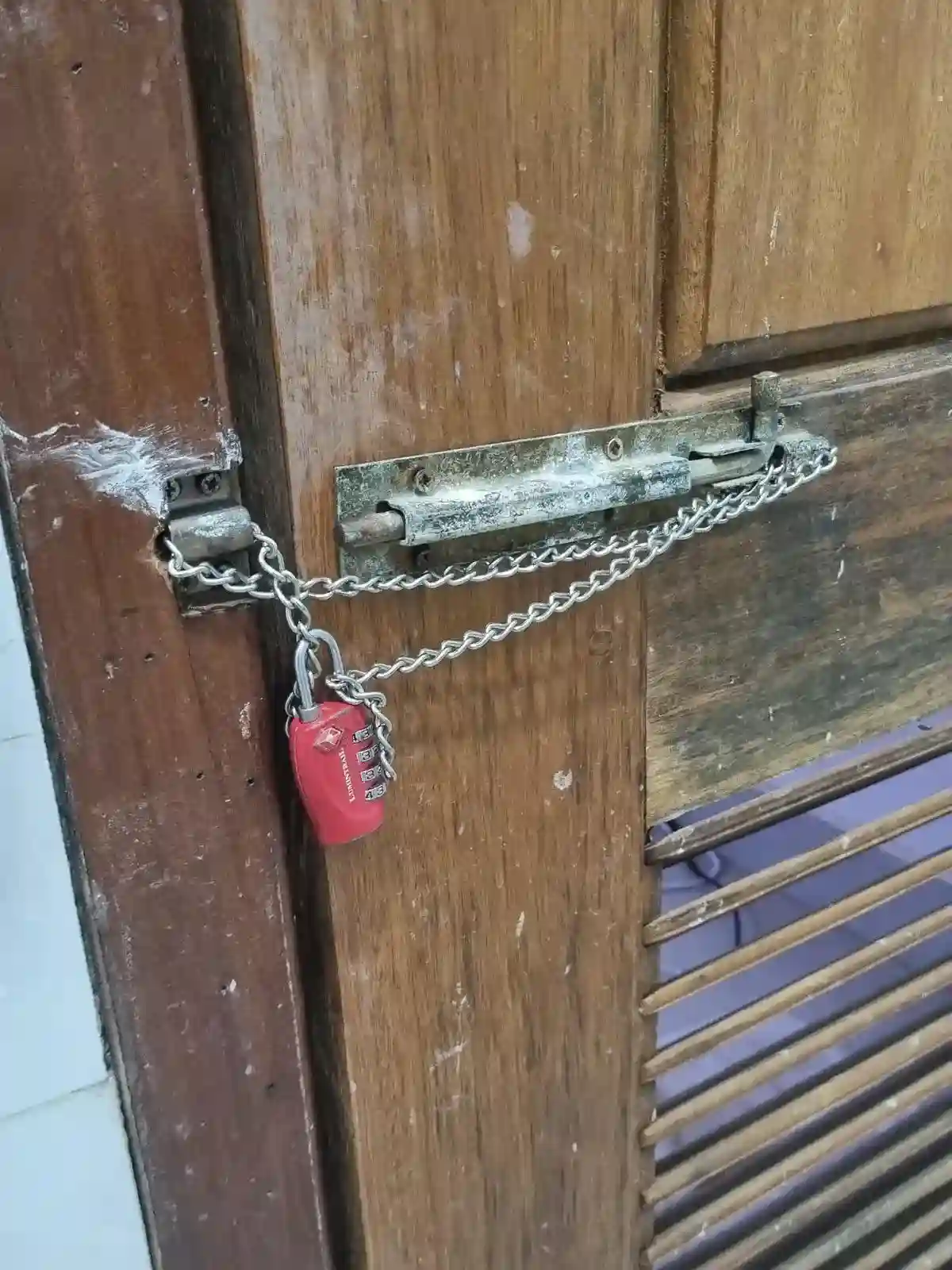
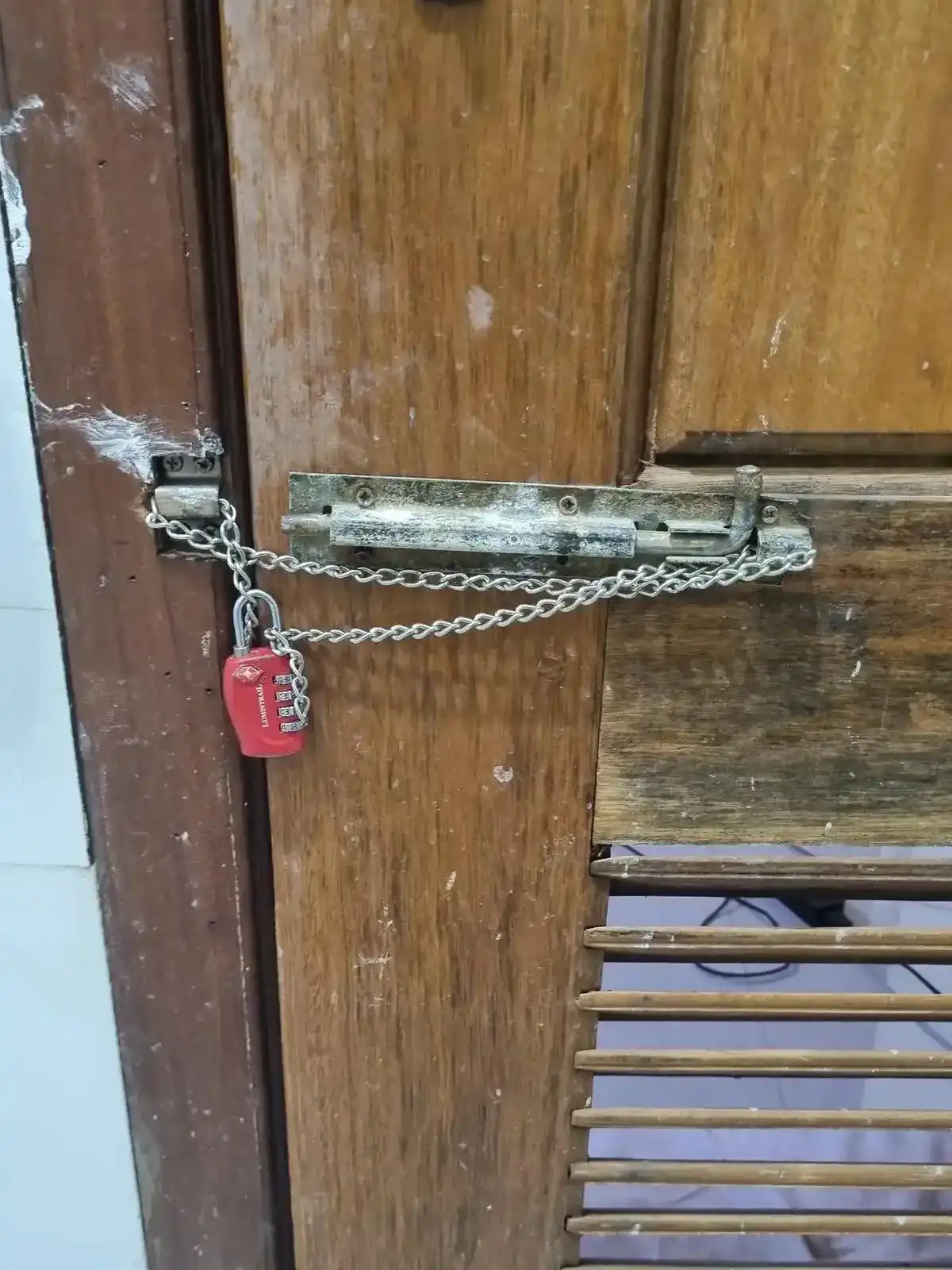
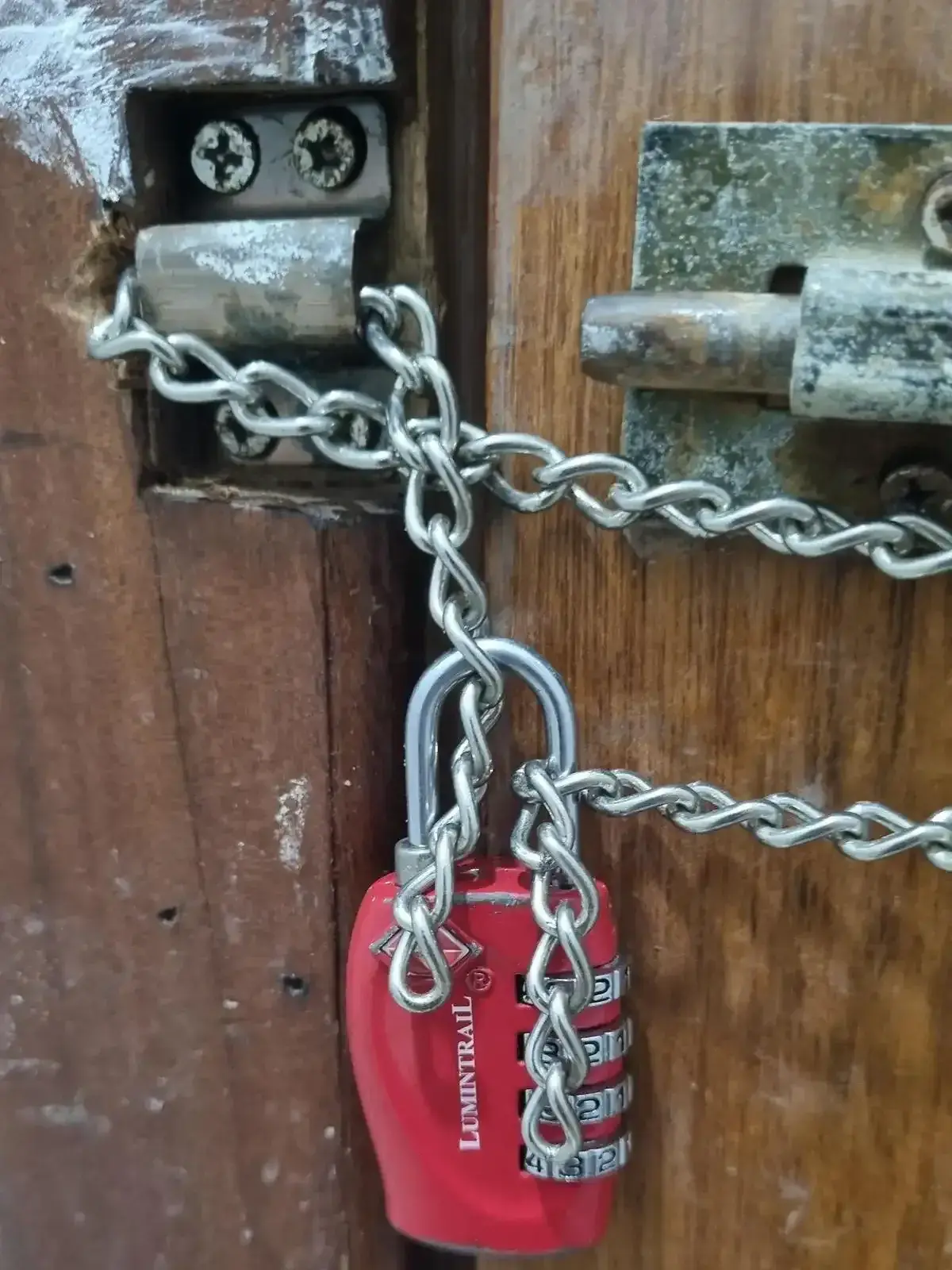
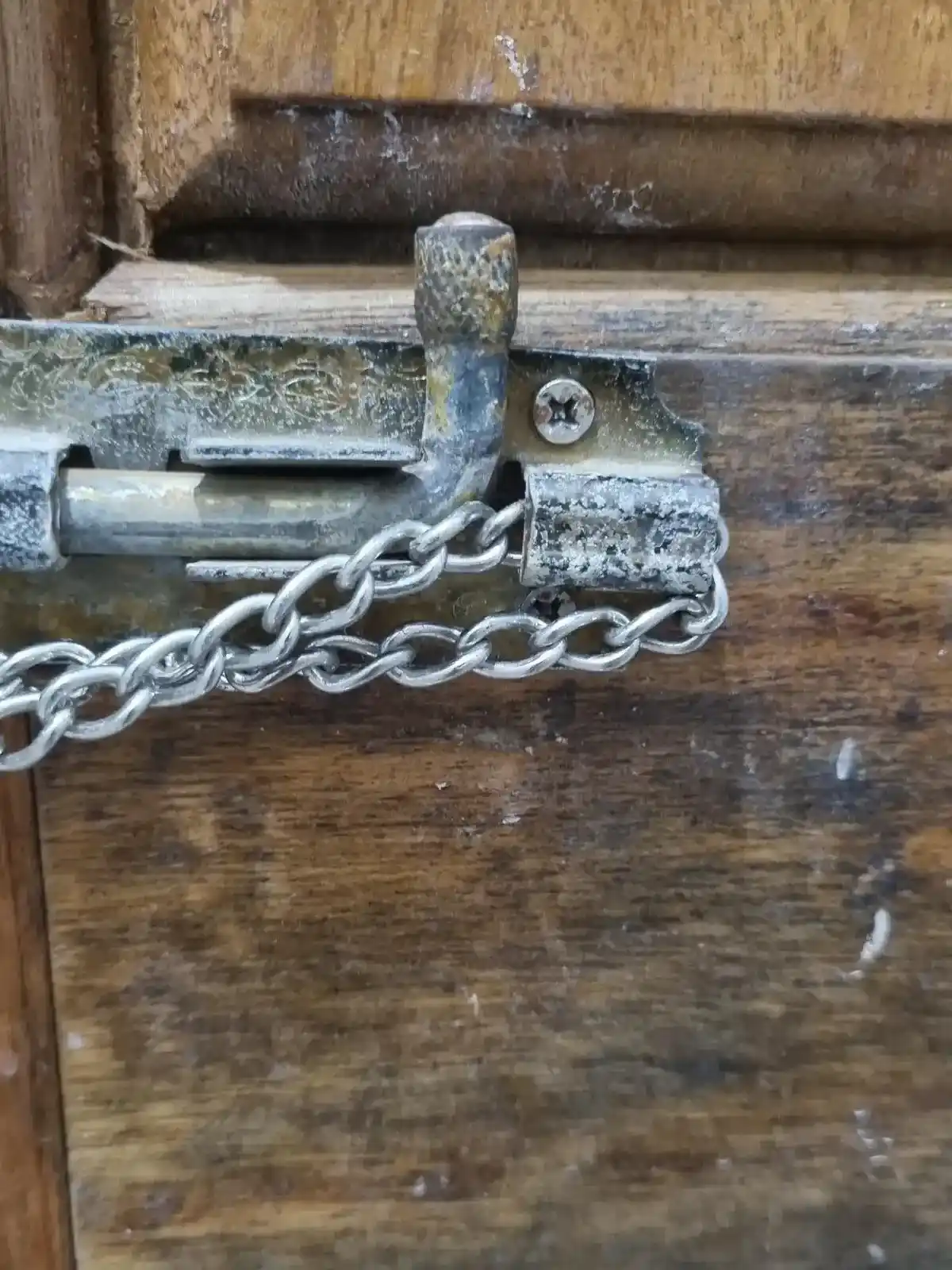
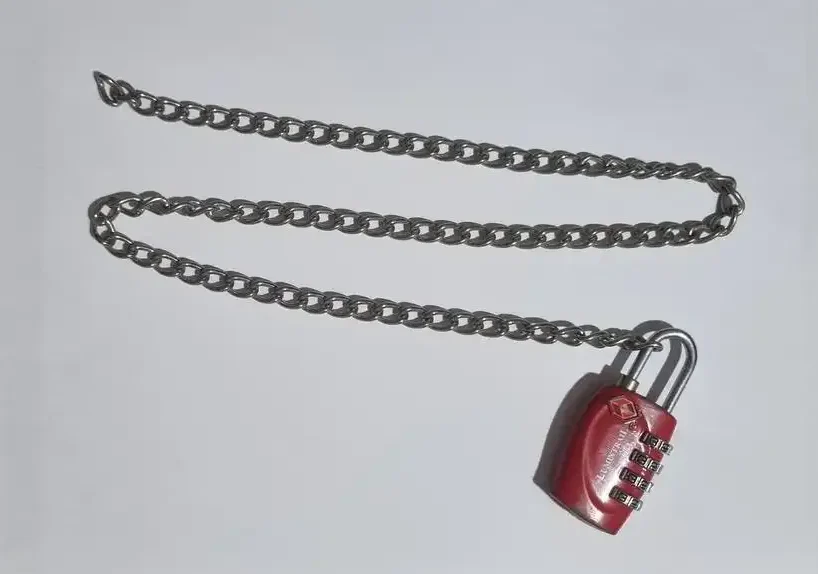
Small Metal Chain (see below pic) : We recommend this chain over the big chain. Your small (nomal-sized) luggage lock will fit through the chain links (confirm before buying). Even more importantly, the metal chain is small enough to thread through small door lock holes mounted on a door frame. These are sold at big-box hardware stores, in which they will cut them to whatever size you want. A length of 2 feet long (0.70 meters) is the perfect length in our experience. It is very strong and you cannot break it – very secure. And the cost is not expensive.
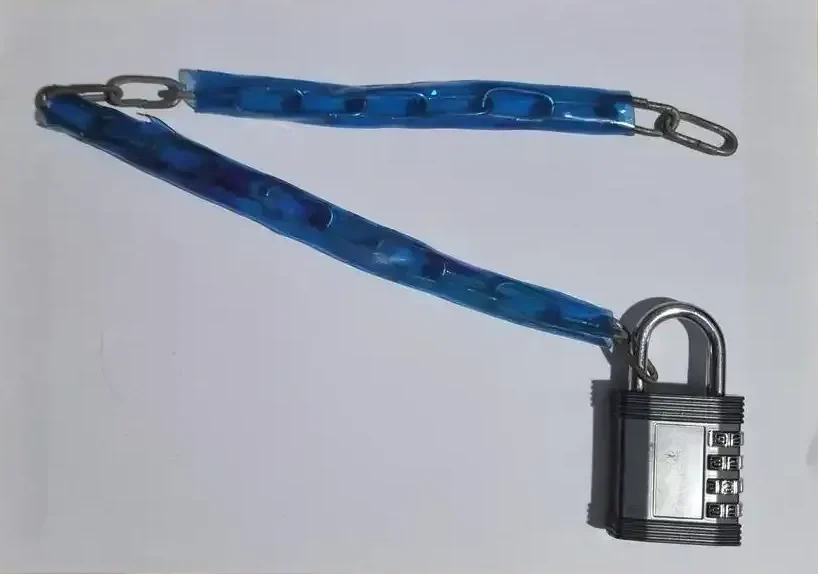
Big Metal Chain (see below pic) : Your luggage lock will also fit through the chain links of this chain. The big issue with this is that there is more play due to the larger chain link size. It is harder to pull it tight – there will be some wiggle room that is not desired when locking the handle of a closet door, for example. Having wiggle room will allow the door to be pulled open enough to reach inside – not good.
Hotel And Hostel Lockers & Security
Always use the locker – secure your stuff inside. It’s hostel culture to leave your bag laying around, but nowadays there are just too many thefts. Don’t risk your valuables such as a laptop, emergency cash, spare credit cards, and passport.
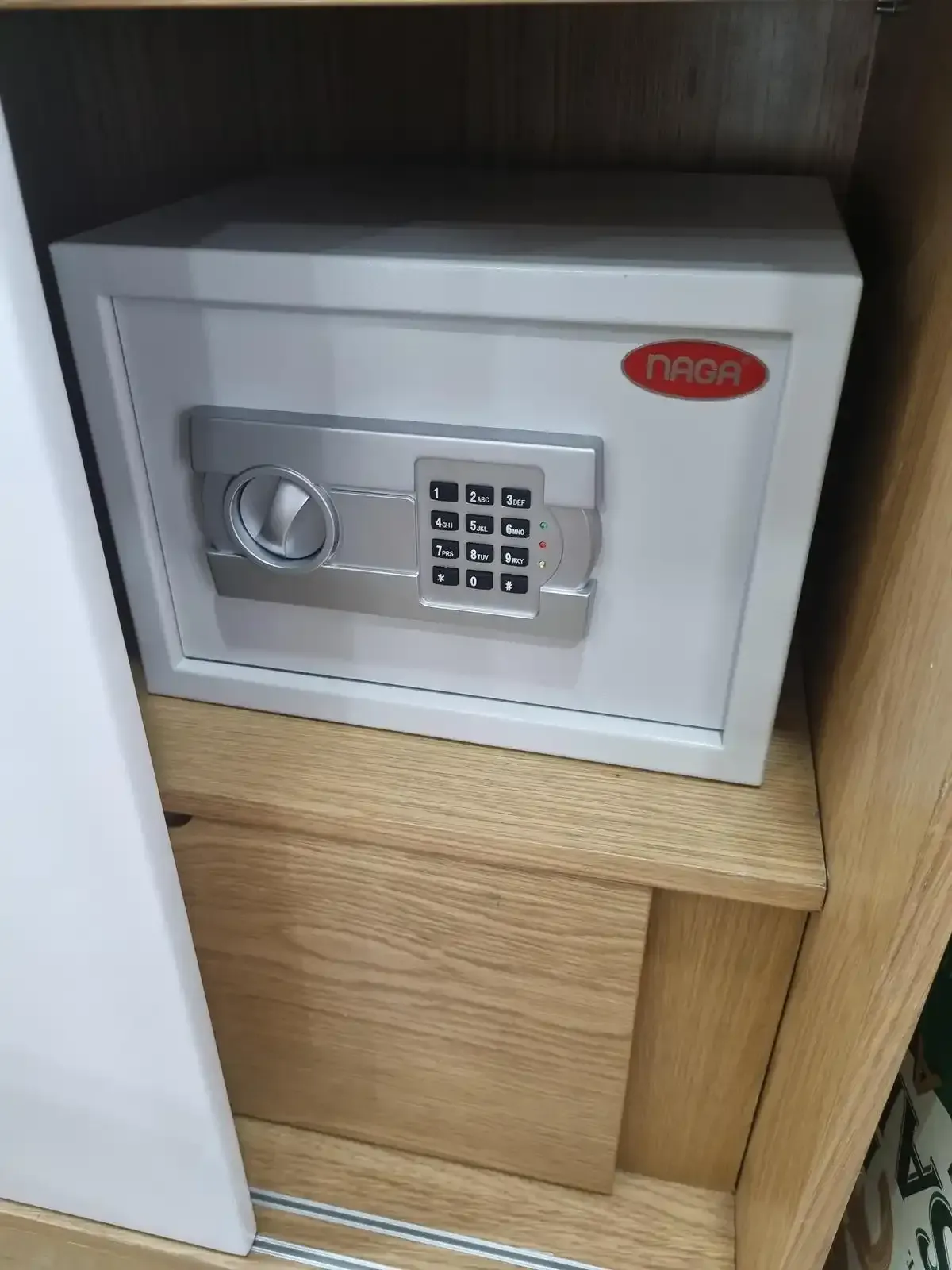
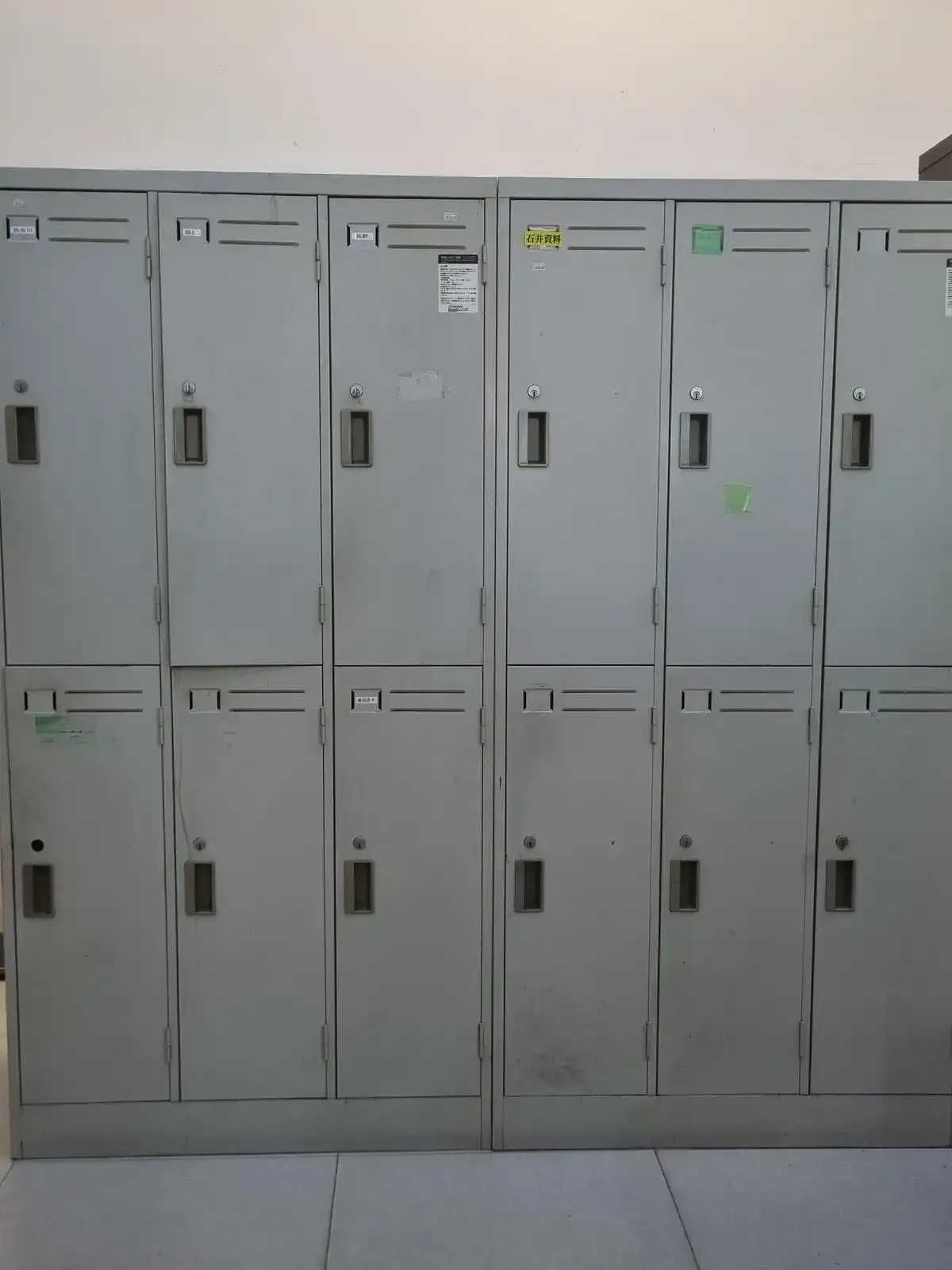
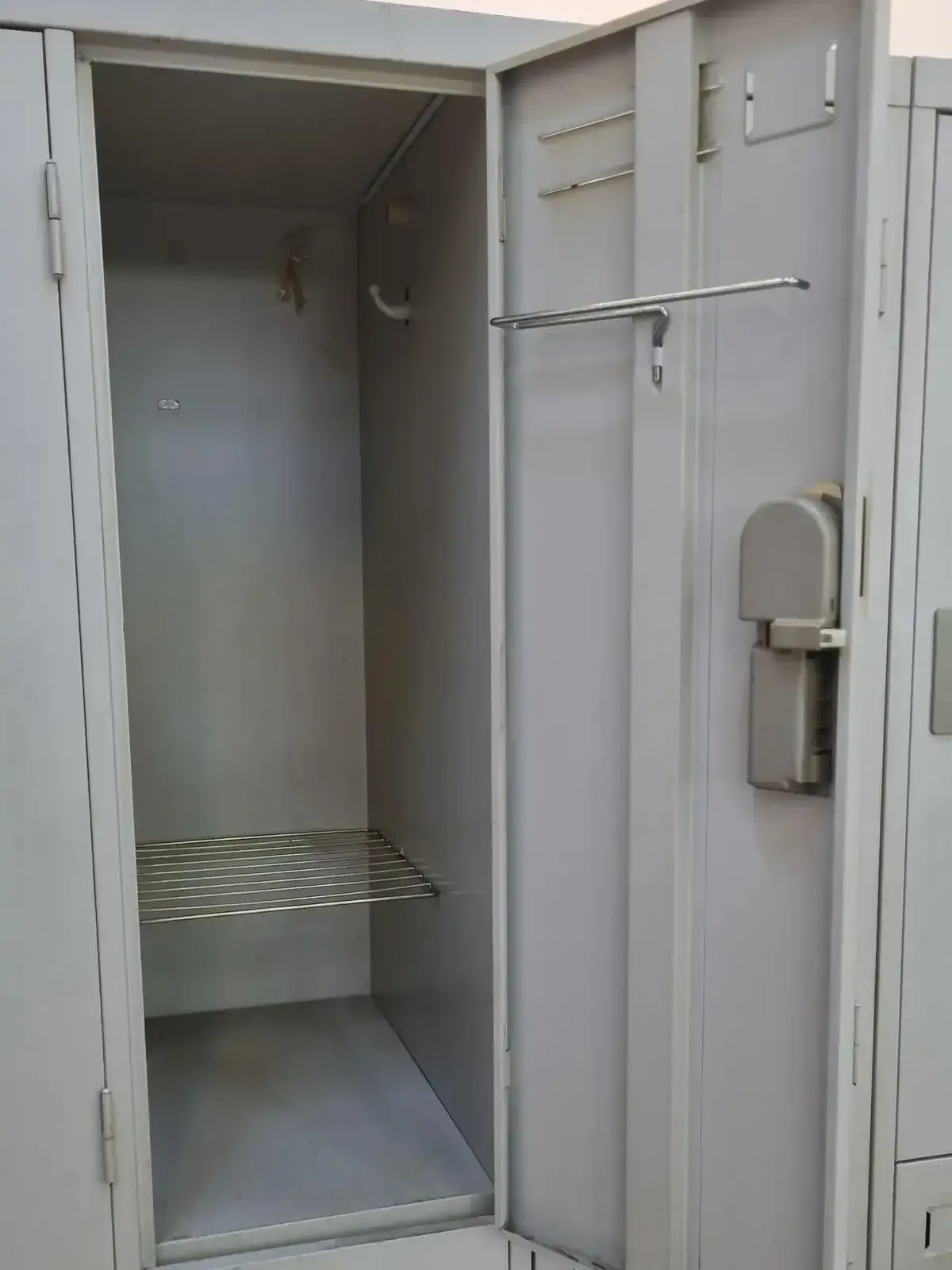
Use Your Own Lock : It’s best to use your own lock for hostel lockers, not one provided by the hostel. Knowing that someone else has a spare key does not sit well. Hostel lockers vary a lot. Some have lugs to use your own lock (our favorite), others have lockers with the lock integrated into the door of the locker. There, unfortunately, are hostels that don’t even have lockers (booo, no good). We suggest not staying at a hostel without a locker, or at minimum locking the zippers with a lock + tethering your bag to an anchor object using a travel cable (see above within this post for details).
Have A Big Lock : To prevent repeating information, see above in “Hostels“. Carry a big lock (not the standard normal-size baggage lock) that has a longer shackle length to fit the big lugs on lockers.
Examine Your Locker : Check if your locker is secure. You’d be surprised how some are easy to break into – yikes!
1
Tug on the door. Try pulling on it hard, too. Does it pop open, even when locked?
2
Is there any sign that the locker has been broken or pried into before?
3
Look inside the locker: Are there any gaps that someone can pull open or stick a hand in?
4
Look inside the locker: Lockers located underneath the bed have separator walls, separating 2 lockers. Are there separators missing?
5
If the locker is below the bed, lift the mattress. Does lifting the mattress(and/or board underneath it) gain direct access to inside the locker? Sometimes the boards that the mattress rests on is not screwed down. Sometimes there are no boards – what!?
6
Are all walls of the locker sturdy? Can they be bent?