
Your bag is like a travel buddy that is more-or-less attached to the hip. Tailoring your bag setup uniquely for you makes sense, right? What makes sense for a nomad is not the same as for a traveler, retiree, or expat.
Before choosing a bag and packing, there are things to consider. Plan your packing around these, as written in the section “Consider Before You Start Packing – Pack Strategically“. And, don’t neglect your needs. That is, your needs based on your purpose + how long you will be abroad. These will influence how you pack and what bag(s) you choose.
Pack smart. Our packing guide, within this post, will step you through the process of packing and choosing a bag(s). There’s more to it than you’d imagine.
So, how do we do it? GemsOfTravel takes the approach of focusing on weight, size, and bag combinations; in that order – that’s the gist. This is a balancing act.
Afterwards, make adjustments for bag security and convenience.
Expressed in greater detail, GemsOfTravel recommends first choosing what you want to take, grouping things together based on importance & weight.
As we will discuss, know your limits and prioritize. You should be thinking about the size(s) of your bag(s) for carry-on/check-in, and what it’ll be like traveling around with them. Can you imagine what it’ll be like to live out of the bags for weeks/months?
After all of this, choose a bag (or combination of bags) to fit that weight.
There is strategic thought behind this all of this. Remember those considerations we mentioned, above? Consider them as you allocate items to a bag and make packing adjustments.
Tip
Buy your bags after you have a strong idea of what you’ll be taking on your trip (or move). This way you have time to try the bags, return them for a refund if they don’t suit your needs, and buy one that is larger/smaller.
Note
FYI: The post is a wee bit nitty-gritty – don’t say we didn’t warn you – but, we’re confident that you’ll come out the other end with an improved packing/bag setup.
Consider Before You Start Packing – Pack Strategically
Keep these points in mind while packing and choosing bag(s). They will equip you with a clearer understanding of what it’s like to live out of a bag, or combination of bags. Short-term travel, or long-term … both will benefit from packing smart.
*This section is a little complicated. Jot down notes as you read through, and use them as an overview as you progress through the rest of this GemsOfTravel post.
Bag Weight & Size
Weight is your primary metric, not size. Limit your stuff to a certain total weight. Then, choose a bag, or combination of bags, that fits the stuff (more on how to pack, below). Carry-on bags (for flights) need to be limited in weight to the airline rule of 7kg (15 lbs) total carry-on weight.
A 30L to 40L sized bag would fit in a hostel locker more often than a larger 60L bag. Also, if you are stuffing a 60L-70L backpack full, then you should consider separating your things into an extra 18L bag. Otherwise, you’ll have a really hard time getting thing in/out of your bag. And, having a small extra bag helps you organize things.
Note
A total weight of 65-70 lbs (29.5 to 32 kgs), across multiple bags, is manageable – not easy, but manageable. That’s 35 lbs (16 kgs) in a backpack, and 36 lbs in a luggage bag. Going over that total weight becomes much harder to carry around.
*We are referring more to long-term traveling/living abroad, when we mention this.
Carry-on Bag Size
Carry-on (a.k.a. in-cabin) baggage is limited to bags 40L and below, as a rough estimate. Also having a 18L bag is useful, because it fits under the seat. Note that having wheels on your luggage bag means that a 40L will be too large for a carry-on.
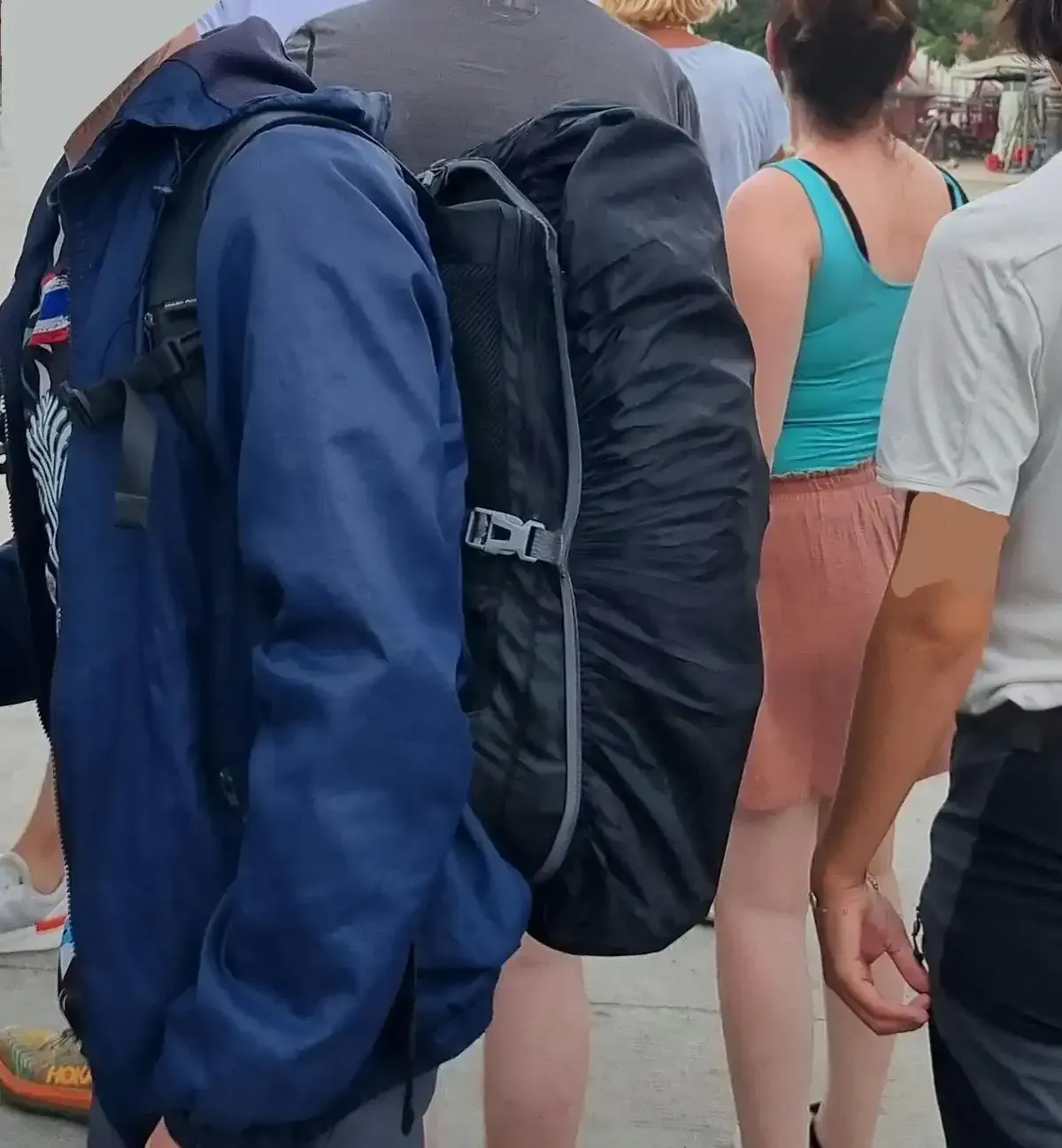
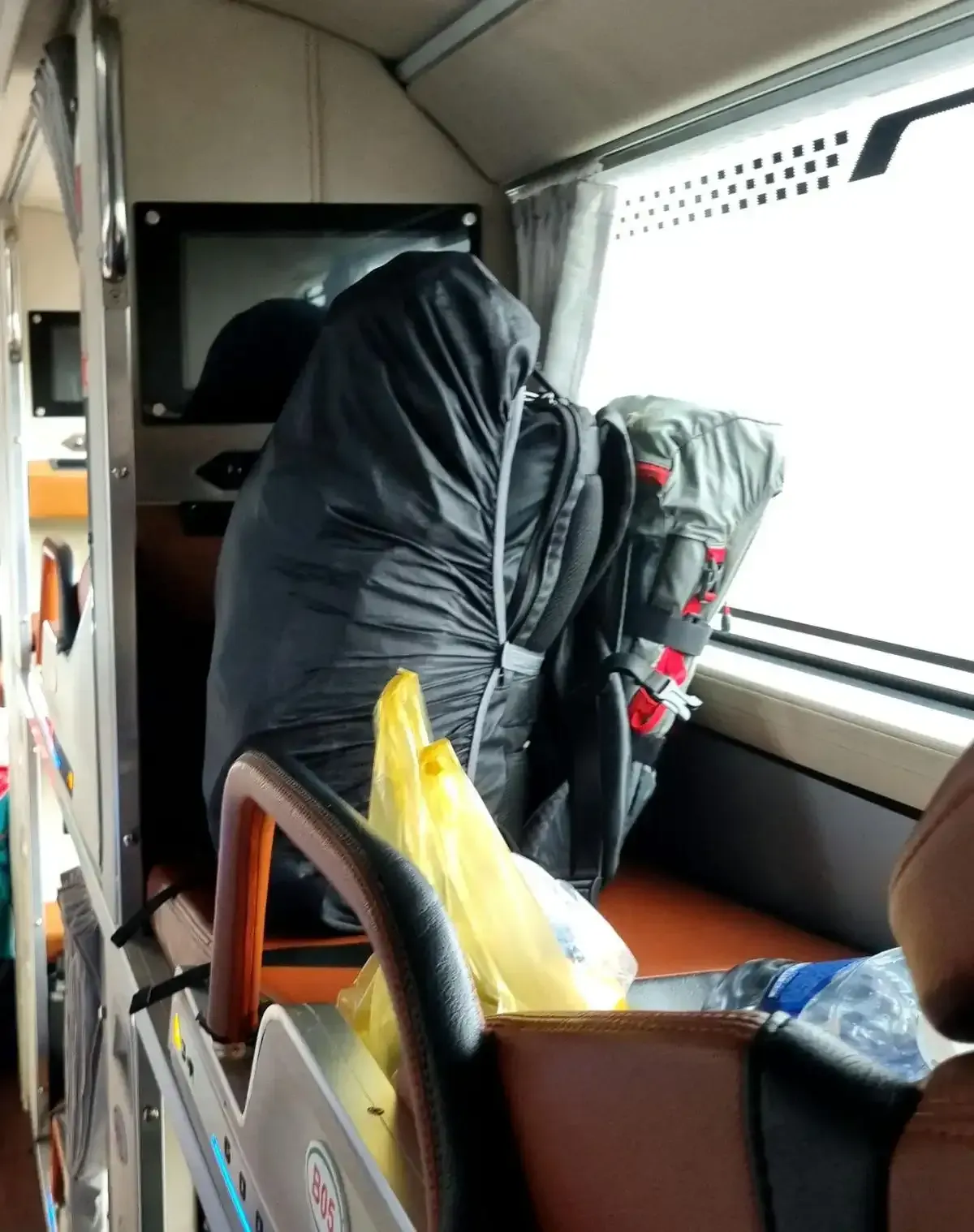

Limit The Amount Of Stuff
The more you carry, the (1) more difficult to dig it out of your bag … unpack/re-pack it , (2) too bulky or heavy to carry around , (3) there’s a lot that you won’t need that you thought you would, but don’t.
Valuables & Electronics Never Leave Your Sight
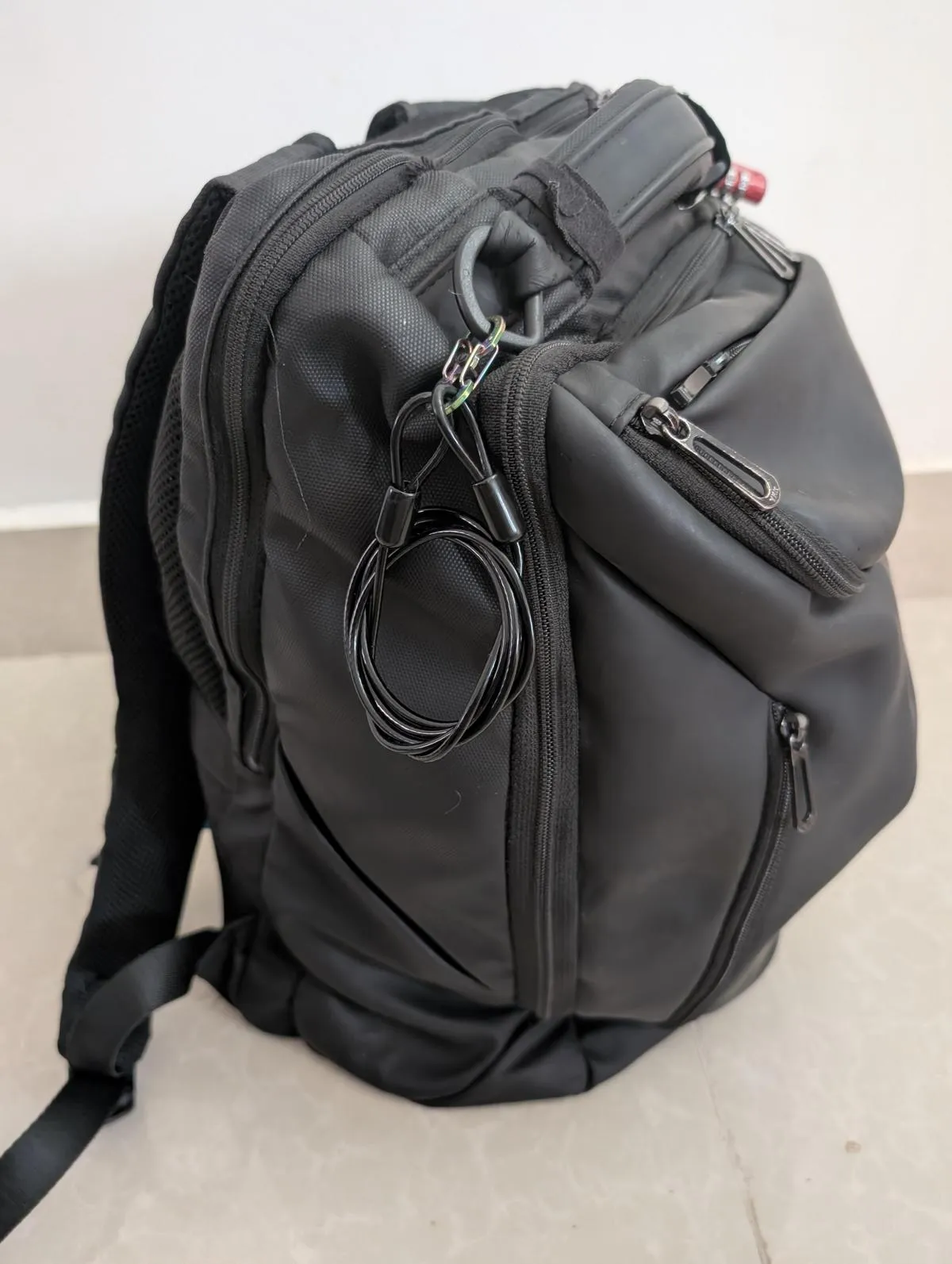
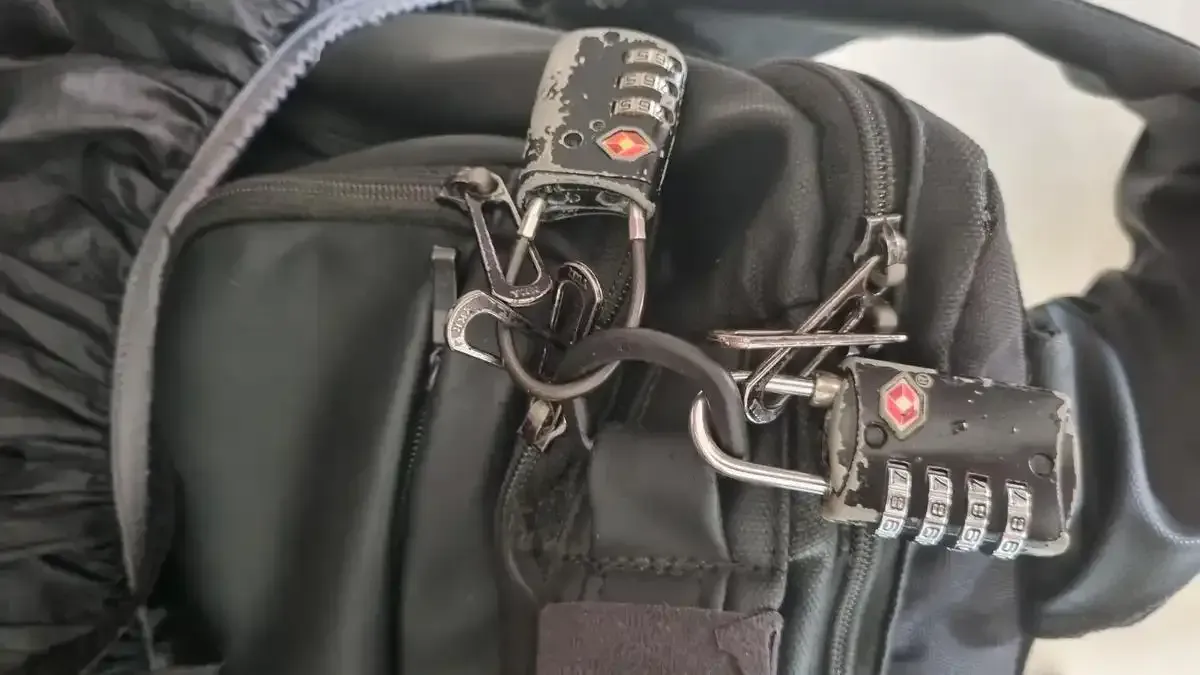
Carry important things on you in a bag that never leaves your possession. Secure it by putting a lock on the zippers (we cannot emphasize this enough). These are things that are expensive, and/or you cannot afford to loose (medications?). Everything else can go in a check-in bag, or a bag that goes into storage under the bus.
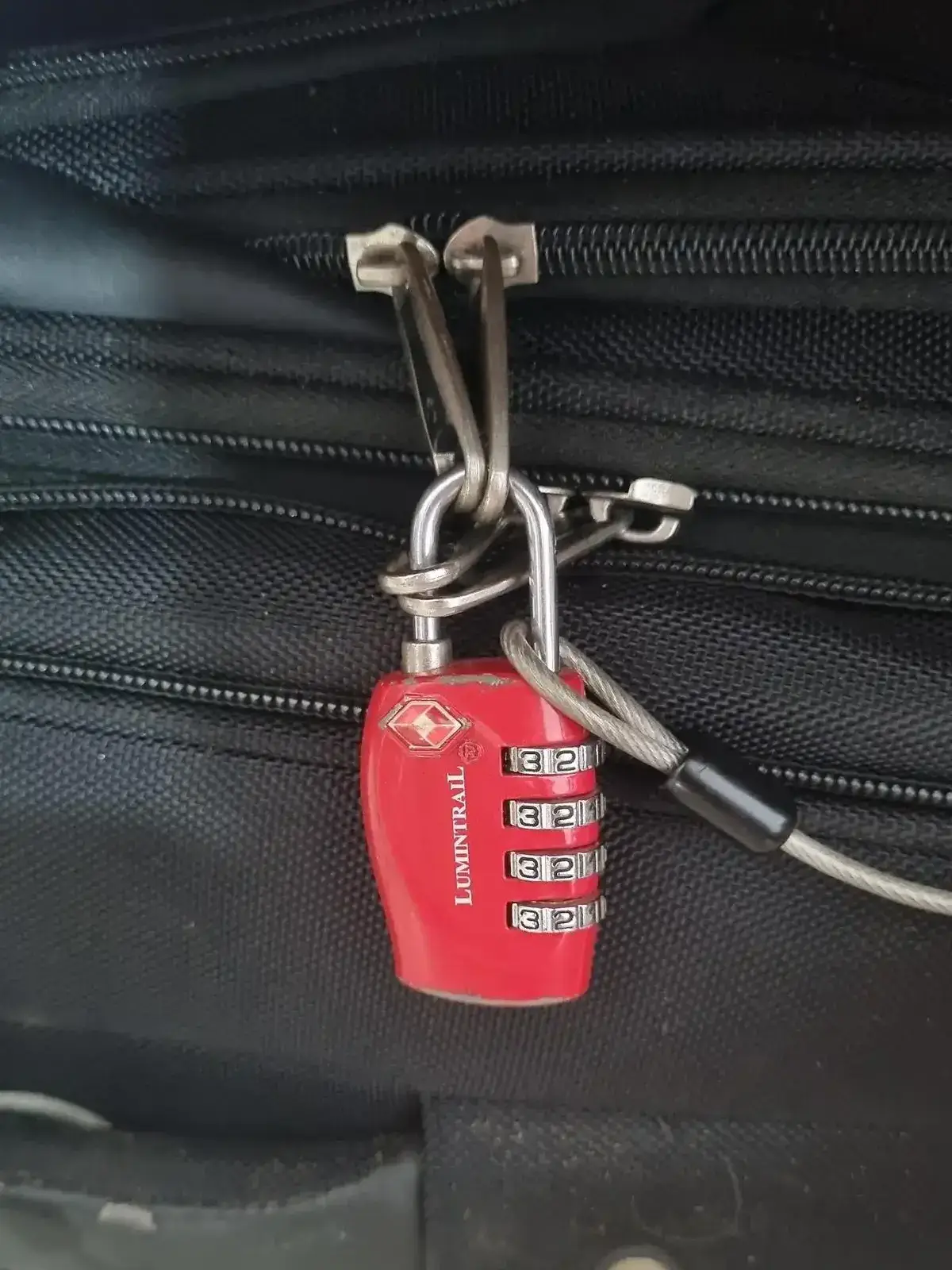
Combination Of Bags
Not just 1 bag, but spread out your stuff over 2 or 3 bags. Don’t put all your things in one basket (aka bag), as the saying goes. We provide guidance on this in the next section.
Tip
A 18L bag can be emptied and used for day trips. A good quality small-sized bag is really nice to have. See our bag recommendations, below.
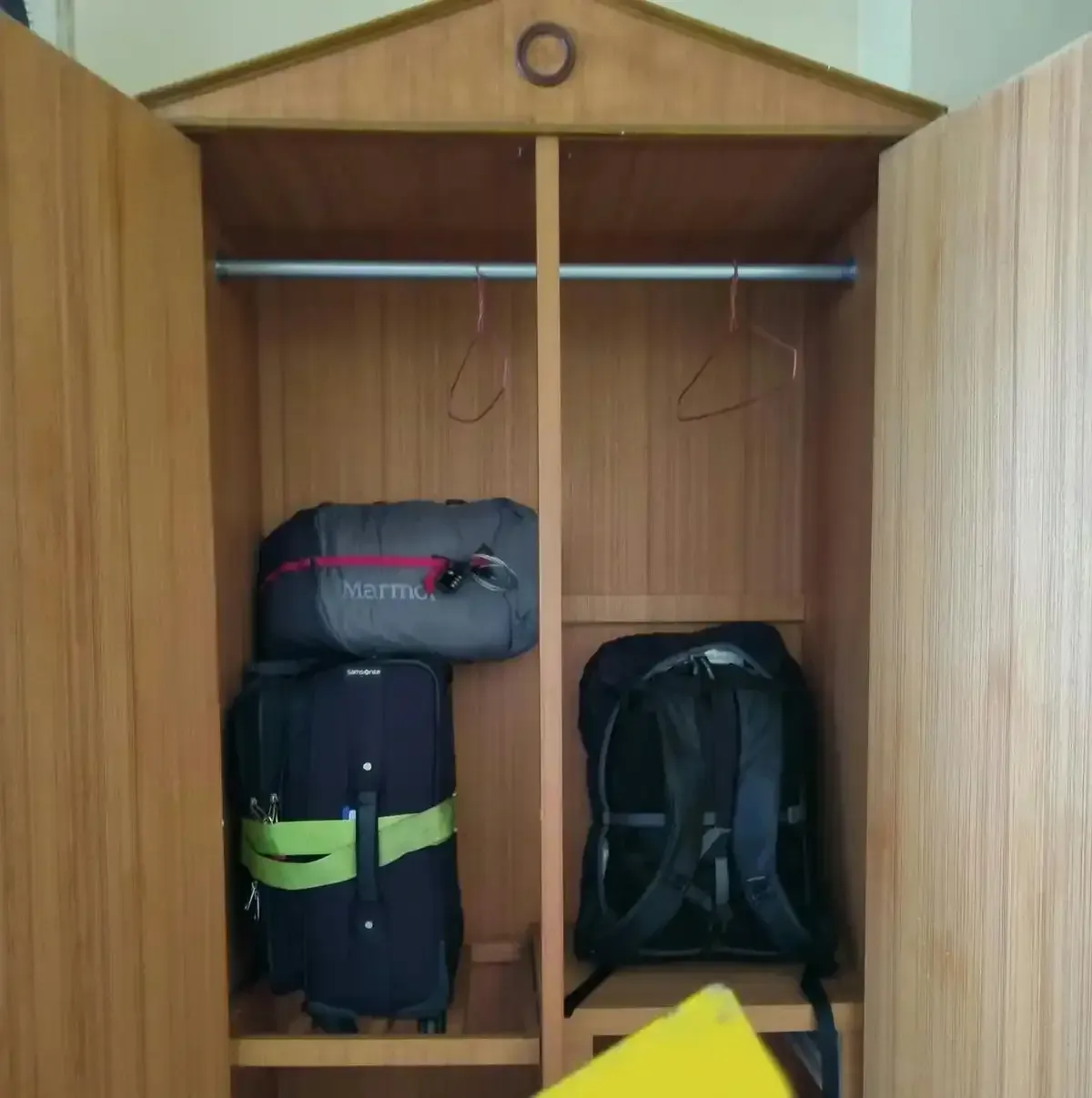
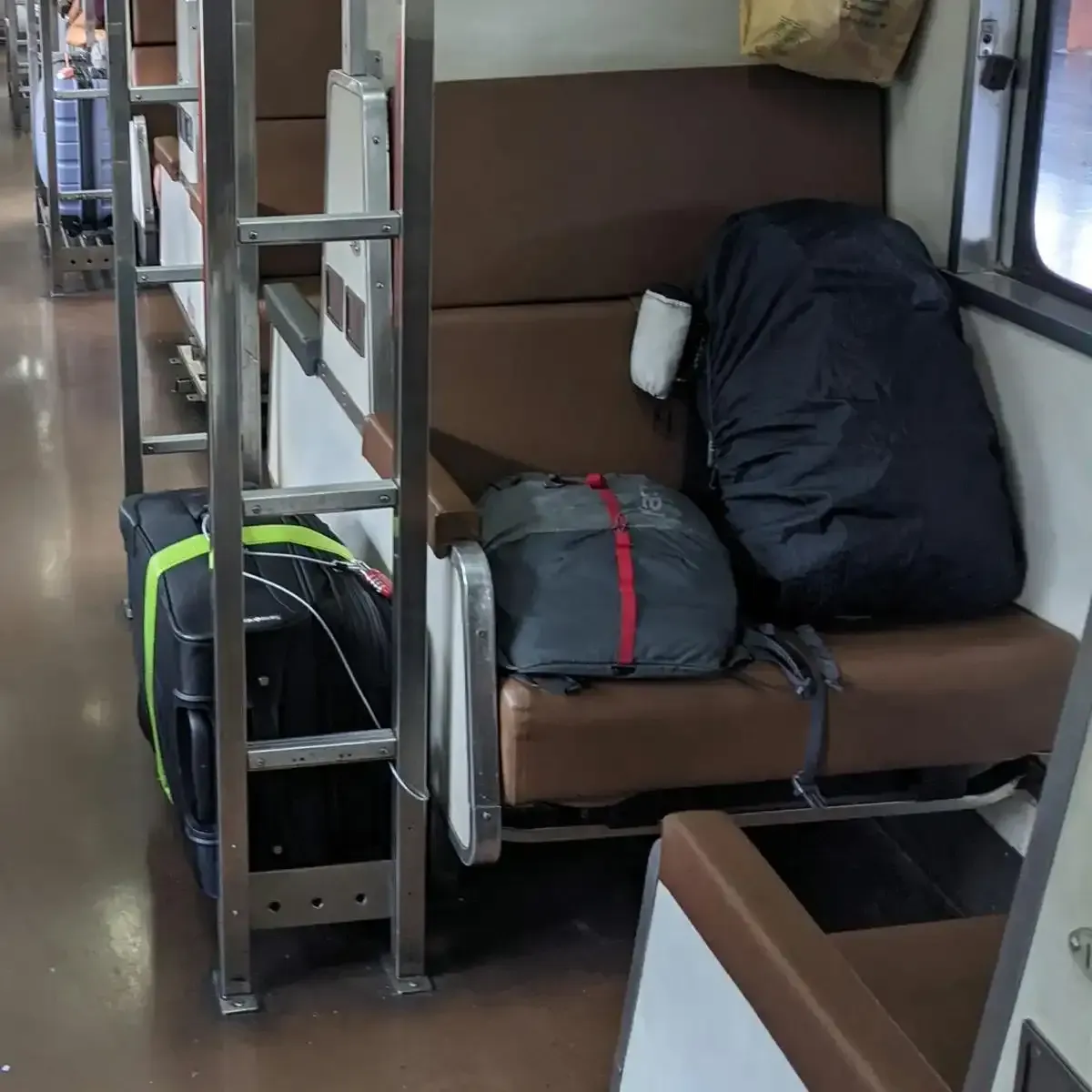
Organization
Treat each bag as if they have a different purpose (see below). And, for the most part, pack each item within the same bag each time you pack-up. Having a dedicated bag for each item prevents you from loosing it. Packing cubes and stuff sacks might help with organization, too.
Main Bag : Valuables and electronics go in here.
Day Bag (lightweight) : We found 18L – 20L bags to be a perfect size for us. We recommend not going much smaller, that way you have the space when you need it. Treat this as a supplement – anything that doesn’t fit in your main bag can go in here.
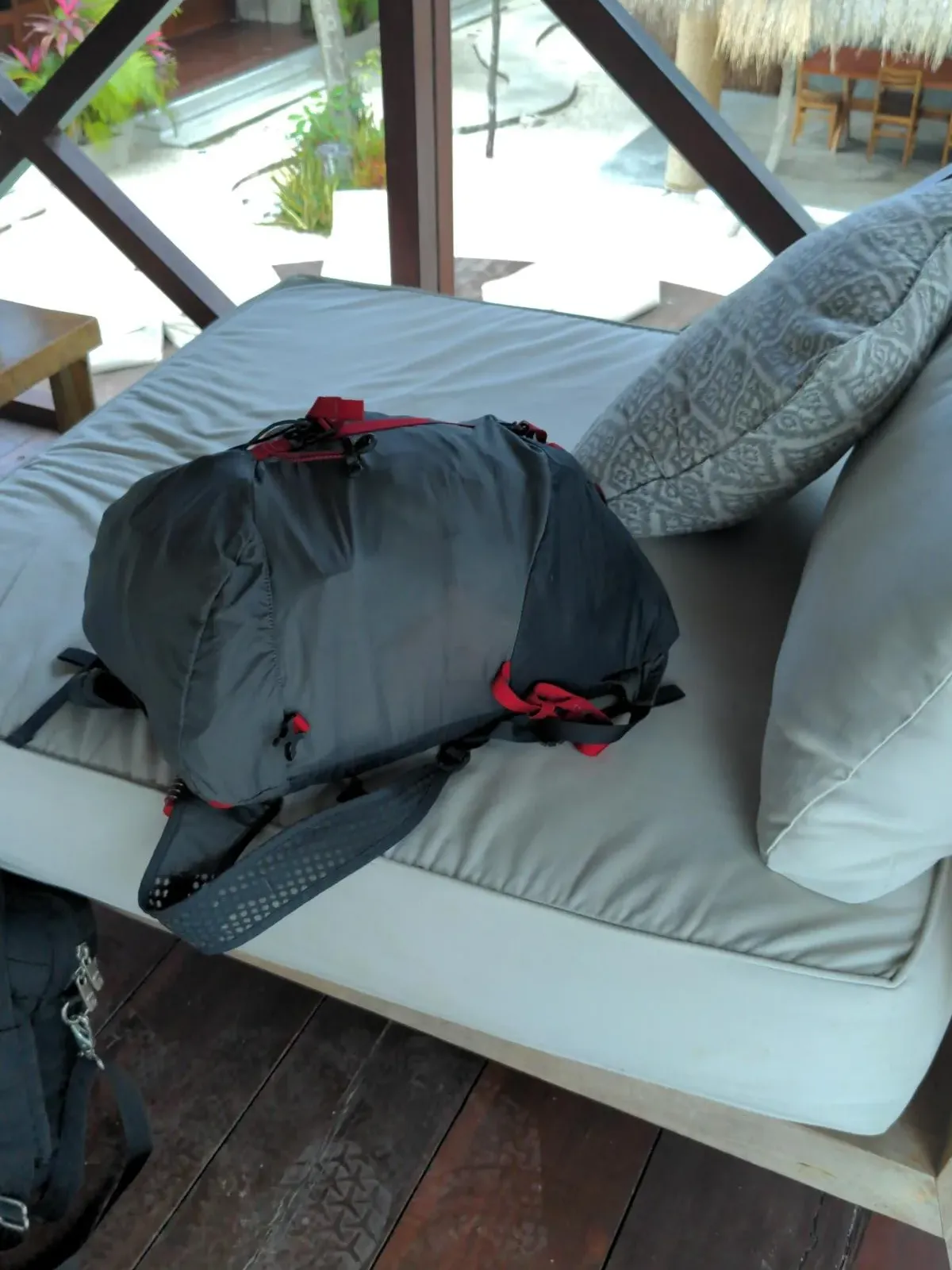
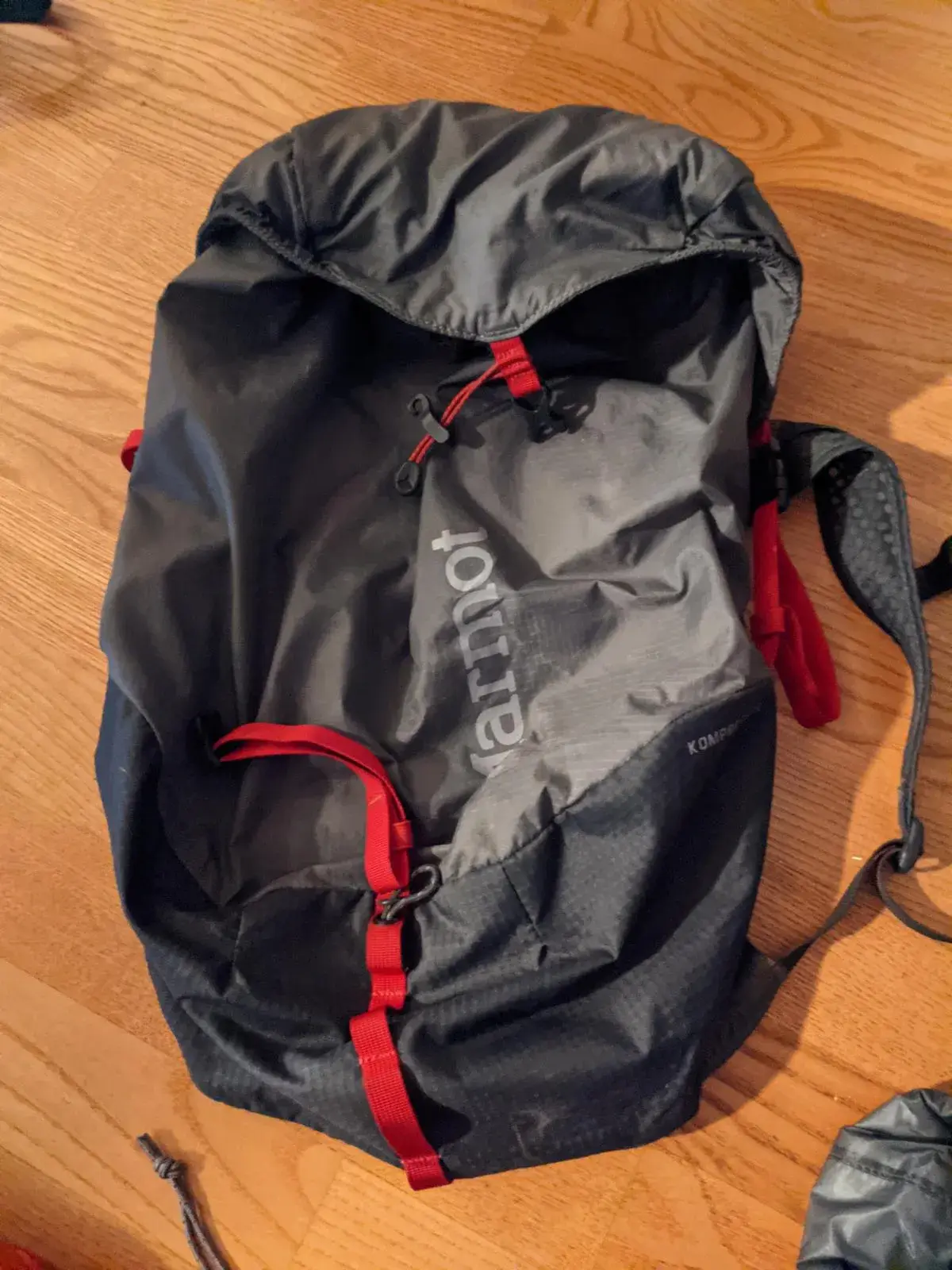
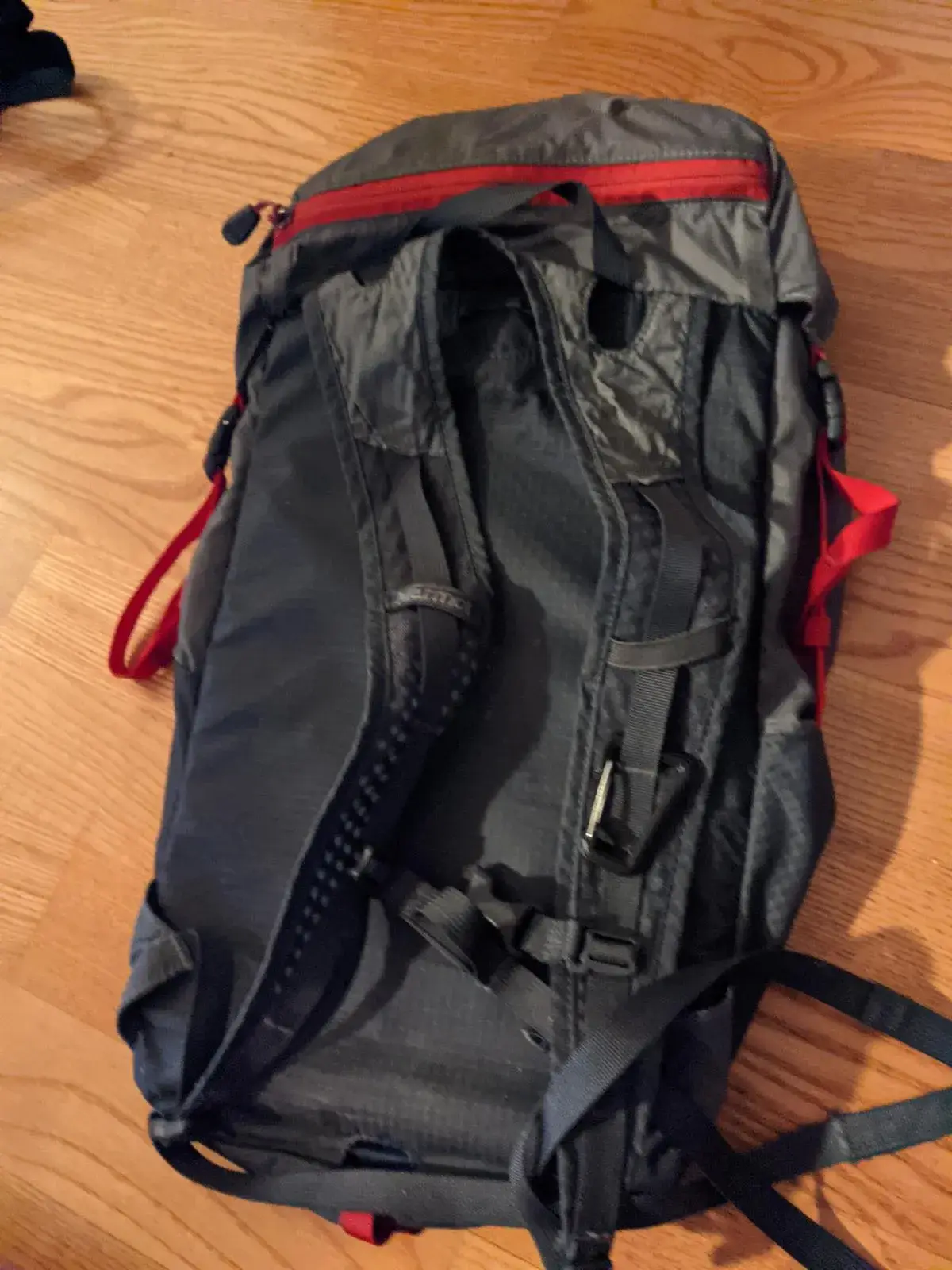
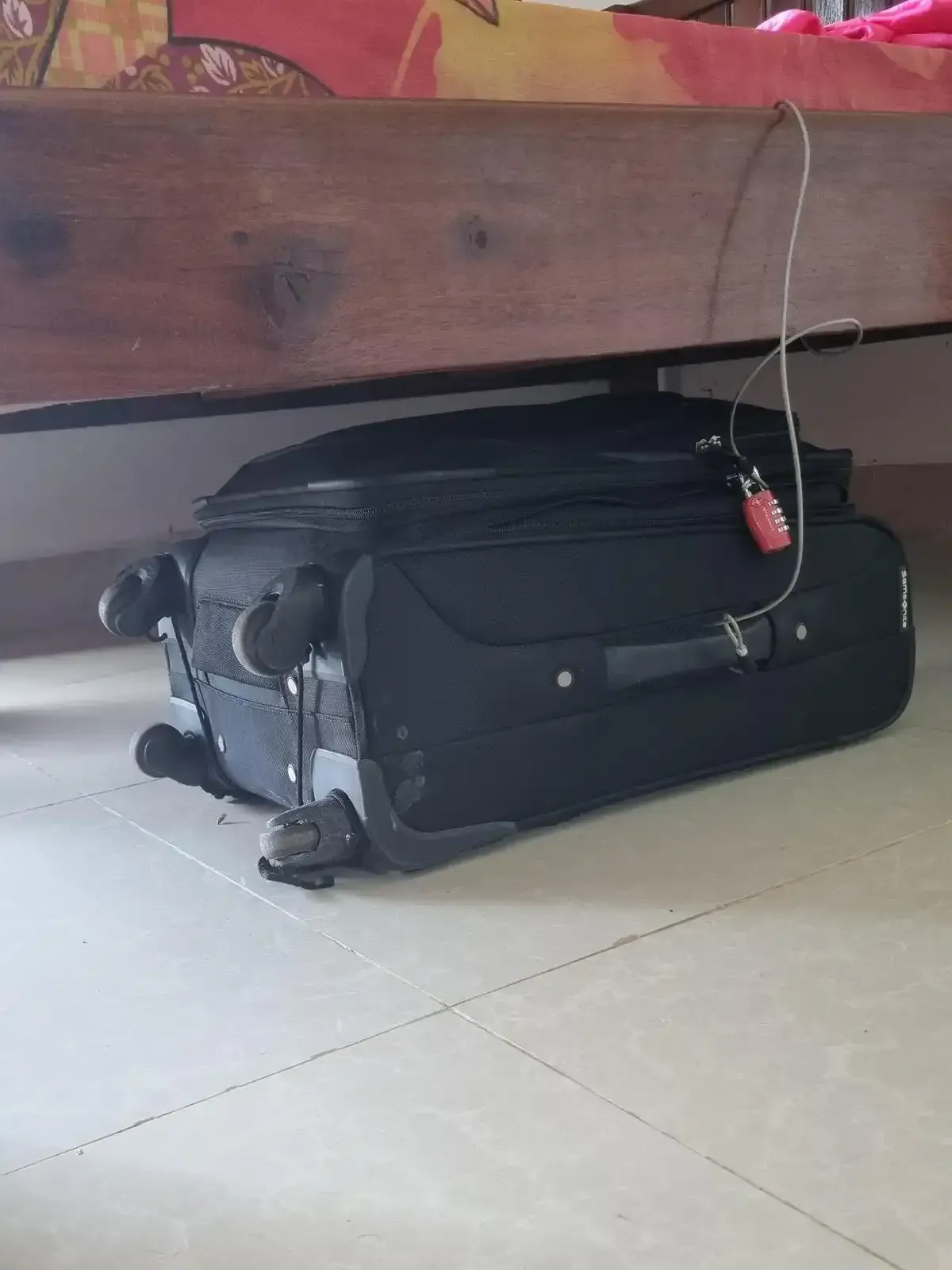
Storage Bag : A Luggage bag (not a backpack) for things you don’t use often; and to carry things around such as a towel, a French press, extra shoes, and odds & ends. This is a bag that we check-in on flights, or put under the cabin storage when on a bus.
Size Of Bag
This is more for reference – a prelude to the next section on choosing bag/bags/bag combinations.
In “Luggage Bag Sizes”, below, we have correlated luggage bag sizes from dimensions (in inches/centimeters) to volume (Liters). Thinking in terms of Liters (a spacial unit of volume) gives you perspective of the bag size, and how much you can fit in it. However, thinking in terms of weight a bag can be packed (total weight when stuffed full) makes more sense.
In “Combinations Of Luggage And Backpacks”, the next section, we correlate size (in Liters) with weight. Therefore, you can think of a bag in terms of how much weight it can hold (using estimates), which makes most sense we think.
How much can you fit inside?
Backpacks come in many sizes. They are sized in Liters (“L” for short), which is a volume unit.
Note
Liters = much stuff you can fit inside.
Luggage is sold in inches or millimeters, which are lengths used to imply volume units – they are not volumes.
Note
You will have to do the math yourself to find the volume in Liters.
-> Multiply all 3 side lengths to get a volume (in cubic millimeters, or cubic inches). Then, use google to convert that volume to Liters. You can compare this volume with backpacks, which are sized in Liters.
Backpack Sizes
Backpackers are classified by having a ‘Large backpack’, while there are many nomads who go the minimalist route (known as “one bag”) and use a ‘Medium backpack’ such as the Osprey Farpoint/Fairview 40.
| Large backpack | up to 60 L – 70 L |
| Medium backpack | 30 – 40 L |
| Medium/Small backpack | 20 – 29 L |
| Small backpack or hand bag | laptop-sized to 18 L |
Luggage Bag Sizes
| Large luggage bag | up to 125 L |
| Medium luggage bag | 35 – 45 L |
| Small luggage bag | 20 – 34 L |
Below is a list of bag sizes in Inches, correlated with their equivalent size in Liters.
Note
The below “Height:” DOES NOT INCLUDE THE WHEELS.
The height is the interior dimension of the luggage bag, not exterior and not including the wheels that stick out further*
⫻
Large luggage bag – up to 25L
| Liters | Height x Width x Depth |
|---|---|
| 125 Liters | 28.5 x 20.5 x 13 inch (72.4 x 52.1 x 33 cm) |
| 122 Liters | 28 x 20.5 x 13 inch (71.1 x 52.1 x 33 cm) |
| 105 Liters | 29 x 20 x 11 inch (73.7 x 50.8 x 28 cm) |
| 93 Liters | 29 x 14 x 14 inch (73.7 x 35.6 x 35.6 cm) |
| 85 Liters | 24 x 18 x 12 inch (61 x 45.7 x 30.5 cm) |
| 65 Liters | 19 x 21 x 10 inch (48.3 x 53.3 x 25.4 cm) |
⫻
Medium luggage bag – 35 – 45 L
| Liters | Height x Width x Depth |
|---|---|
| 45 Liters | 20 x 14 x 9.8 inch (50.8 x 35.5 x 25 cm) |
| 40 Liters | 19 x 13 x 9.5 inch 48.26 (48.3 x 34.2 x 24.1 cm) |
| 38 Liters | 19 x 14.5 x 8.5 inch (48.3 x 36.8 x 21.6 cm) |
| 35 Liters | 19 x 14 x 8 inch (48.3 x 35.6 x 20.3 cm) |
⫻
Small luggage bag – 20 – 34 L
| Liters | Height x Width x Depth |
|---|---|
| 34 Liters | 16.5 x 14 x 9 inch (42 x 35.6 x 23 cm) |
| 33 Liters | 20 x 10 x 10 inch 50.8 (50.8 x 25.4 x 25.4 cm) |
| 32 Liters | 19.5 x 13.5 x 7.5 inch (49.5 x 34.3 x 19 cm) |
| 30 Liters | 19 x 13 x 7.5 inch (48.3 x 33 x 19 cm) |
Combinations Of Luggage And Backpacks
1️⃣ Use the Charts
Below is a “Simple chart” for easy reading.
The “Detailed chart” (Chart – Choose Based On Weight) helps you choose a baggage combination to meet your weight requirements.
2️⃣ Go through the steps in “HOW TO USE [this chart] + Packing Guide“.
It might seem a bit complicated, but we promise that it will help! The steps will guide you through on how to manage your belongings by choosing the right bags to travel with.
ℹ️ Note the assumptions, below, too.
Simple Chart
⫻
Backpack(s) Only 🎒 or 🎒🎒
| Backpack: 30L – 40L | ✅electronics |
| Backpack: 18L + Backpack: 30L | ✅electronics |
| Backpack: 18L + Backpack: 40L | ✅electronics |
| Backpack: 60L | 🚫 NO electronics |
| Backpack: 18L + Backpack: 60L | ⚡some electronics |
⫻
Backpack 🎒 + Luggage 🧳
| Backpack: 18L + Luggage: 45L | ⚡some electronics |
| Backpack: 30L + Luggage: 45L | ✅electronics |
| Backpack: 40L + Luggage: 45L | ✅electronics |
⫻
2 Backpacks 🎒🎒 + Luggage 🧳
| Backpack: 18L + Backpack: 30L + Luggage: 45L | ✅elec. |
| Backpack: 18L + Backpack: 40L + Luggage: 45L | ✅elec. |
| Backpack: 18L + Backpack: 60L + Luggage: 45L | ⚡some |
⫻
Luggage Only 🧳
| Luggage: between 18 – 125L | – |
| Luggage: 40L | – |
| Luggage: 45L | – |
Note
“✅electronics” = you can put them in your bag.
“⚡some electronics” = All electronics would have to go within the small 18 L carry-on bag.
Chart – Choose Based On Weight
1️⃣ See below “EXAMPLES”.
2️⃣ Go through the steps in “HOW TO USE [this chart] + Packing Guide“.
*ASSUMPTIONS: See assumptions below under “Assumptions Of The Chart“.
⫻
Backpack(s) Only 🎒 or 🎒🎒
| 22-29 lbs (10-13 kg) | 30 to 40L | 1 bag | Backpack: 30L-40L | ✅elect. |
| 31 lbs (14 kg) | 48L | 2 bags | Backpack: 18L + Backpack: 30L | ✅elect. |
| 38 lbs (17 kg) | 58L | 2 bags | Backpack: 18L + Backpack: 40L | ✅elect. |
| 40 lbs (18 kg) | 60L | 1 bag | Backpack: 60L | 🚫 NO elect. |
| 48 lbs (22 kg) | 78L | 2 bags | Backpack: 18L + Backpack: 60L | ⚡some electronics |
⫻
Backpack 🎒 + Luggage 🧳
| 46 lbs (21 kg) | 63L | 2 bags | Backpack: 18L + Luggage: 45L | ⚡some electronics |
| 58 lbs (26 kg) | 75L | 2 bags | Backpack: 30L + Luggage: 45L | ✅electronics |
| 65 lbs (29.5 kg) | 85L | 2 bags | Backpack: 40L + Luggage: 45L | ✅electronics |
⫻
2 Backpacks 🎒🎒 + Luggage 🧳
| 66 lbs (30 kg) | 93L | 3 bags | Backpack: 18L + Backpack: 30L + Luggage: 45L | ✅electronics |
| 74 lbs (34 kg) | 103L | 3 bags | Backpack: 18L + Backpack: 40L + Luggage: 45L | ✅electronics |
| 84 lbs (38 kg) | 123L | 3 bags | Backpack: 18L + Backpack: 60L + Luggage: 45L | ⚡some electronics |
⫻
Luggage Only 🧳
| 20-98 lbs (9-45 kg) | 25 to 125L | 1 bag | Luggage: between 18L-125L | – |
| 32 lbs (14.5 kg) | 40L | 1 bag | Luggage: 40L | – |
| 36 lbs (16.5 kg) | 45L | 1 bag | Luggage: 45L | – |
Note
“✅electronics” = you can put them in your bag.
“⚡some electronics” = All electronics would have to go within the small 18 L carry-on bag.
⫻
EXAMPLE #1:
If the weight is 45 pounds (20.5 kg), then you could choose anything larger than 45 pounds.
Note
Going with 40L bag you could carry-on and it would remain in your possession(for airline flights).
However, a 60L backpack would mean that you have to check it in (for airline flights).
Another choice would be one the below (not fully packed).
⫻
EXAMPLE #2:
If the weight is 70 pounds (31.8 kg), then you could choose:
Note
Going with 40L bag you could carry-on and it would remain in your possession(for airline flights).
However, a 60L backpack would mean that you have to check it in (for airline flights).
You could also go with the two combinations, together.
HOW TO USE + Packing Guide
Basically, weigh your stuff, then use the above chart to choose a bag combination.
The chart weights are ‘close-enough‘ estimates, so you’ll have to confirm by seeing what fits in your bag and then measure the total weight to confirm.
Weight -> Bag Combination -> Packing Process
Tip
Know what you want to take, first. Then, buy your bags after.
This way you can take the bags back if they don’t suit your needs, and buy one that is larger/smaller. Or, you can take less stuff.
For living abroad long-term, packing is an iterative process.
[Step 1️⃣]
ITEM LIST + WEIGHT
Start by listing everything you want to take, and weigh it. This is your total weight.
[Step 2️⃣]
BAGGAGE COMBINATION
Based on this weight, choose among the baggage combinations. These are presented in max weight. Note that it’s fine to have a bag that is larger than you need and not stuffed completely full. Also, you might choose a different baggage combination due to leaving some things behind.
[Step 3️⃣]
CONSTRAINTS – Know Them
(1) You can only carry so much weight, physically. With multiple bags, a total weight of 65-70 lbs (29.5 to 32 kgs) is manageable – not easy, but manageable. That’s 35 lbs (16 kgs) in a backpack, and 36 lbs in a luggage bag. Going over that total weight becomes much harder to carry around.
(2) You are limited by how big your carry-on bag is. If you cannot fit things inside, then you can’t take it.
(3) Carry-on weight: The majority of flights within SE Asia (and between countries in SE Asia) only allow 15 pounds (7 kg) of carry-on in cabin baggage weight. Although, Air Asia allows you to purchase an extra 7 kg (for a total of 14 kg or 31 pounds). We only fly Air Asia for this reason – it is preferrable and cheaper to have our bags with us in the cabin, not in storage below. We want our valuables and electronics in our possession at all time, never out of sight.
Note
Good news. The weight concern is only for flights. ✈️
✅ Busses 🚐 and trains 🚄 do not care about how heavy your bags are in Southeast Asia!
[Step 4️⃣]
LABEL
Label each item as “needed” or “want”. This makes the distinction between ‘must have’ and ‘wish to take’. Keep in mind, that you might have to leave some things behind – can’t take it all. Packing will be an iterative process. Oh, and some things you can buy in SE Asia and leave behind when you leave.
[Step 5️⃣]
ALLOCATE
Allocate your grouped items to each bag. Do not add in “want” items, yet. Start with electronics, valuables, and “needed” items. Electronics & valuables must be carry-on, thus grouped together. Plus, it is best to keep these in your possession when on a bus/train/and flight. That means, bringing them on board with you (must be carry-on size, not too large). On busses, we prefer to have our carry-on on our lap, or resting on the floor between our legs. Trains have plenty of overhead space, but busses do not. *Put locks on your bag zippers to prevent theft*
[Step 6️⃣]
BAG WEIGHT
Sum up the weight for each bag.
[Step 7️⃣]
BALANCING ACT
Do you meet the weight requirement? Can that bag fit everything you put in it?
If “no”, then you’ll need to (1) decide what not to take with you, (2) put some items in a different bag, (3) get a larger bag, and/or (4) choose a different baggage combination.
Add in “want” items as necessary, if you have space/weight.
Tip
Bag not big enough? Don’t get a bigger bag, extend it!
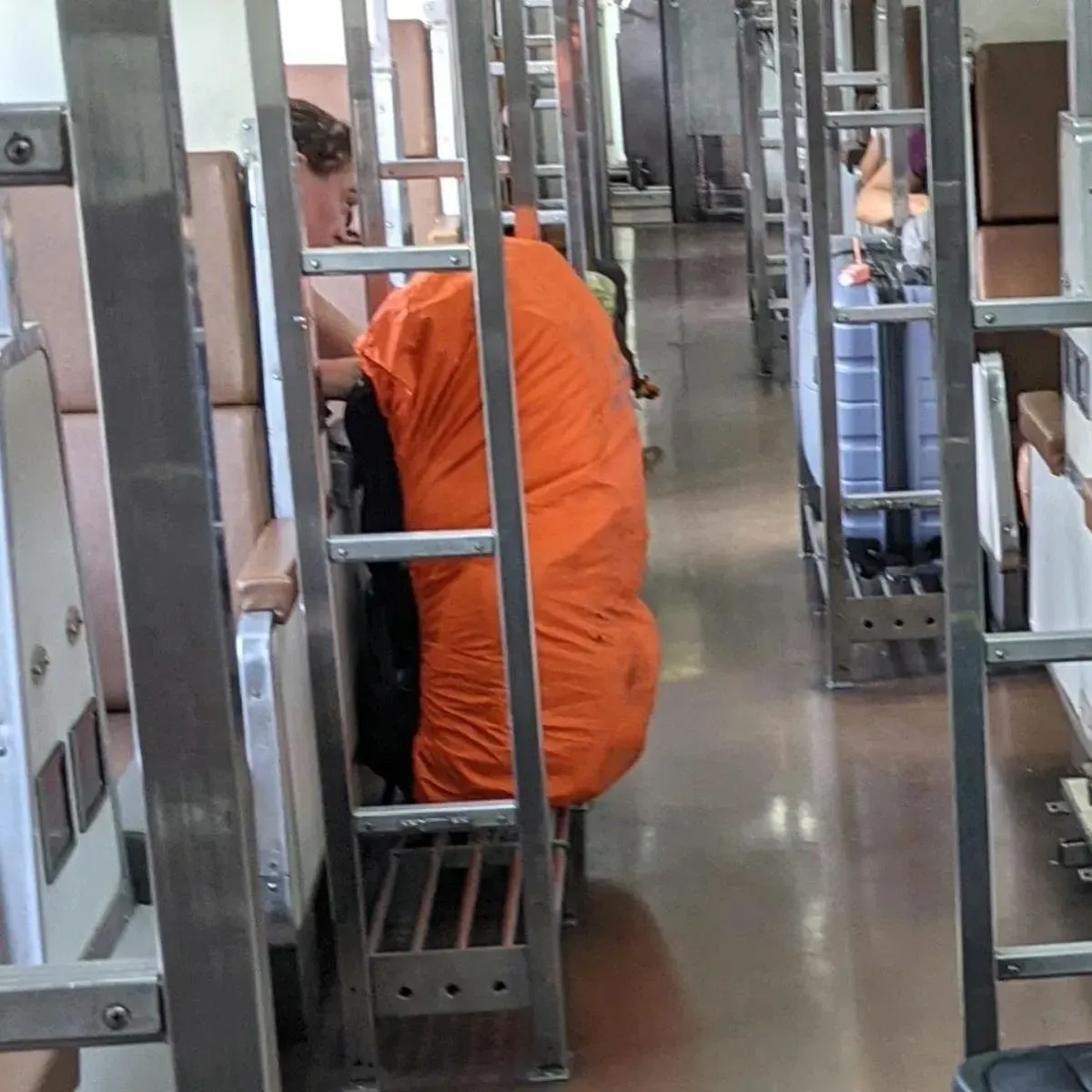
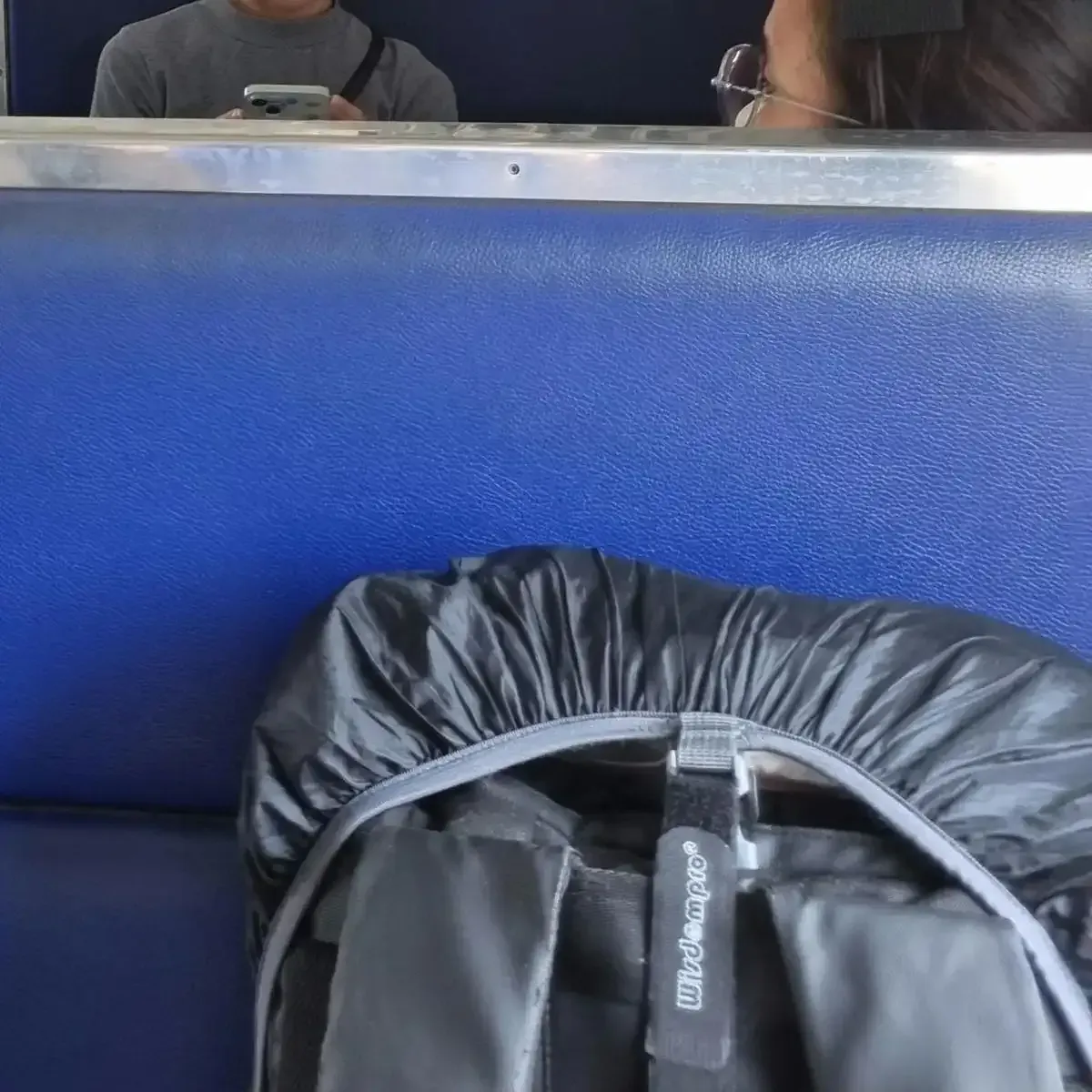
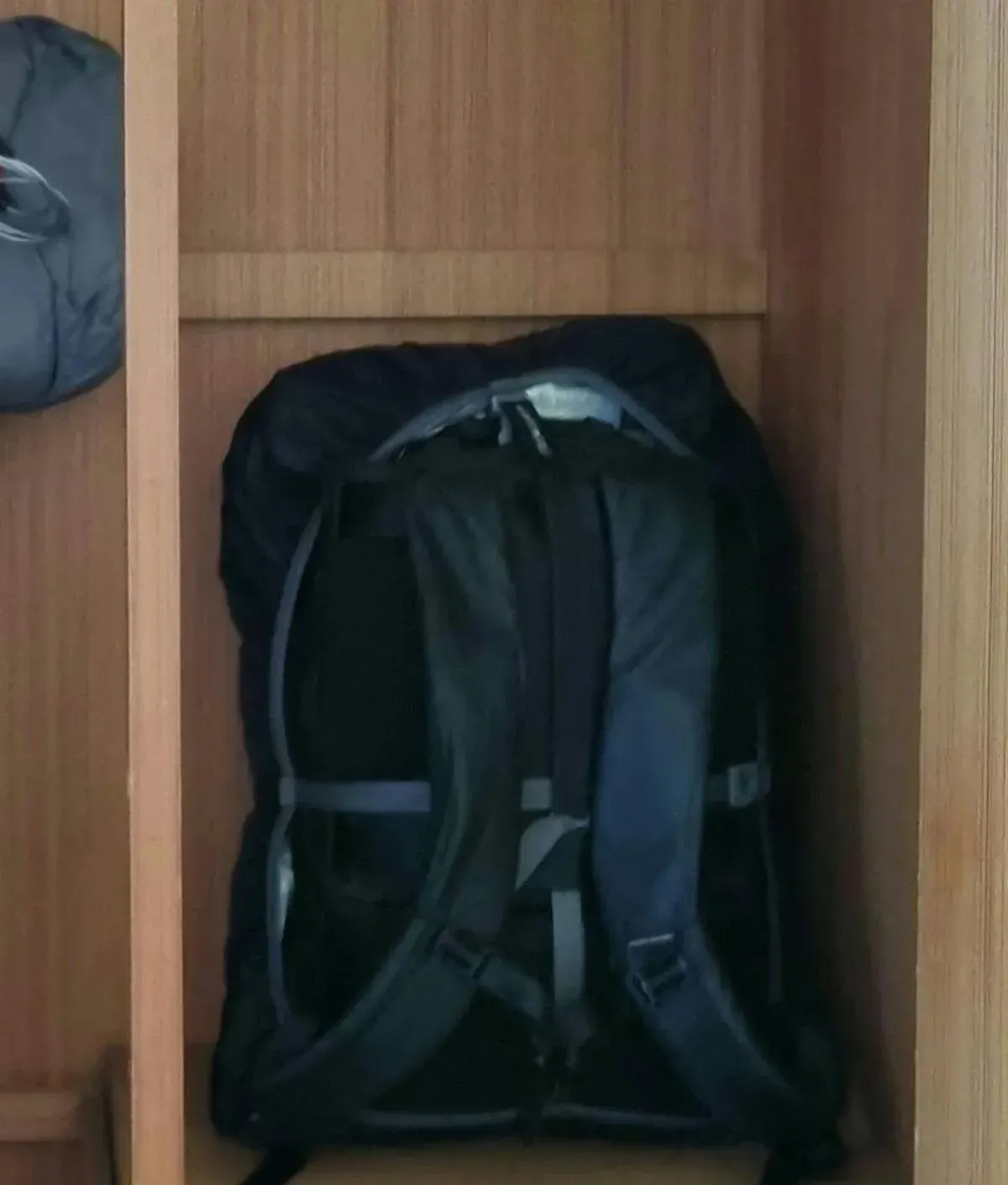
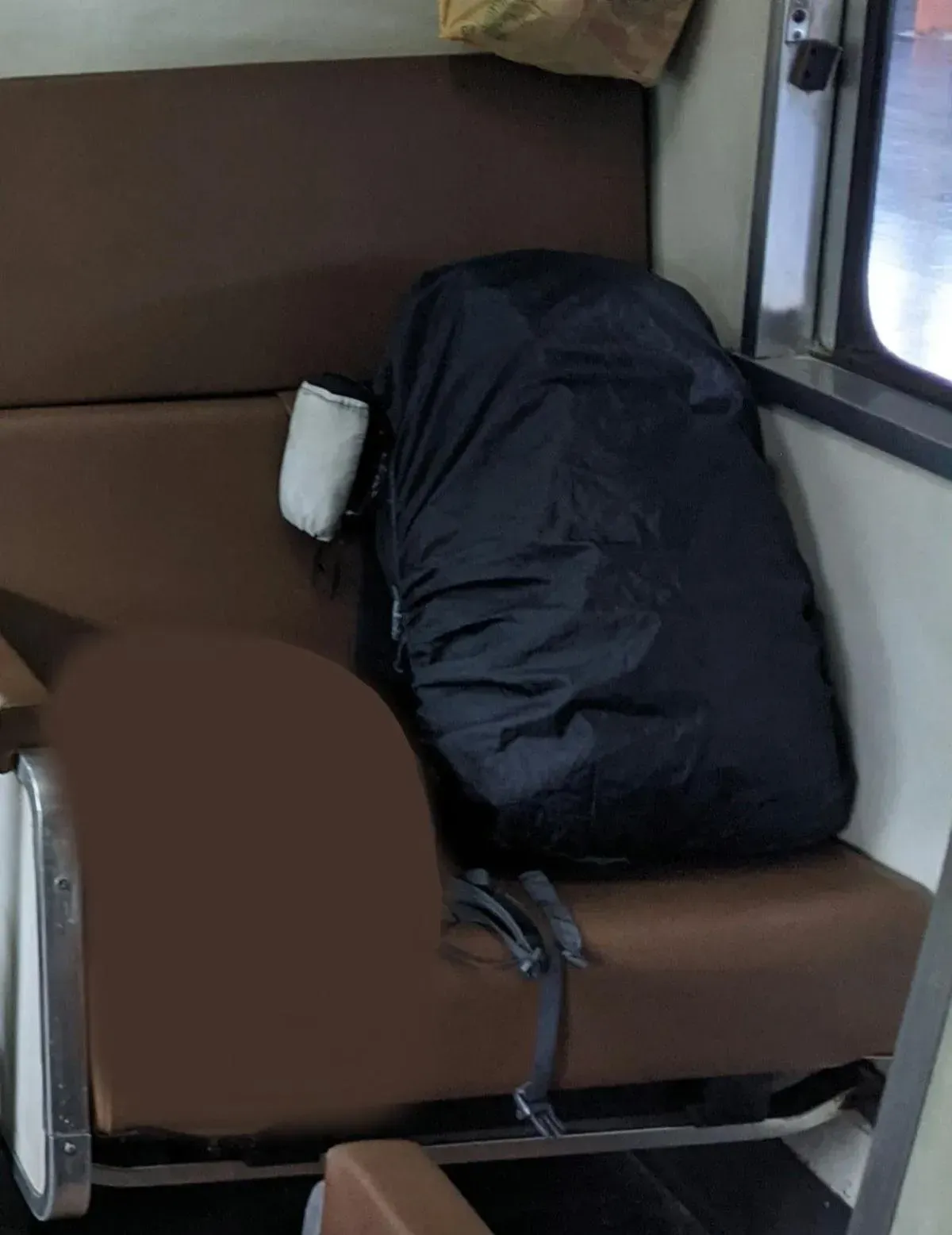
Here’s how —> Use a rain cover + stuff things in between the bag and rain cover for extra storage space. BONUS: a rain cover keeps things safe, dry, and clean.
[Step 8️⃣]
BALANCING ACT – Extra #1
Play around with packing. Arranging items in different ways and different pockets can help obtain a better fit.
[Step 9️⃣]
BALANCING ACT – Extra #2
Is there any lightweight gear that you can buy to replace the heavier item, saving weight?
Assumptions Of The Chart
Electronics
Weight
Weight densities used are based on:
Bag Recommendations
Based on our experience, a 30 Liter main backpack (full) + a 18L extra backpack (full or not) will cover most of what you need – 48L total. Bump the main backpack up to 40L, if needed – 58L total.
Anything between 20-25 L might be too small as a main backpack.
Medium-sized Backpacks
GemsOfTravel suggests 1 of the following 2 medium-sized backpacks:
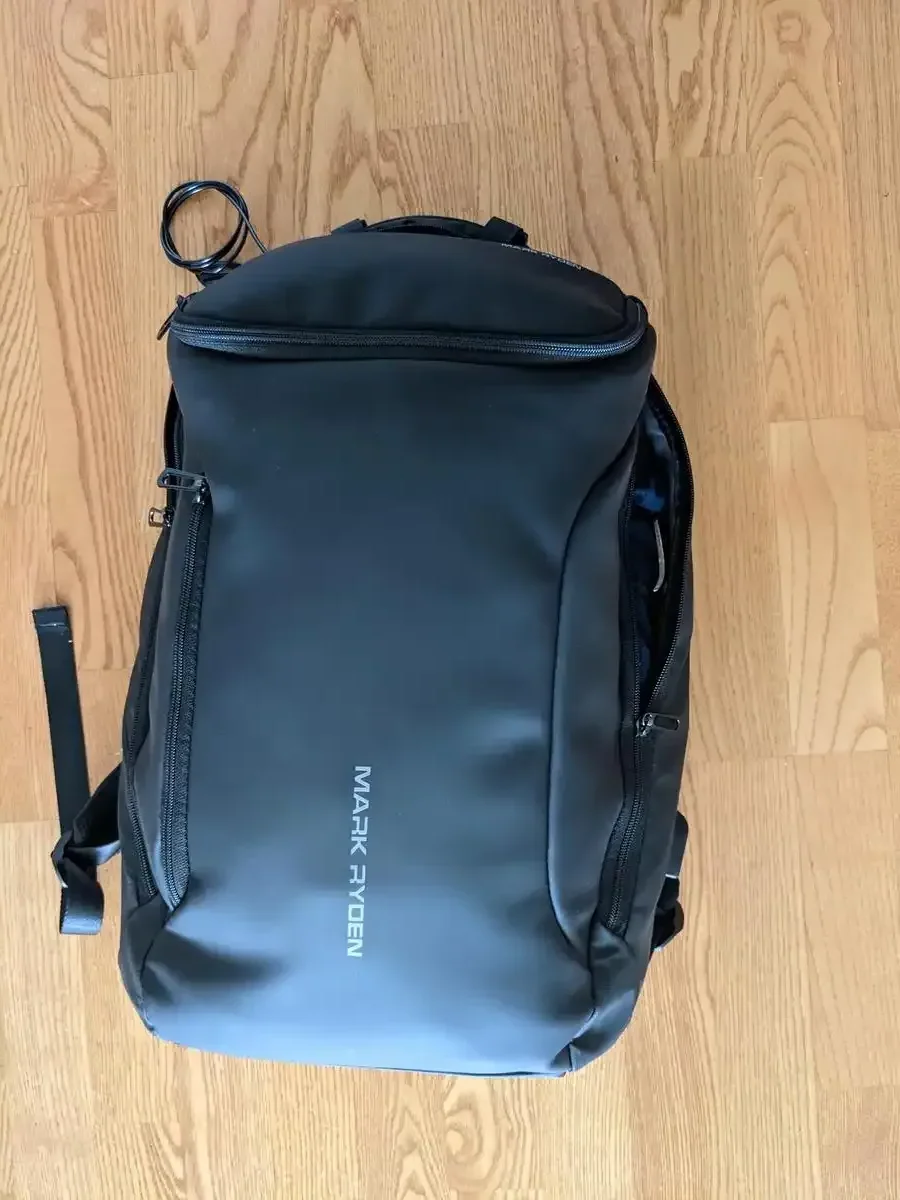
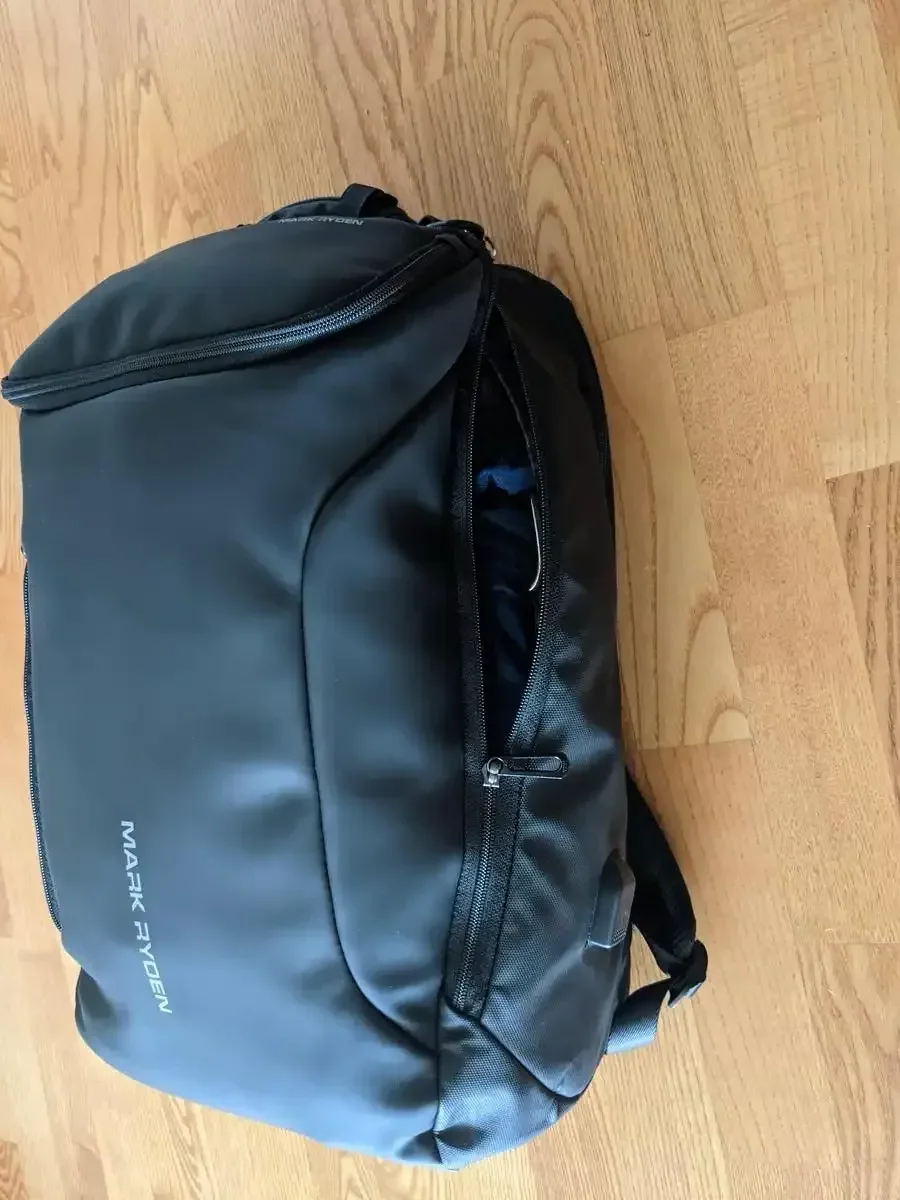
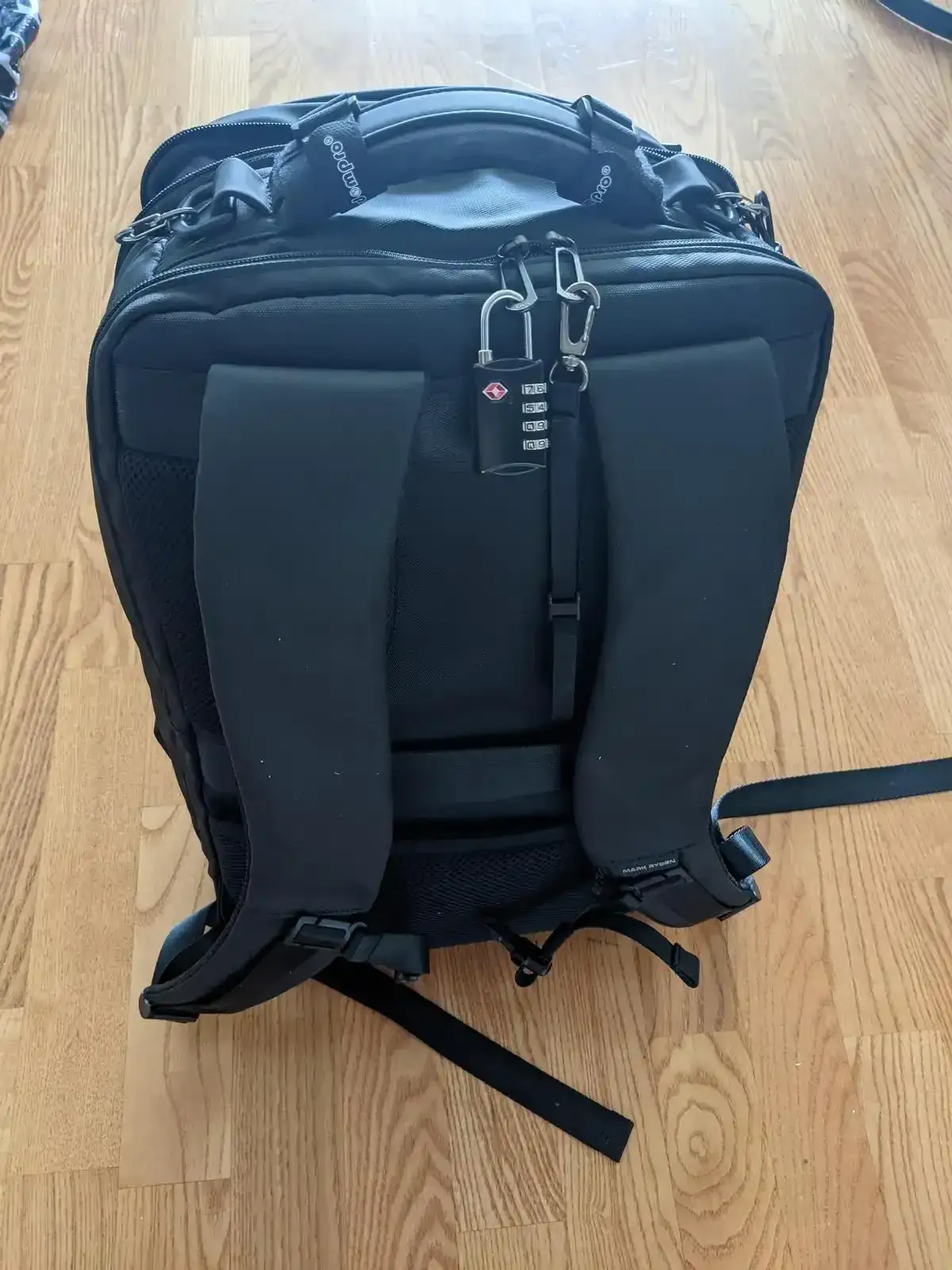
The Mark Ryden Navarro/Voyager (3 pocket version) is a strong competitor to the nomad-famous Osprey Farpoint/Fairview 40.
GemsOfTravel has used the Mark Ryden bag (3 pocket version) for several years. It works great, but the 30 Liter bag has been barely large enough for us. Due to need and convenience, we have gained extra space by extending it using a rain cover + velocro straps to hold the cover on tight. Yes, we’ve been tempted to get the larger Osprey bag, but never had a reason to.
Small-sized Backpacks
GemsOfTravel really likes the Marmot Kompressor 18 (a 18L ultra lightweight backpack).
Unfortunately, they don’t seem to make it anymore 😪.
After researching, the Quechua MH100 20L (a Decathlon brand) is what we’d choose as a replacement. We’d re-buy the Kompressor 18 if we could, though. Checkout this review for the Quechua MH100 20L.
Decathlon is a sporting goods store located all over Southeast Asia/Europe/South America. That’s not why we’d choose their backpack. We choose the Quechua MH100 20L because (1) the price is good (some bags can be upwards of $80-120 USD), (2) it is most similar to our beloved Marmot bag, plus (3) it has a few extra features and pockets.
Here’s why we love the Marmot Kompressor 18.
We feel it’s been the perfect day bag!
Replacement Bags
Note
First, we’d try and get one off of eBay, or hopefully find something similar if we could (REI used to make a very similar one). If we couldn’t find one we’d cry for a bit, and then move on. Sorrow is a real thing, ya know.
Here are the bags, in order, that GemsOfTravel would buy if we couldn’t get a new Marmot Kompressor 18.
Where To Buy
Obviously, you need bag(s) before you leave your home country, so that is where you’ll need to buy them. However, you can always re-purchases them in Southeast Asia.
Backpacks – Buying In USA & SE Asia
Some backpacks you can rebuy in SE Asia, but maybe with less selection than your home country, and with a markup in price due to imports. There are lower quality knock-offs, and real imported ones. It really depends on you and your needs.
Buying in USA:
Buying in SE Asia:
Luggage – Buying In USA & SE Asia
Buying in USA : You should know, discount stores have amazing prices (1/3 of retail price) for high-quality luggage from name brands. Discount stores include: TJMaxx, Marshalls, Burlington, and Ross Dress For Less. Luggage stores like Samsonite and Tumi are a well-known choice.
Buying in SE Asia : You can buy luggage easily and cheaply in SE Asia. Don’t worry about that. New, good-quality, luggage seems to be sold everywhere for around $30 USD – at the grocery store, random mom & pop stores, the mall, and more. Both stores, Samsonite and Tumi, have many locations within SE Asia. So, if you want to go with those brands, you can.