FRUIT Paradise! (Juicy, Delicious, FRESH & CHEAP)

Bookmark:

Fresh fruit everywhere, harvested daily!  You have a wide range of options to choose from.  It’s refreshing, healthy and natural, and cheap.

There will be many fruits you have never knew existed – give them a try.

Take advantage of the opportunity to try the fruits.  They taste better than the West, where they have to import their fruit from tropical countries.  And, the farming practices in SE Asia are much more natural and less corporatized.
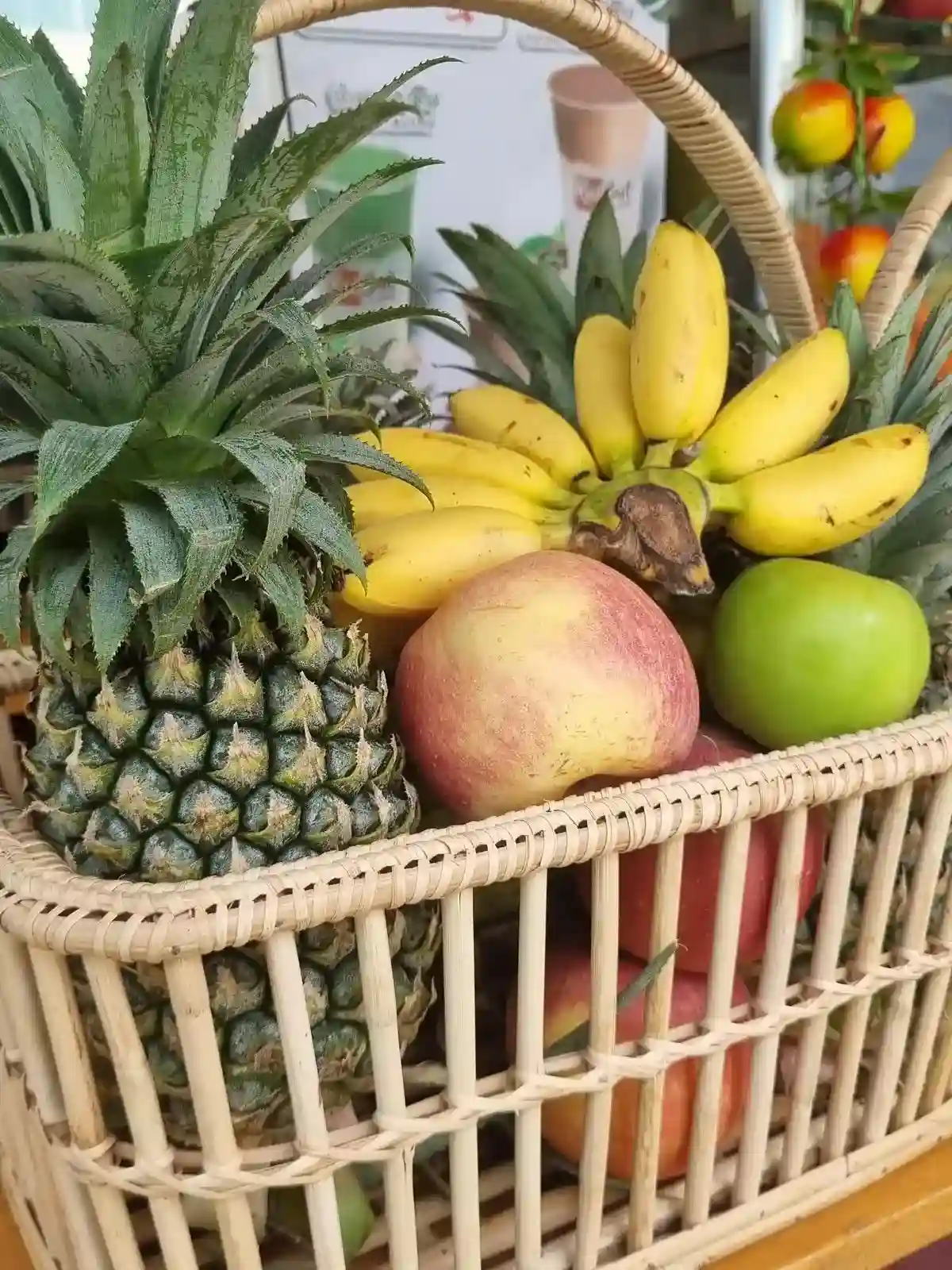
A basket of fruit at a café in Southeast Asia, which is used to make fruit smoothies. Inside is a pineaple, three red apples, one green apple, and a set of eight bananas. The bananas are a strain that are small, about the length of a finger.
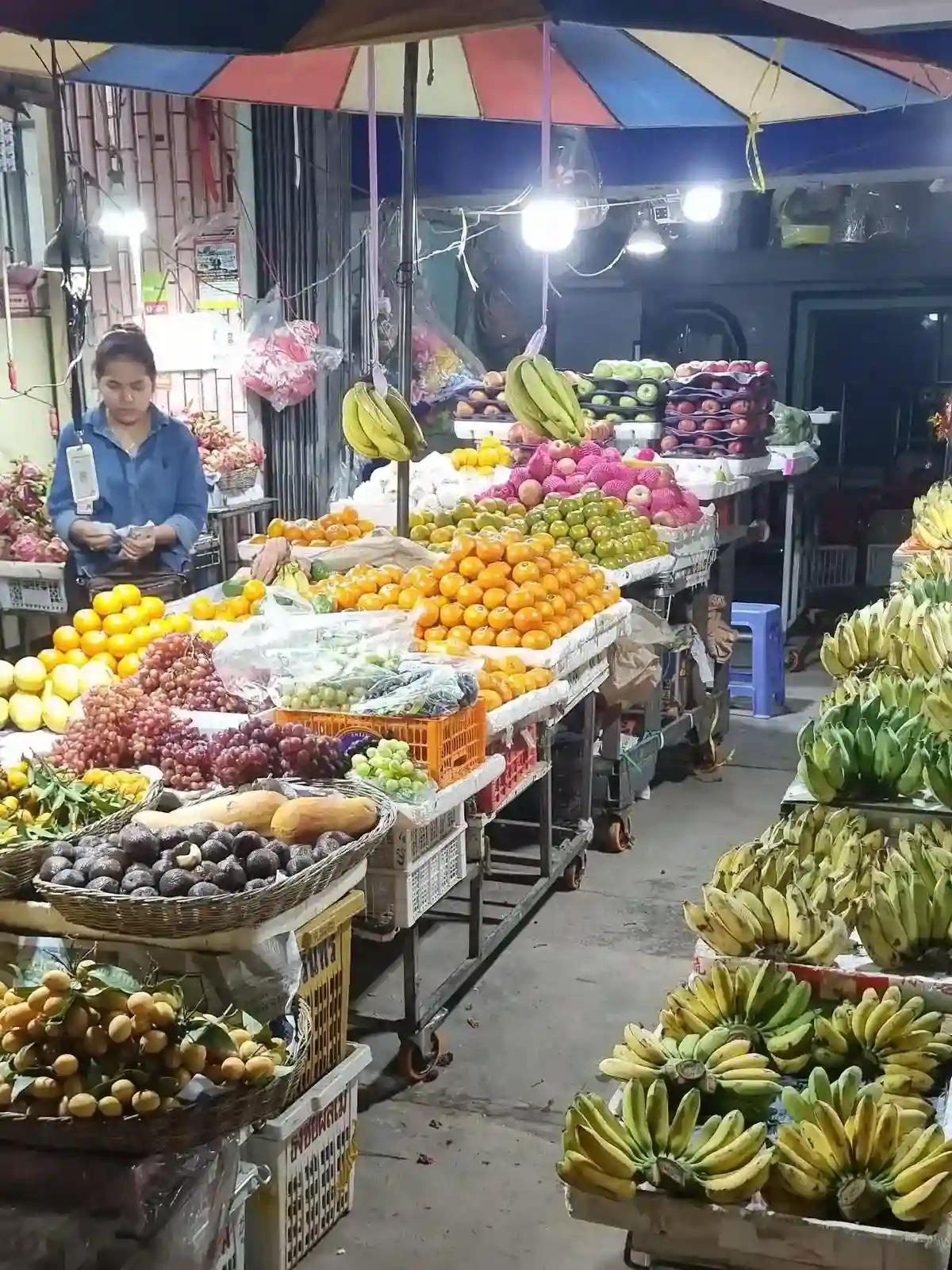
A stall in Southeast Asia selling a variety of fruit. Bananas, passion fruit, dragon fruit, oranges, green and purple grapes, and apples are sold here. The stall is partially outdoors with an umbrella over the fruit. A seller is standing around waiting for customers.
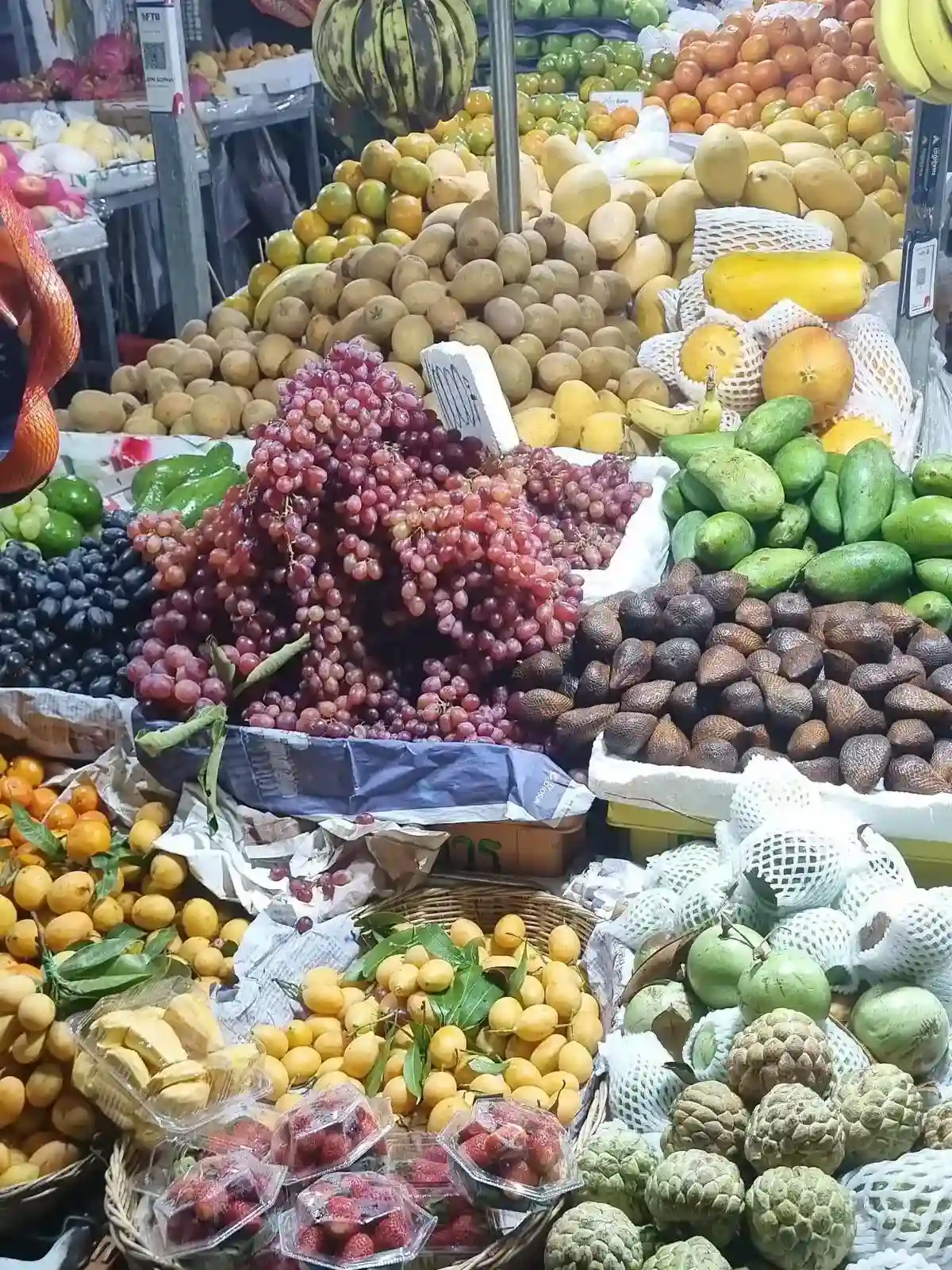
A close up image of various fruit being sold at a stall in Southeast Asia. Jack fruit, mangos, passion fruit, oranges, purple and dark purple grapes, bananas, and more are sold here.

Fruits

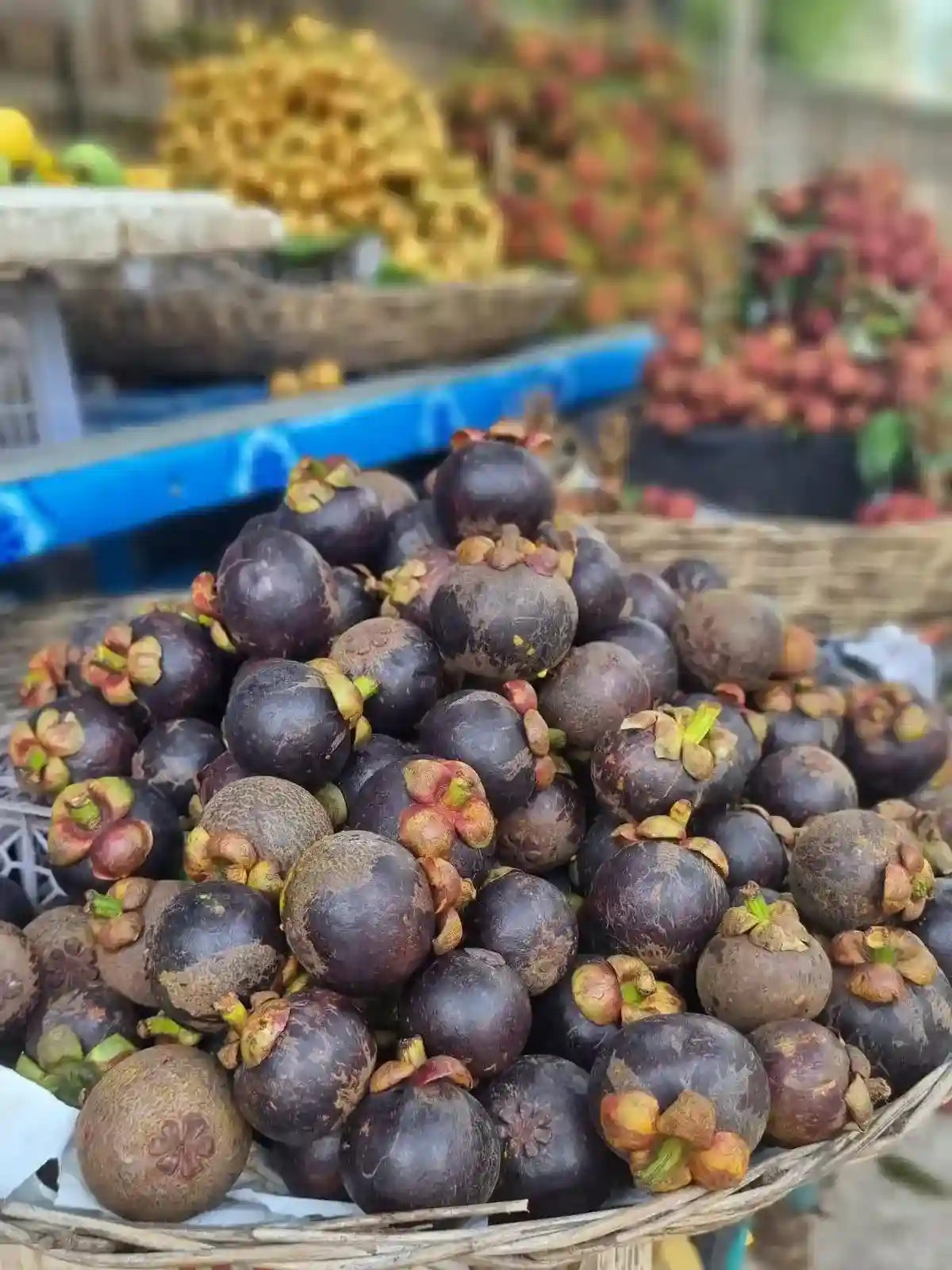
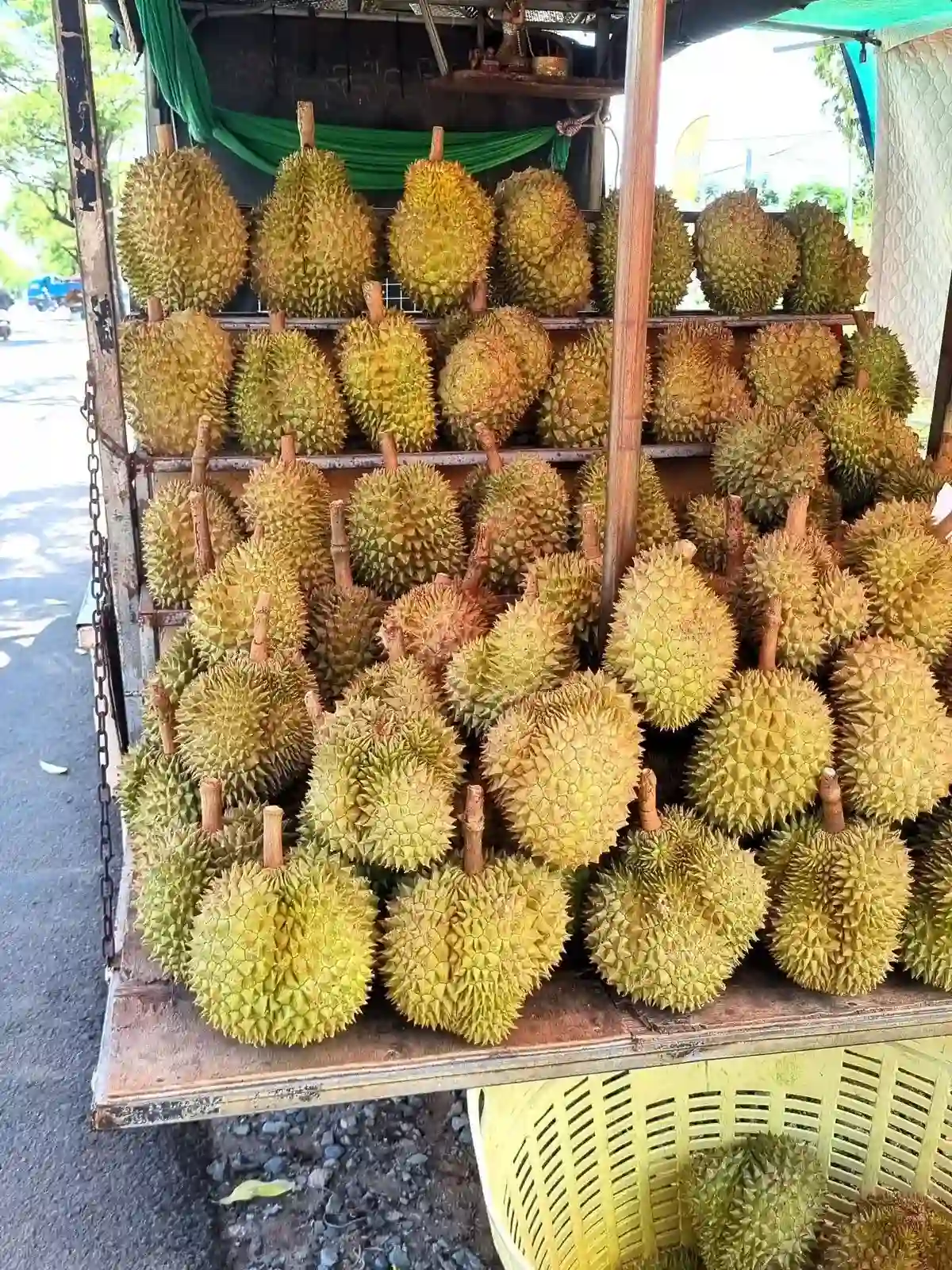
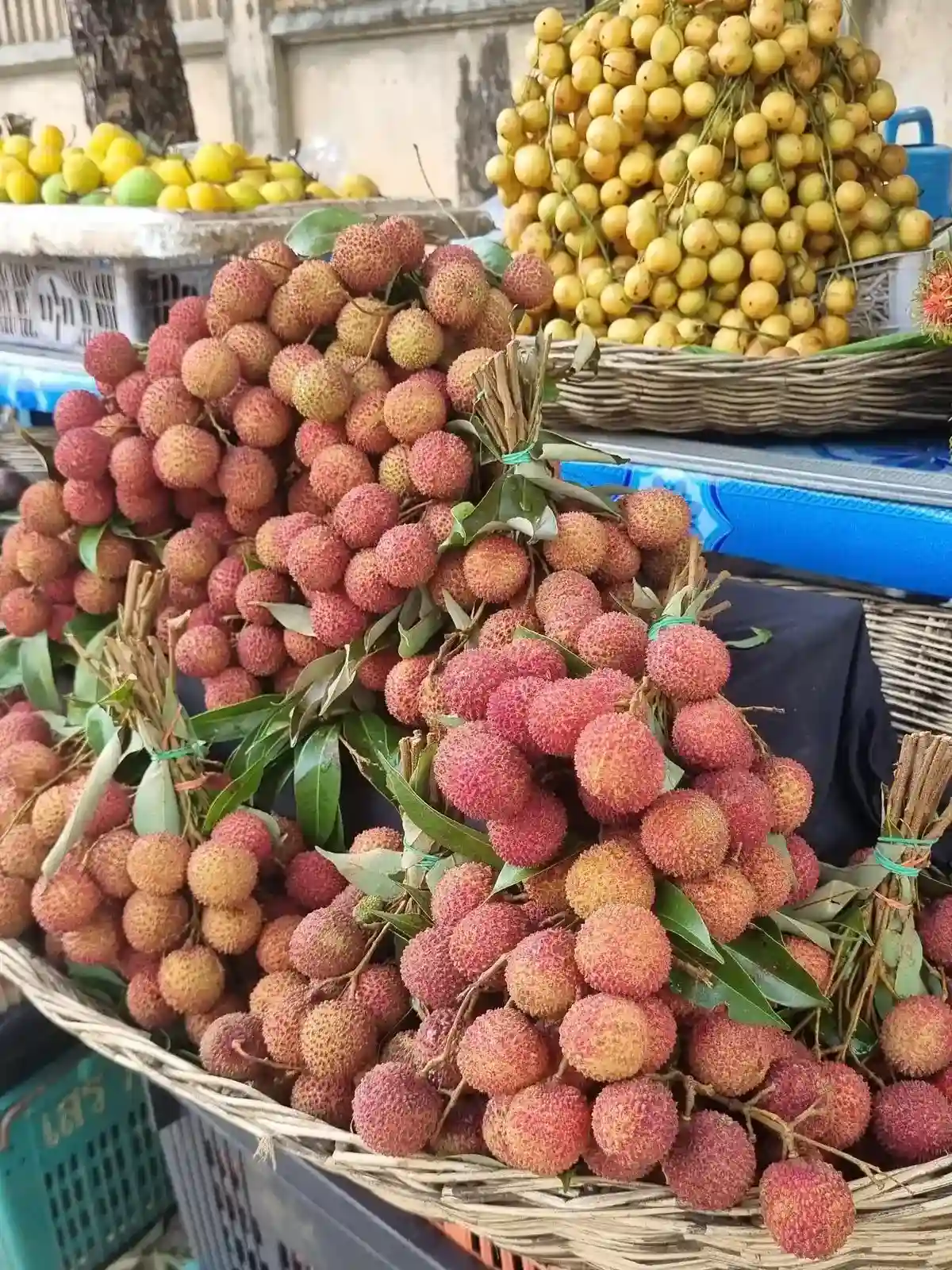
Try exotic fruit such as durian, mangosteen (not to be confused with mango), mango, rambutan, pulasan, dragon fruit winter melon, papaya, jack fruit, and various bananas.
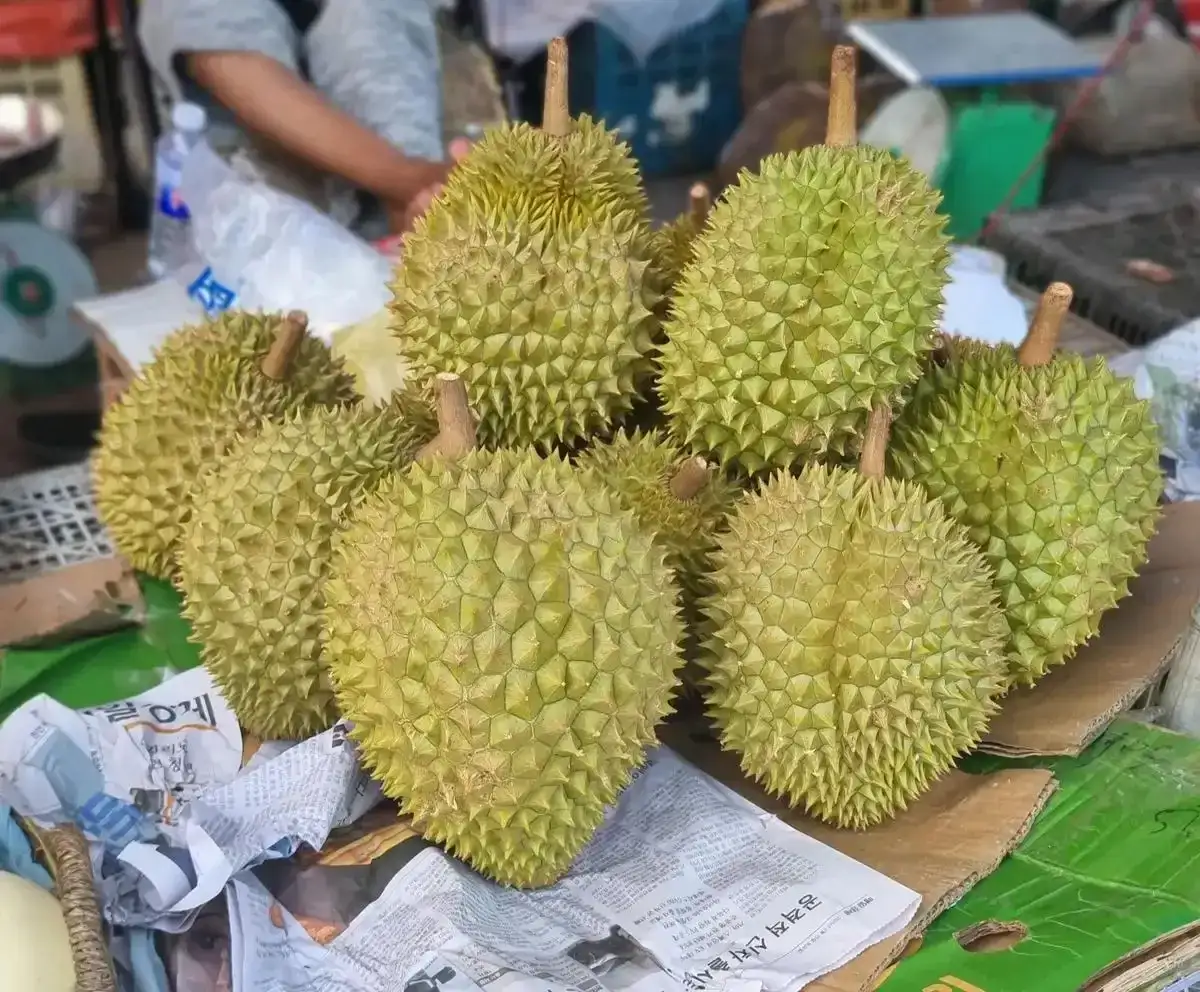
Durian. A group of about twelve unopened durians on a table. Durian have sharp spikes covering it's hard outer shell, protecting the fruit inside. Their size is about the size of a soccerball, but are more oval shaped than round.
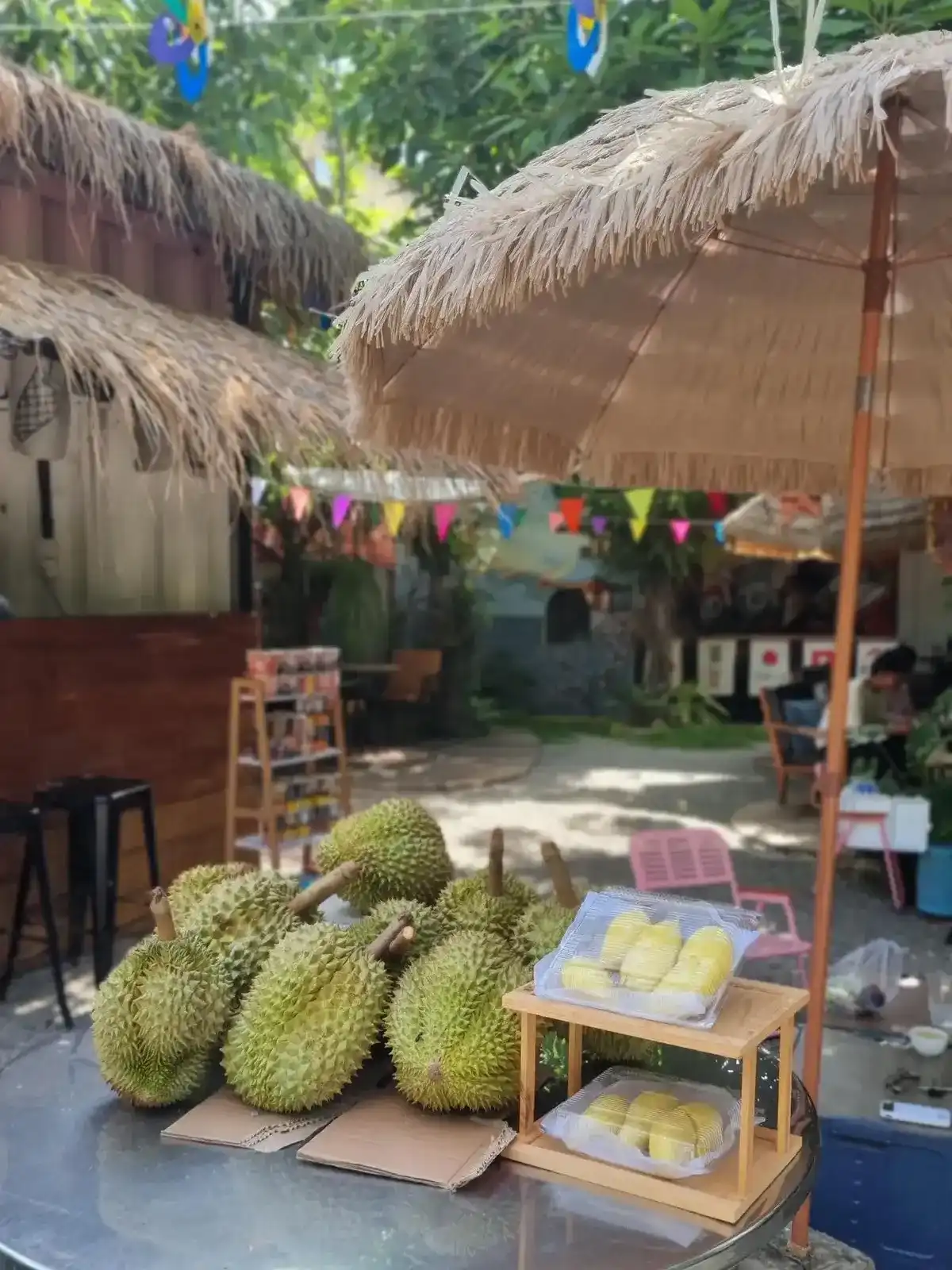
Durian. A group of about ten unopened durians on a table, along with a small display shelf with some durian removed from the shell and ready to eat. They are for sale at an outdoor cafe in Southeast Asia, with a straw umbrella near the durian, the cafe counter to the side, ad seating in the background. Durian have sharp spikes covering it's hard outer shell, protecting the fruit inside. Their size is about the size of a soccer ball, but are more oval shaped than round.
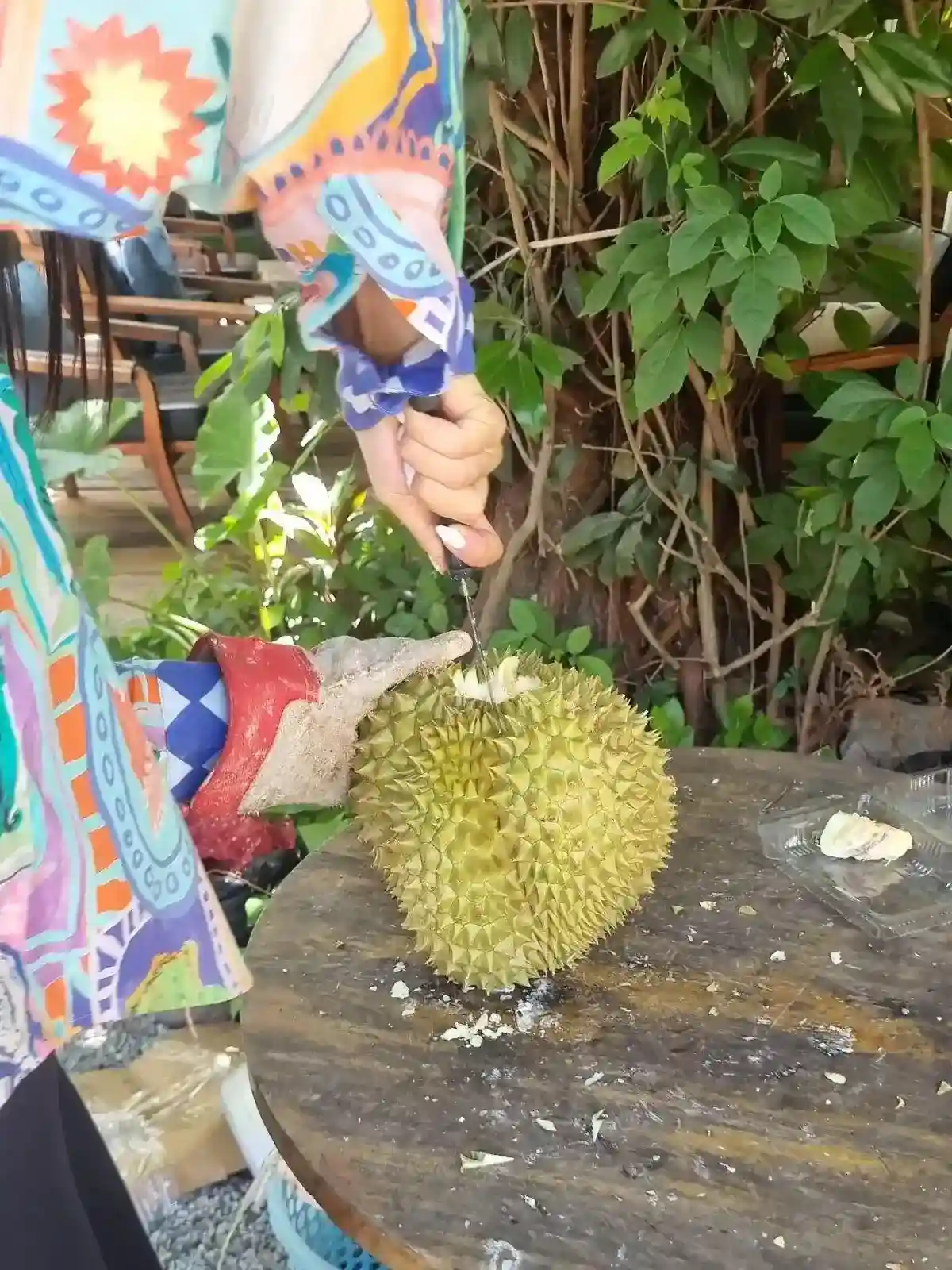
Durian being opened at a cafe. A person is opening a durian with a large knife to harvest the fruit that is inside. The person is wearing a thick glove to hold the durian. Durian have sharp spikes covering it's hard outer shell, protecting the fruit inside. Their size is about the size of a soccerball, but are more oval shaped than round.
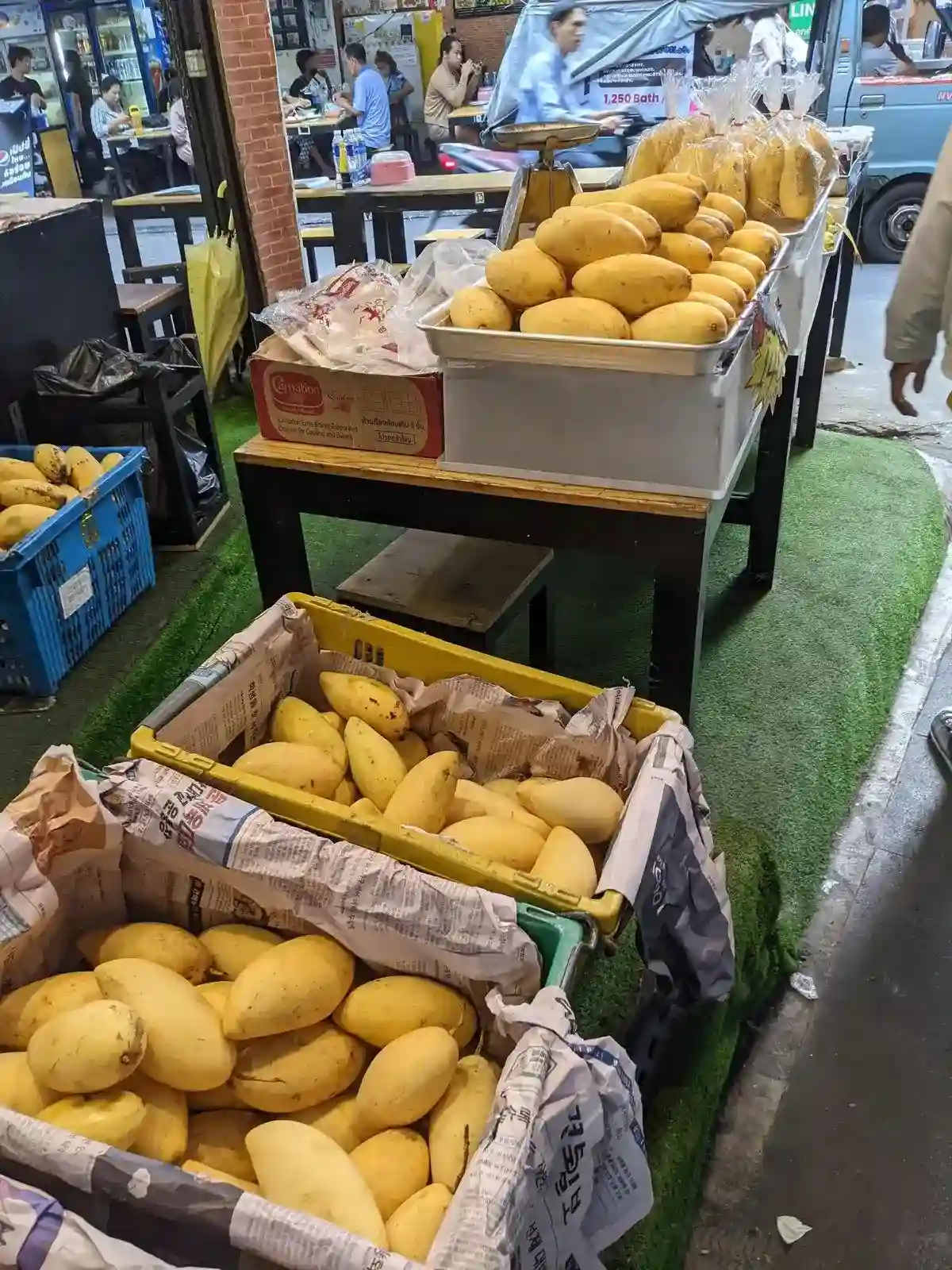
Mango fruit in baskets on display for sale in Bangkok city, Thailand.
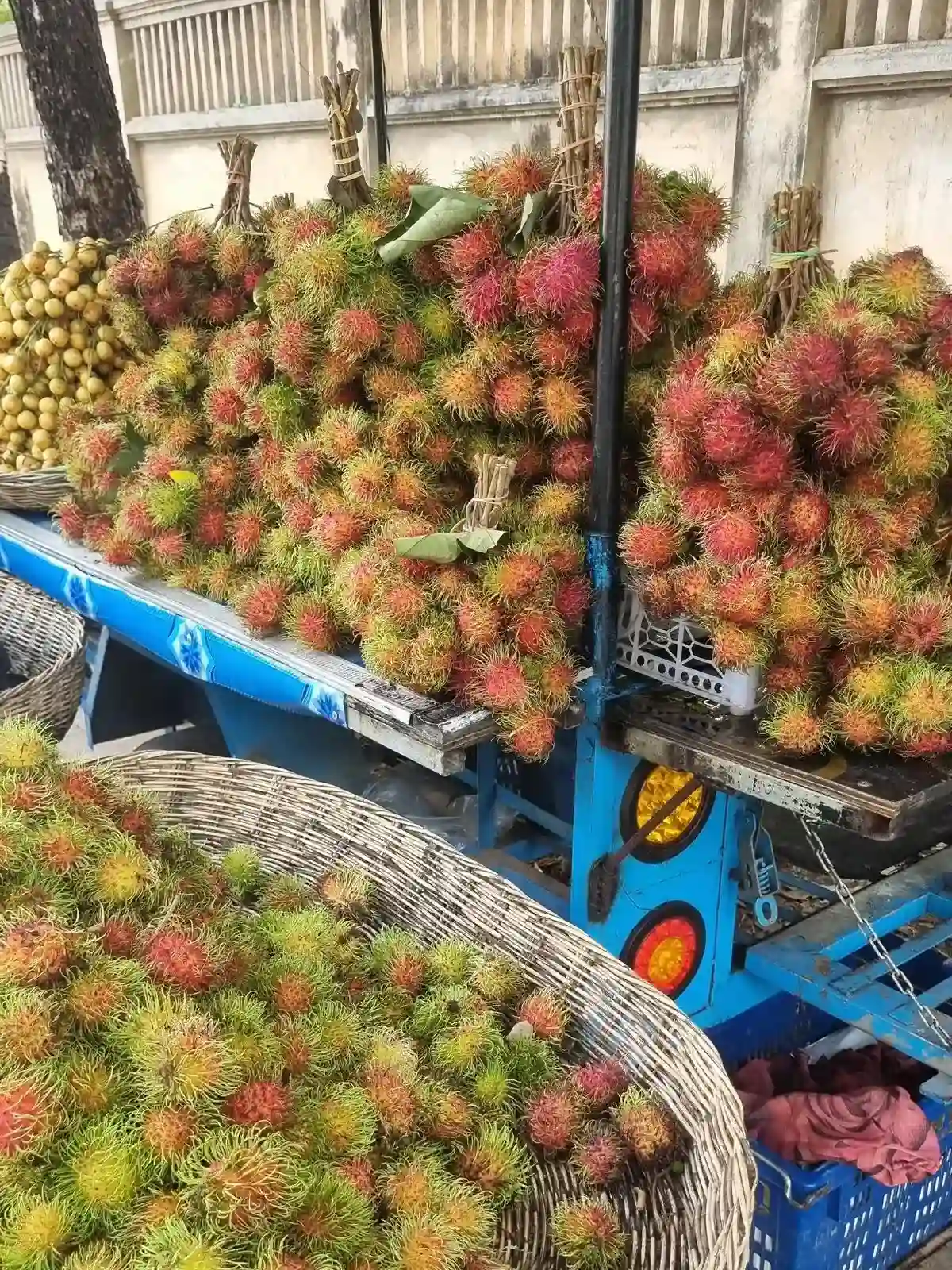
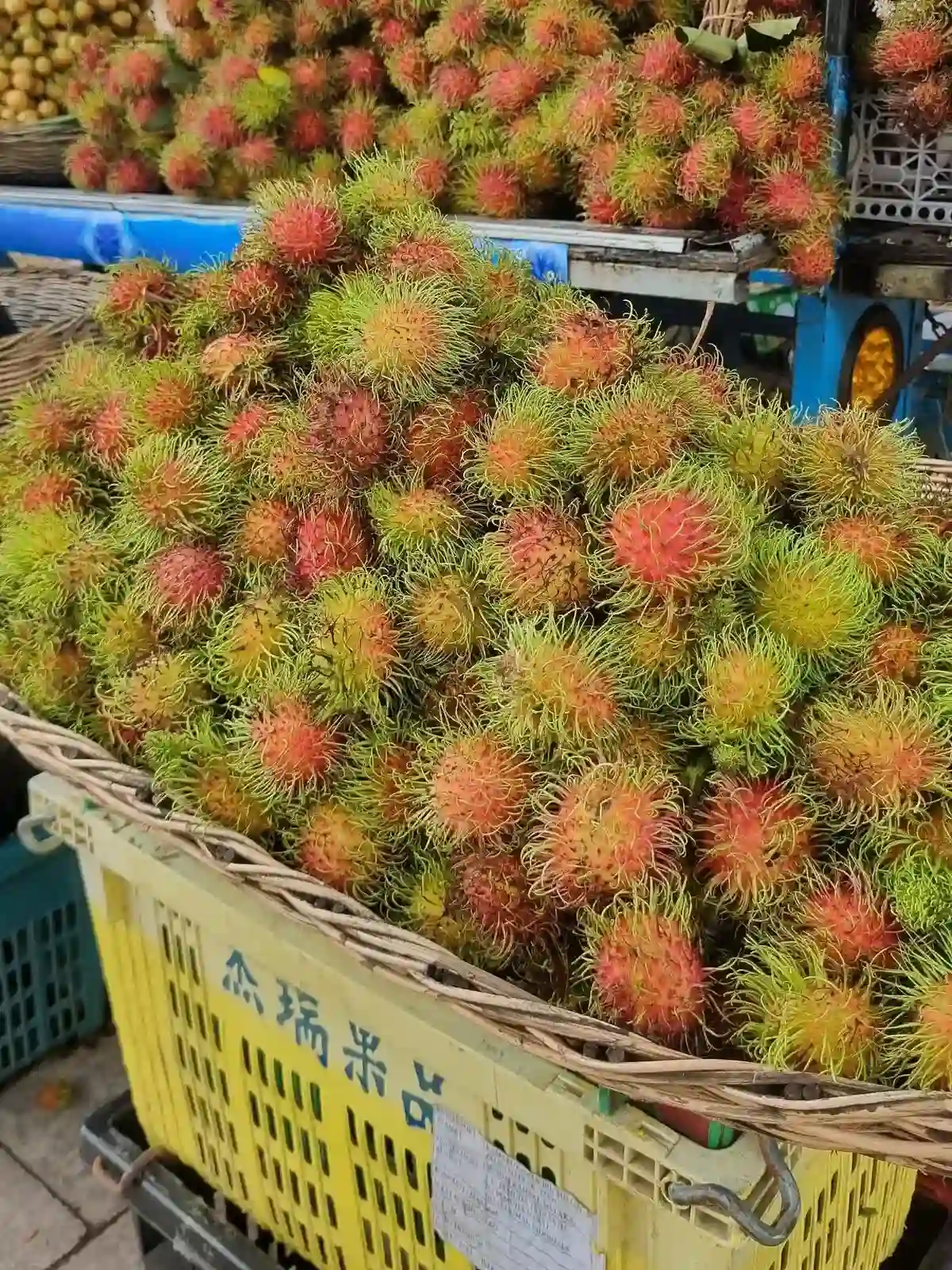
Rambutan fruit in whicker baskets on display for sale in Southeast Asia.
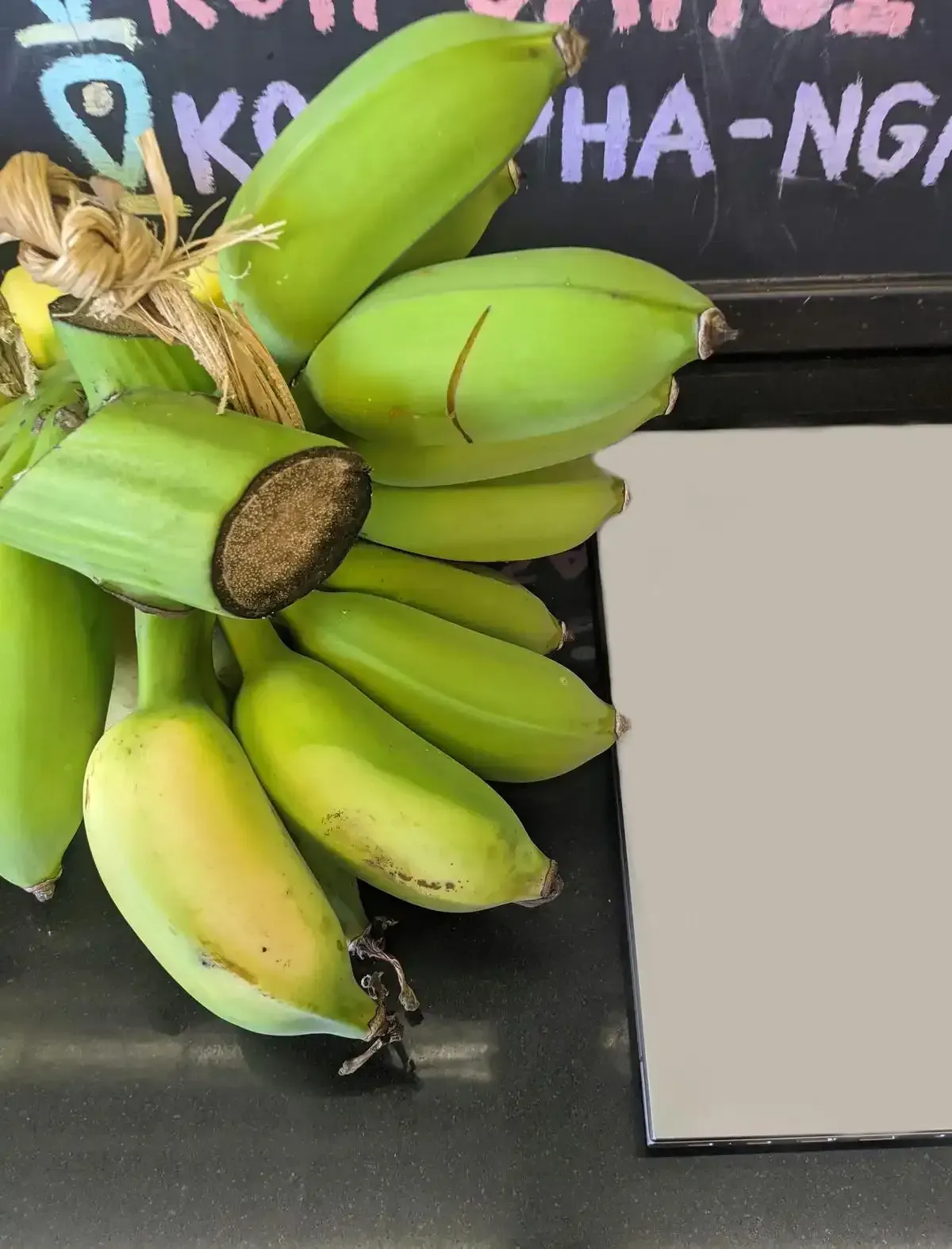
Freshly cut set of bananas that are of large girth, a strain of bananas found in Thailand.
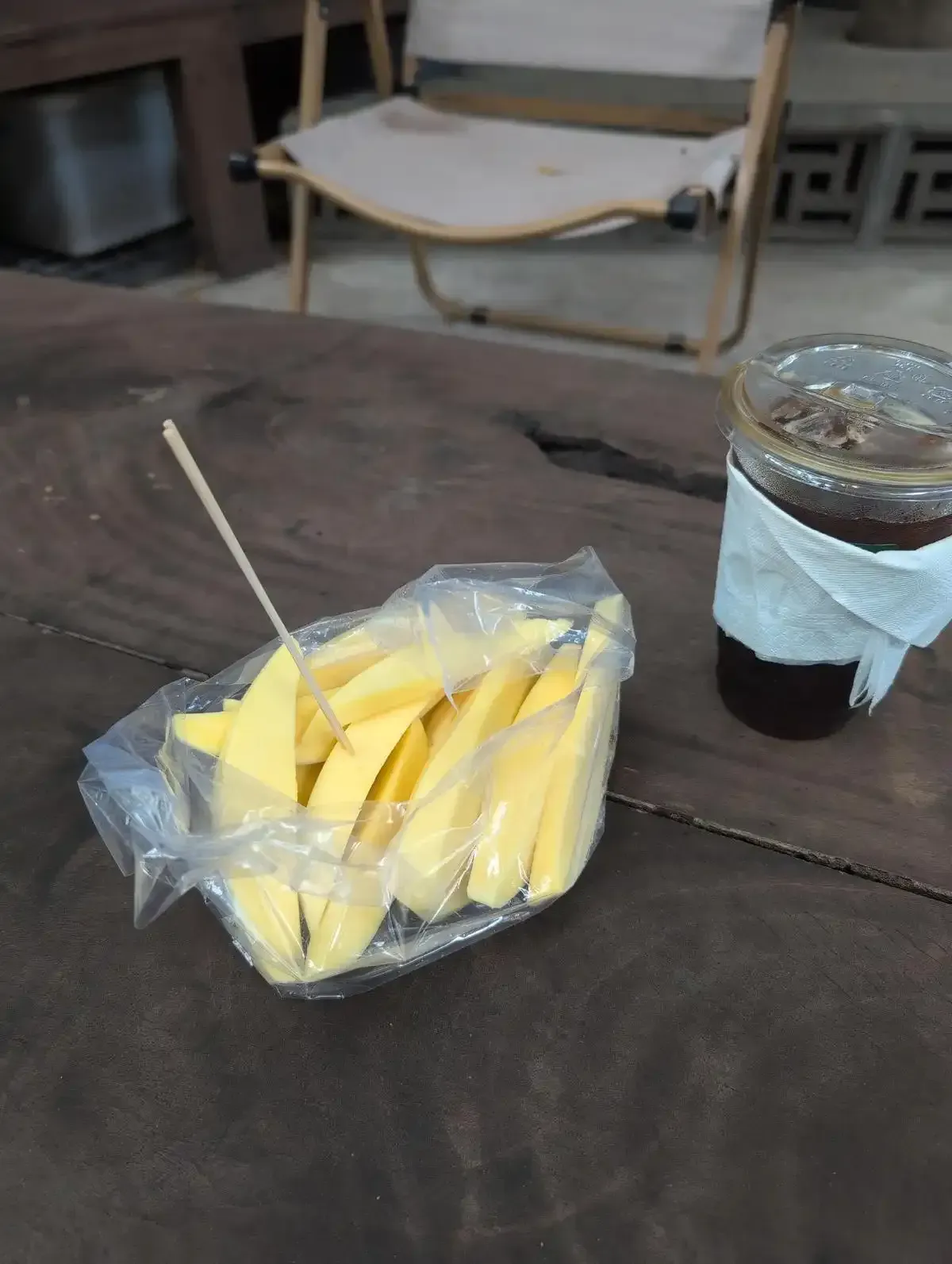
A bag of sliced not-fully-ripe mango on a table next to an iced Americano coffee at a café in Southeast Asia. There is a stick, like a large tooth pic, that is stuck into a piece of the mango. It serves as a fork. Not-fully-ripe mango is crunchy, much like an apple. It is a popular way to eat mango in Southeast Asia. A benefit is that the sellers have more time to sell it before it ripens, then goes bad.
Rambutan fruit in whicker baskets on display for sale in Southeast Asia.
Fruit in whicker baskets on display for sale in Southeast Asia. The main fruit in focus is mangosteen.
Durian. A group of over twenty unopened durians on a table. Durian have sharp spikes covering it's hard outer shell, protecting the fruit inside. Their size is about the size of a soccerball, but are more oval shaped than round.
Fruit in whicker baskets on display for sale in Southeast Asia. The main fruit in focus is pulasan.
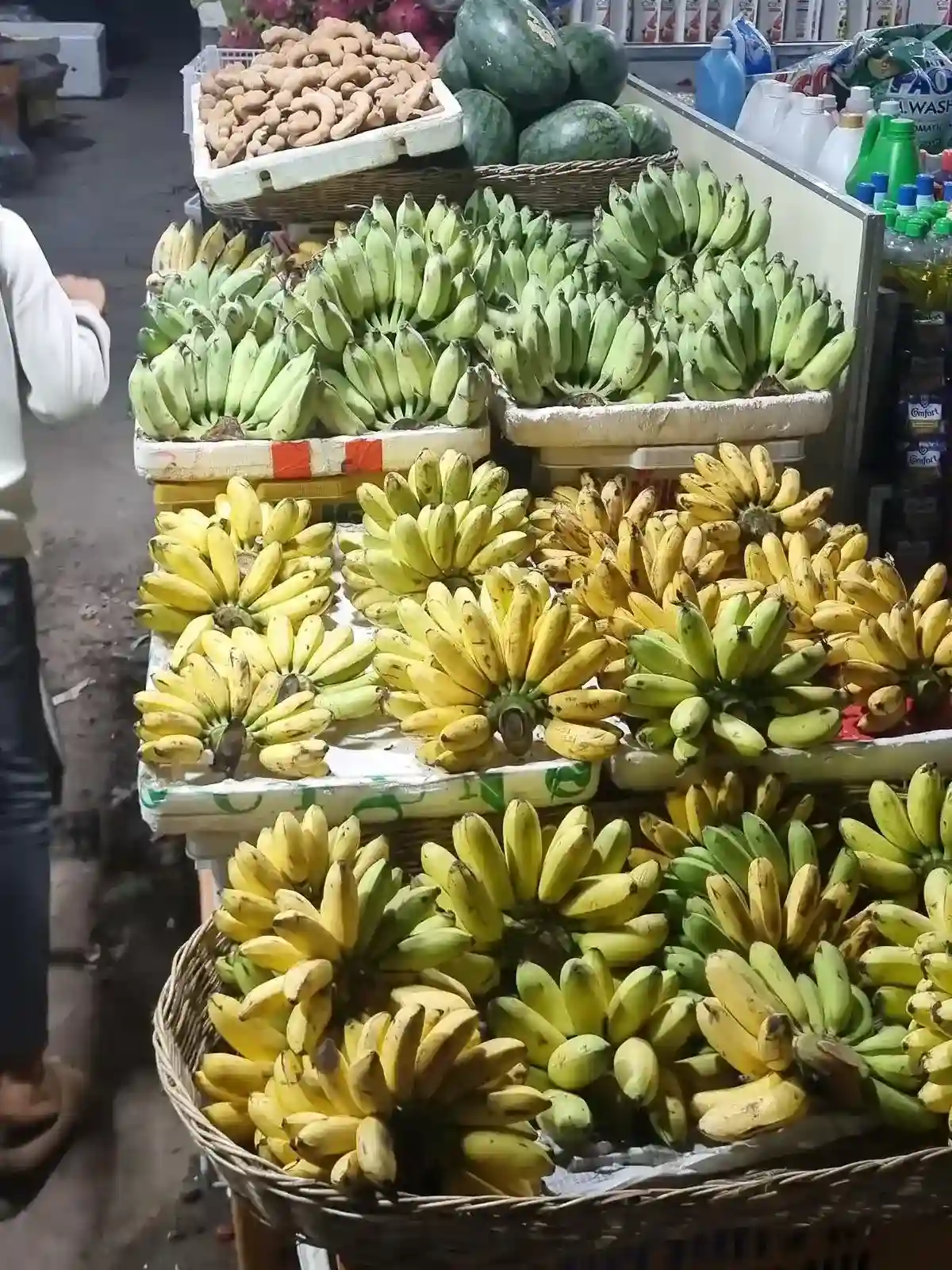
Bananas on display for sale in Southeast Asia.

There are several types of mangos, ranging from sweet to sour.  The kicker is that you can eat them unripe or ripe, both are good.  Most of us prefer our mangos ripe, soft and juicy!  But in Thailand, it is common to eat sliced mangos before they are ripe.  Unripe mangos are very similar to an apples (and less juicy than ripe), however some say they are far yummier than the best tasting apple.  Yea, we said it!  Sorry, apples.

There are also many types of bananas, and that becomes apparent when in SE Asia.  You really should try the different types.  Bananas are not as exciting as mangos, but that is a controversial opinion that you are free to not agree with.

For passive income or as a main business, locals harvest the fruit from mango trees and banana trees growing on their property.  None of these trees seem to have been intentionally planted, rather they grow in abundance.  If you keep an eye out you’ll certainly notice trees with far more fruit than a person can harvest and sell, let alone eat.  For that reason, fruit is a saturated market in Southeast Asia with lots of sellers and located whenever & wherever you need a bite.
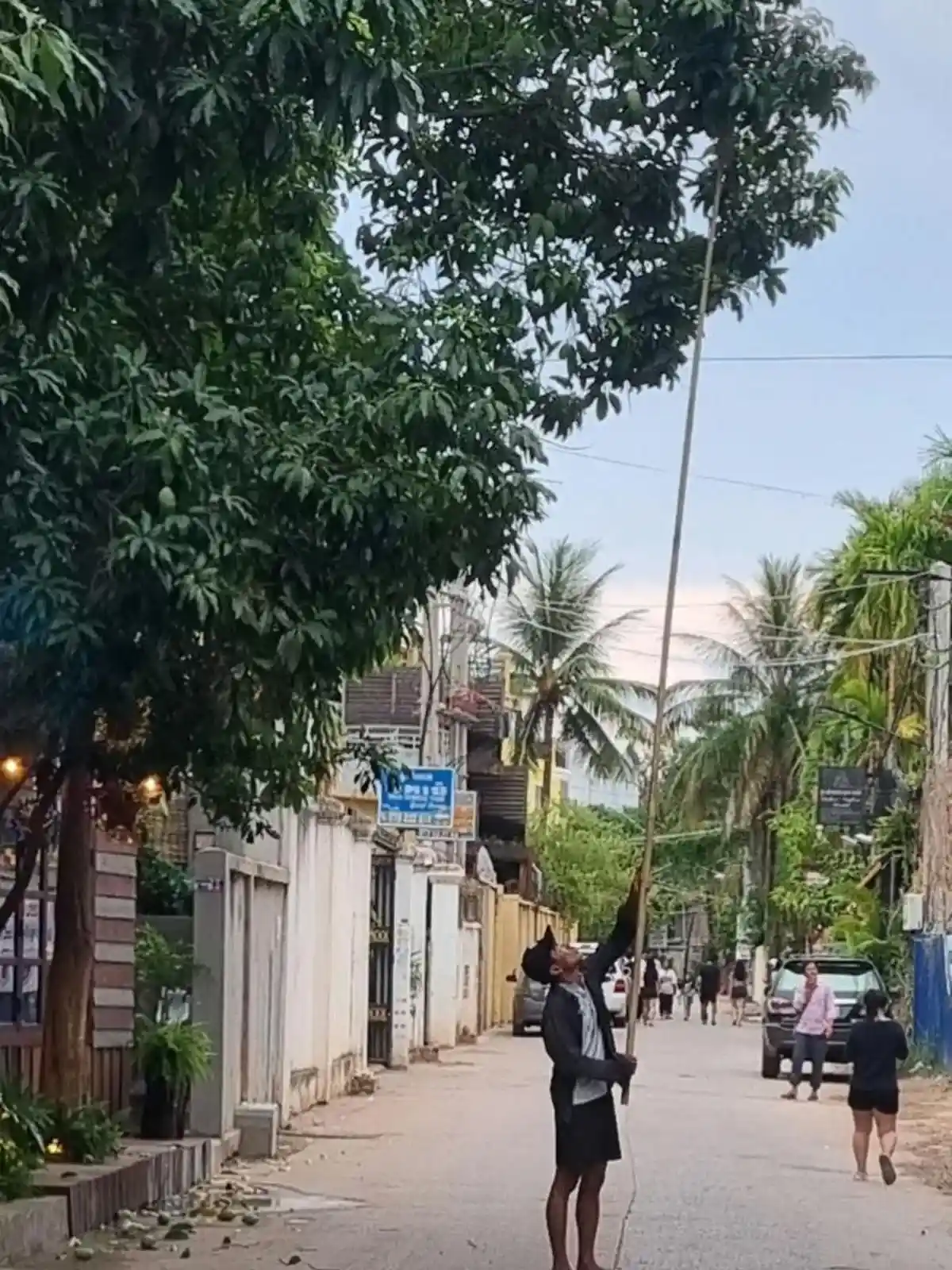
A man picking a mango from a mango tree in Cambodia. The tree limb is up high, so he is using a long (about fifteen feet long) bamboo pole with a tool at the end to pick the mango. Also, the tree limb overlaps a small road (only the width of two cars), so he is standing in the middle of the road picking it - there is no traffic.
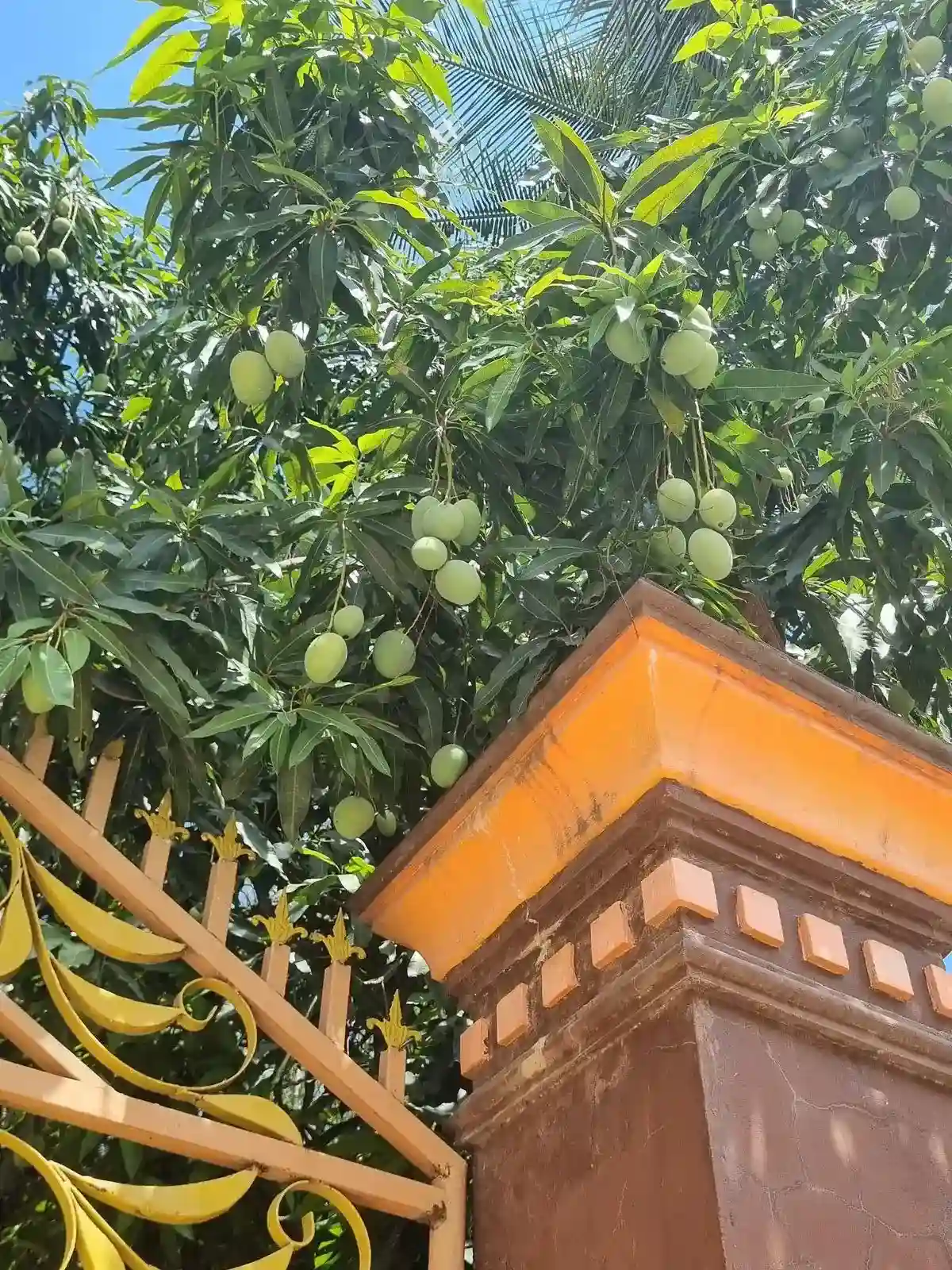
A mango tree with mangos hanging from it at the gate of a home in Cambodia.
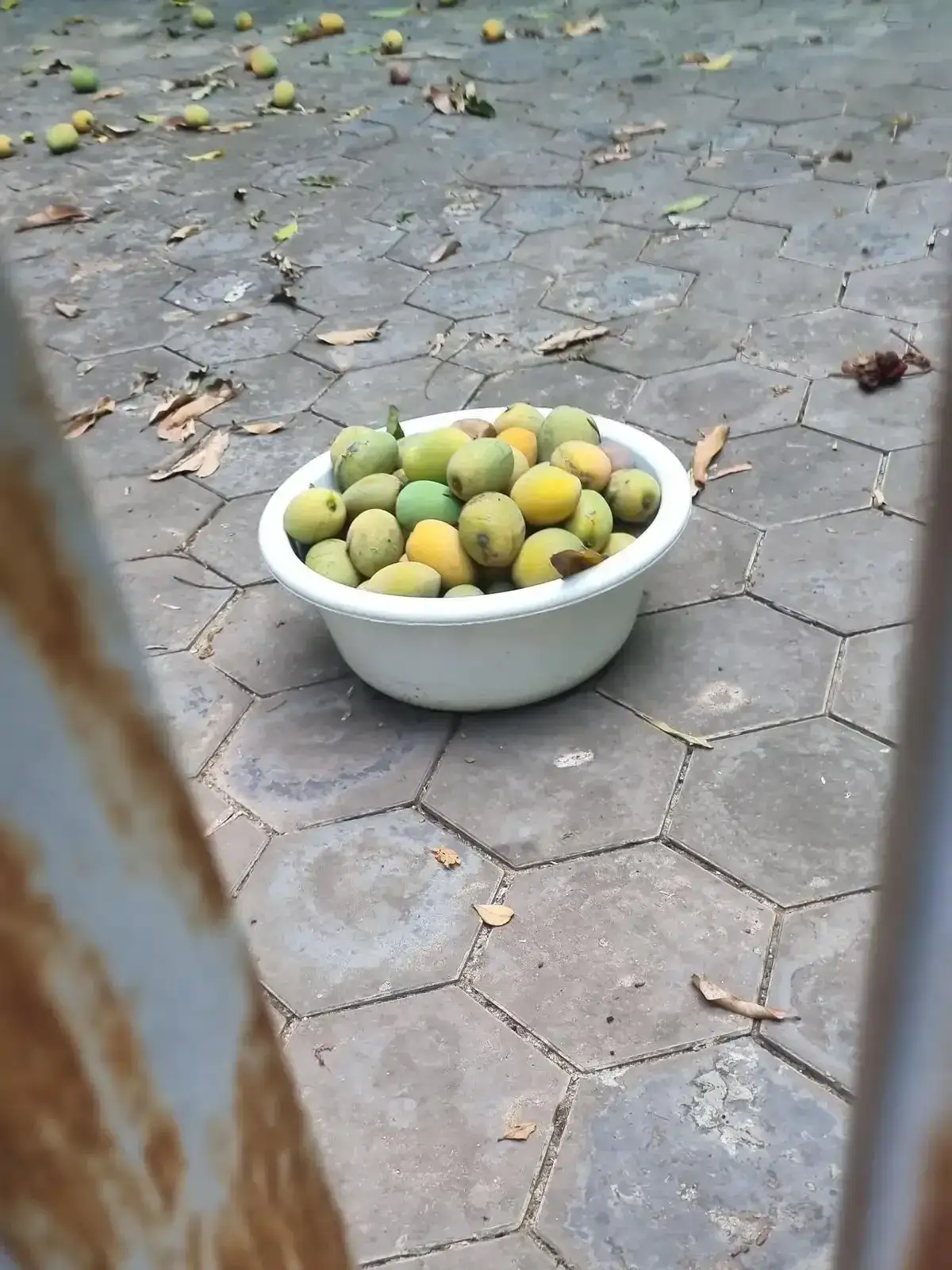
A full basket of freshly-picked mangos (more than twenty of them), picked from a personal mango tree at someone's home in Cambodia. The basket is sitting on the ground in the driveway.
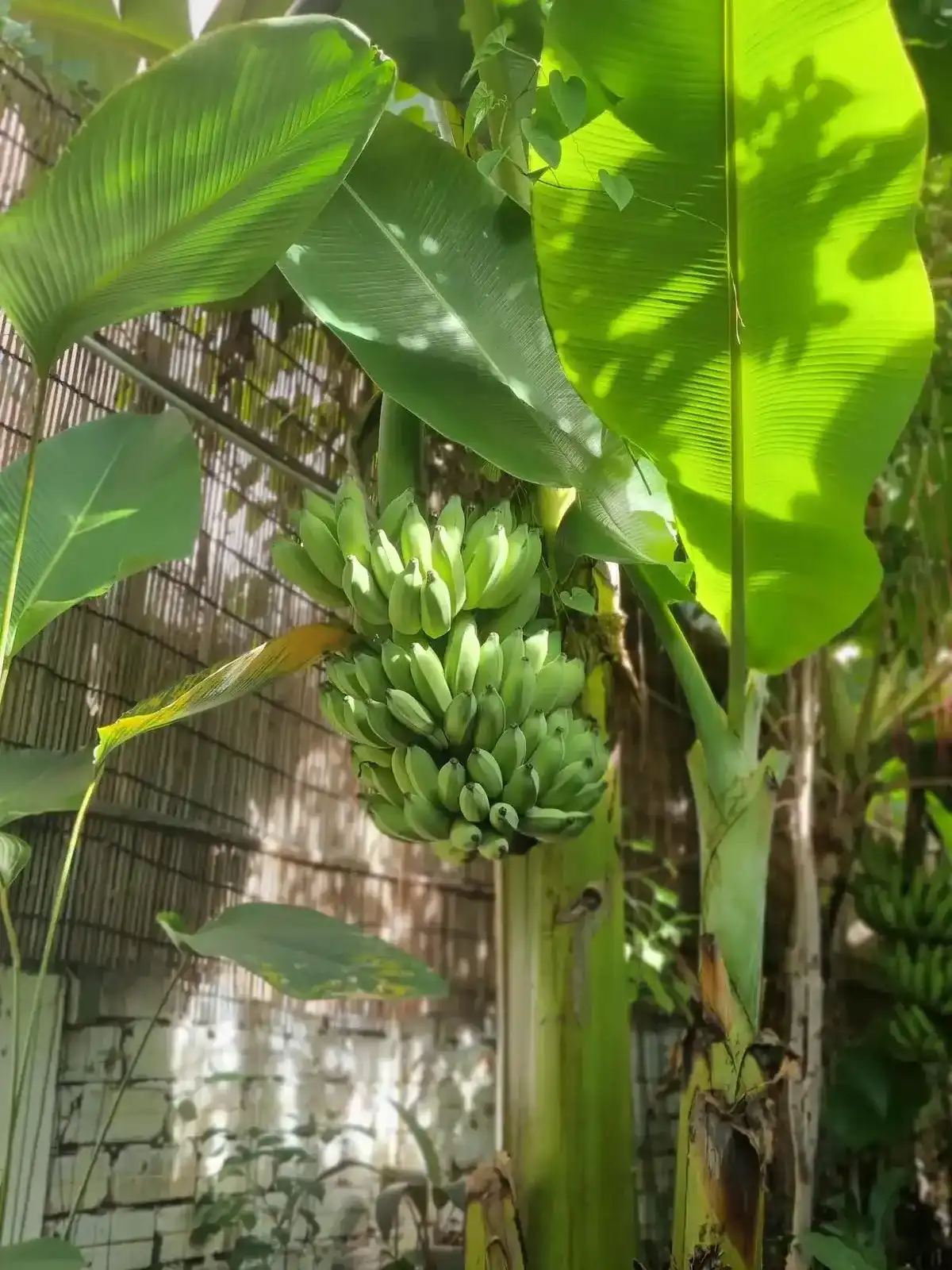
A bunch of bananas hanging from a banana tree at someone's personal home in Cambodia. They are low-laying fruit, at a height of about eye level, making them easy to pick.
Freshly cut set of bananas that are of large girth, a strain of bananas found in Thailand.
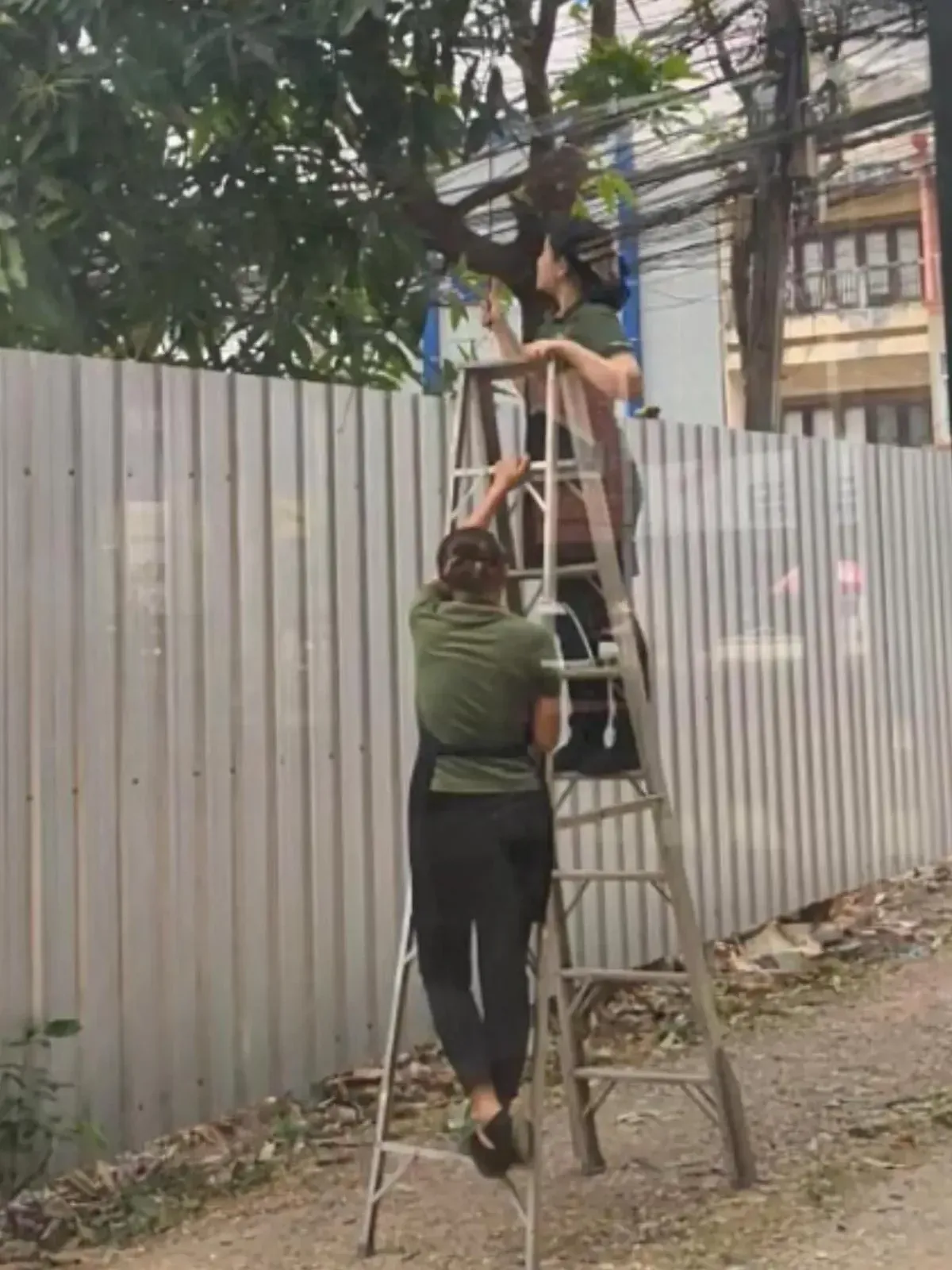
Two cafe workers in Laos - one on a ladder, the other holding the ladder - picking a mango from a mango tree. The worker on a ladder is using a metal rod to pluck (wrap the end around a mango and then pull it) the mango from the tree.

Fruit Juice

Coconuts are by the truck-load.  Sugar cane is cheaper than dirt.  Both of these make super refreshing drinks.  Can you say yummy!?

Buy a coconut, they’ll chop it up on the spot and poor the coconut water into a cup for you for about $0.50.  They might even scoop the coconut meat for you, too.
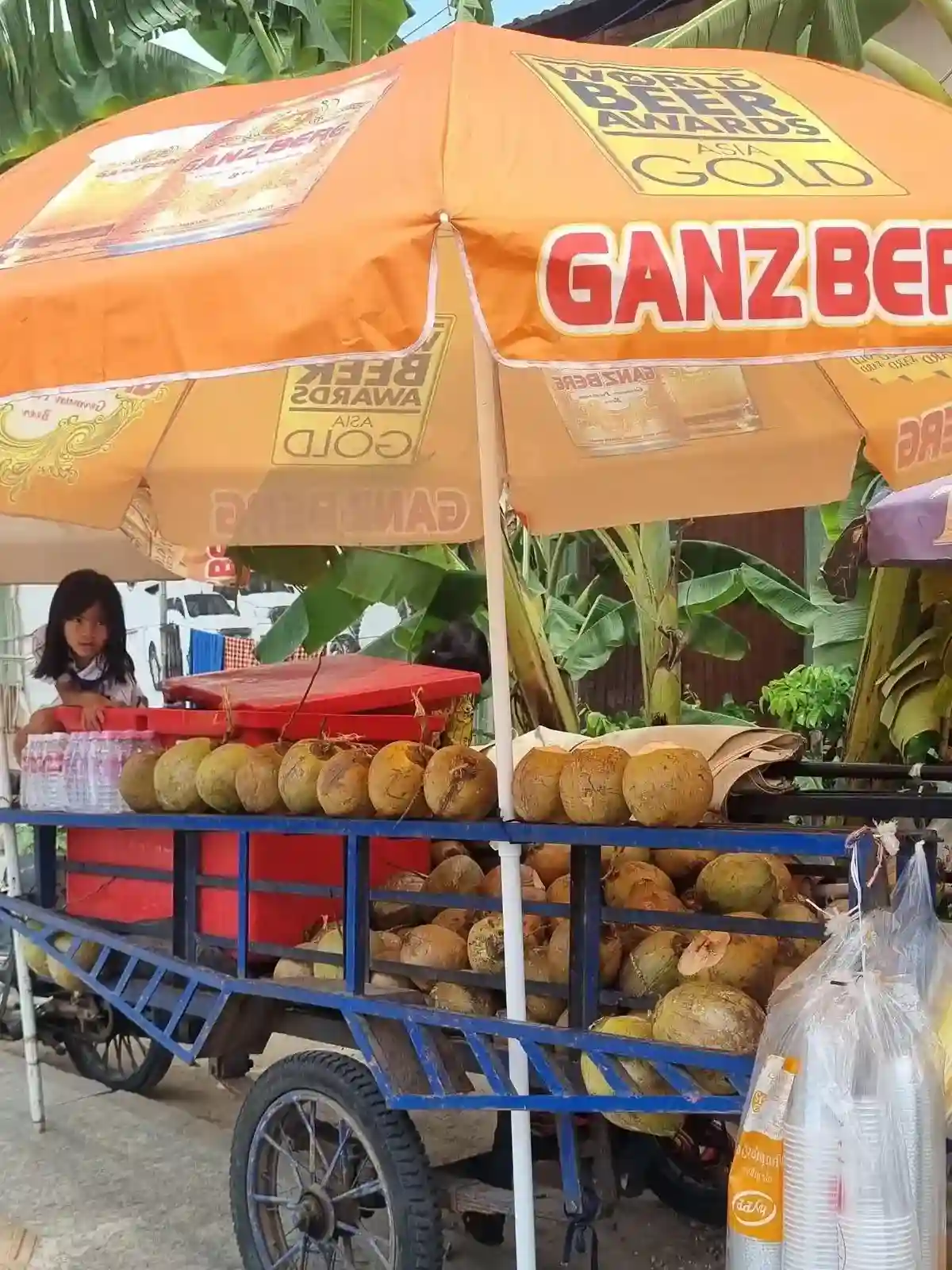
A seller of coconuts and coconut milk drink in Cambodia. The seller has a small trailer with coconuts stored within and on top of it. They have a large umbrella for shade, plastic cups, and a cooler with ice inside. A child is tending the business with their parent, who is not in the picture.
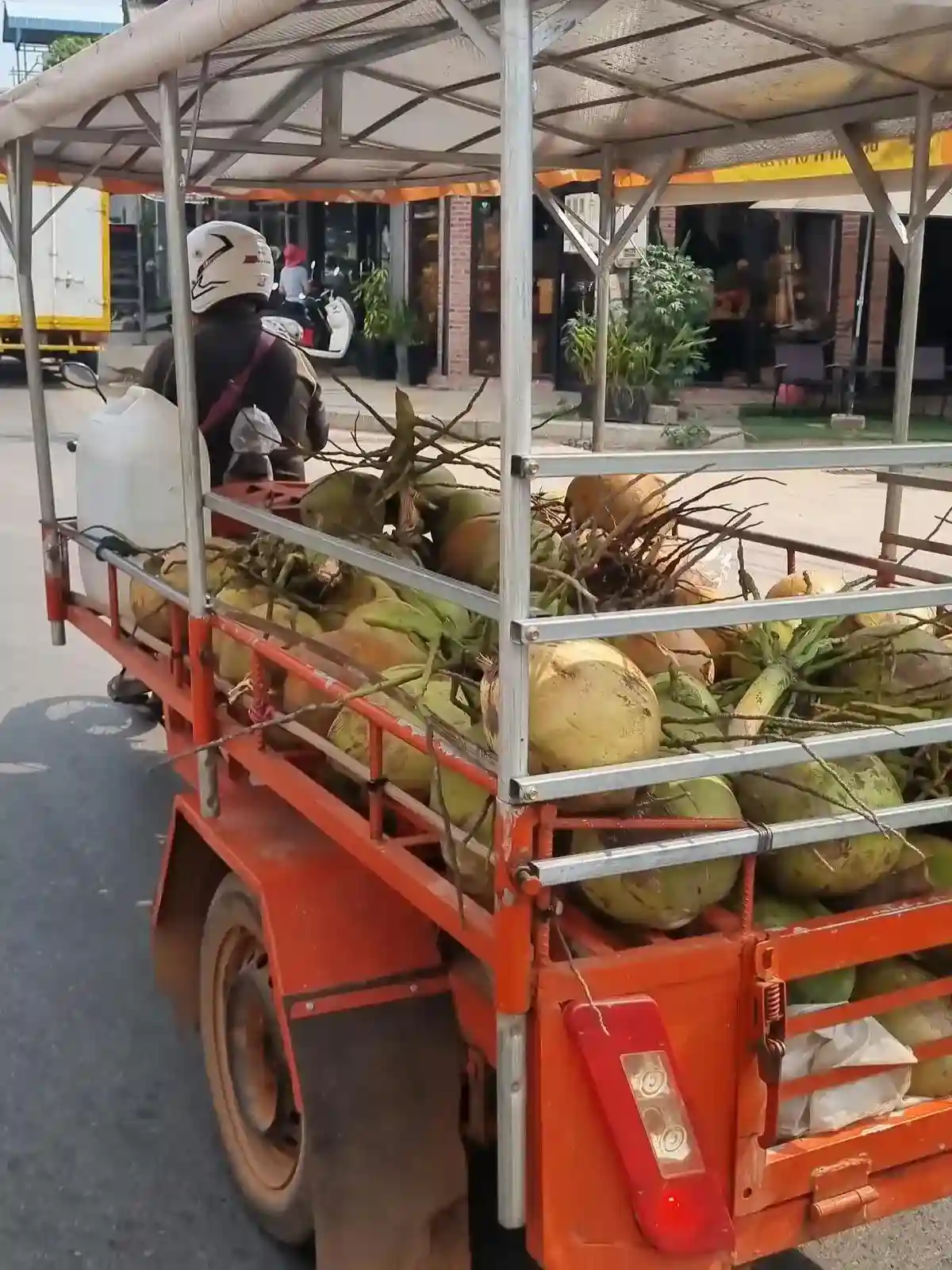
A motorbike rider with a trailer attached that has coconuts inside, driving down the road.

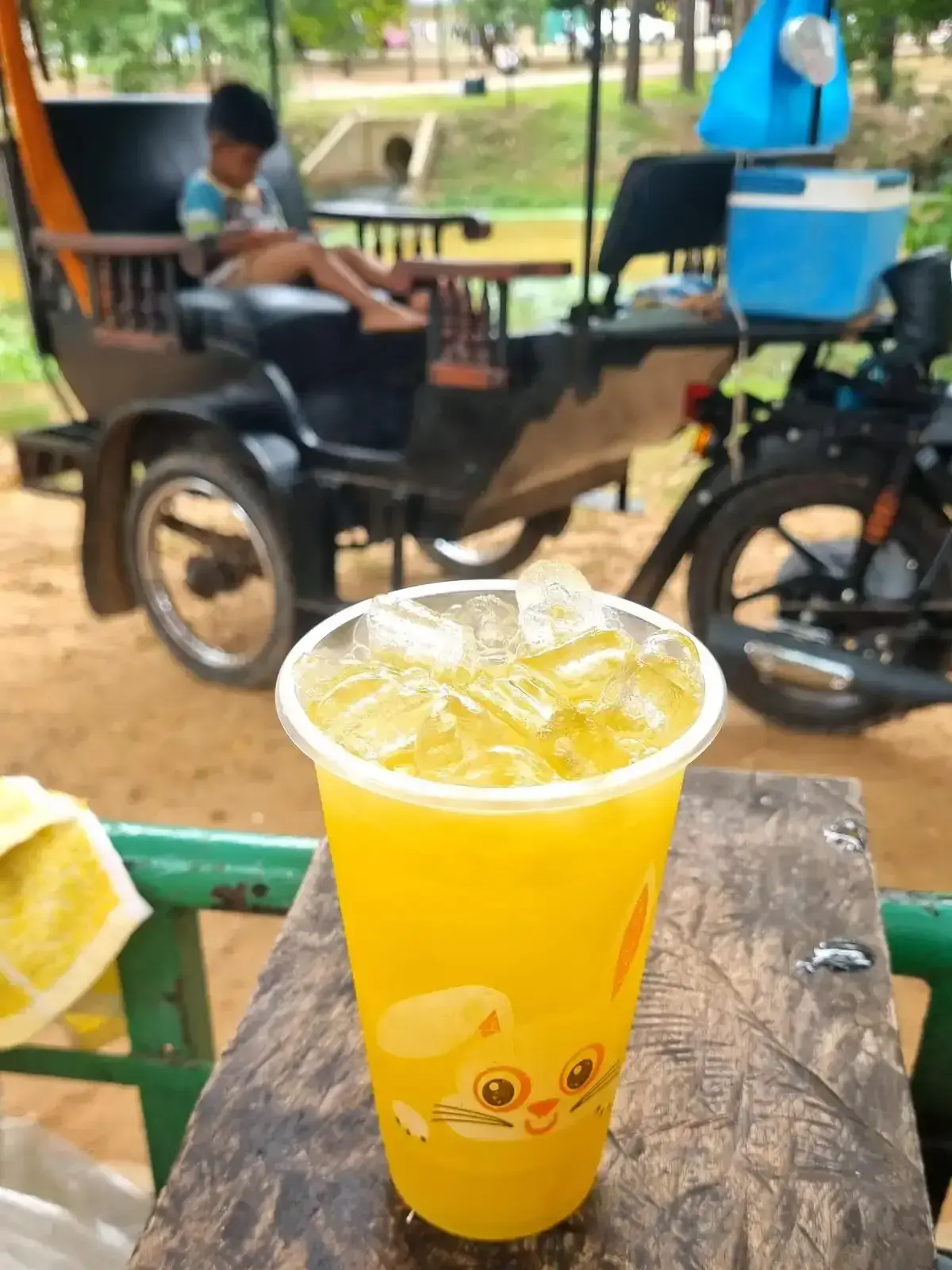
To be honest, the sugar cane juice does not look appetizing.  TRY IT!  It’s incredible!  Words can’t explain – there is nothing like it.  They squeeze a small citrus lemon-like fruit into the drink, too, and it compliments the sugar cane juice very well.  It’s all natural, unbelievably, and there is nothing added such as sugar or concentrate.
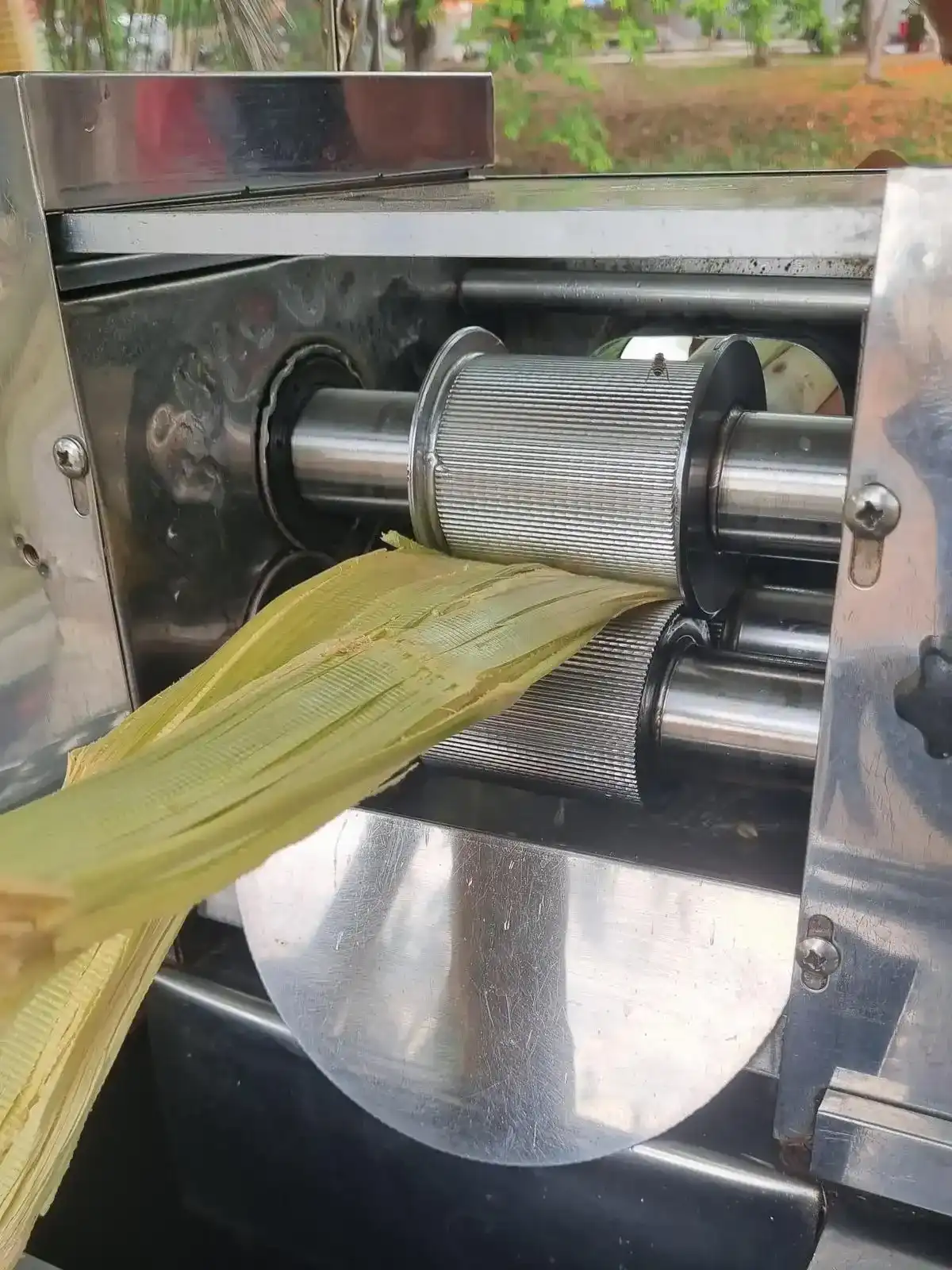
A worker using a machine to make sugarcane juice in Cambodia. They are actively feeding sticks of sugarcane through a machine with rollers than compress the sugarcane to squeeze the juice out of it. The scenery is in a grassy area with many small trees.
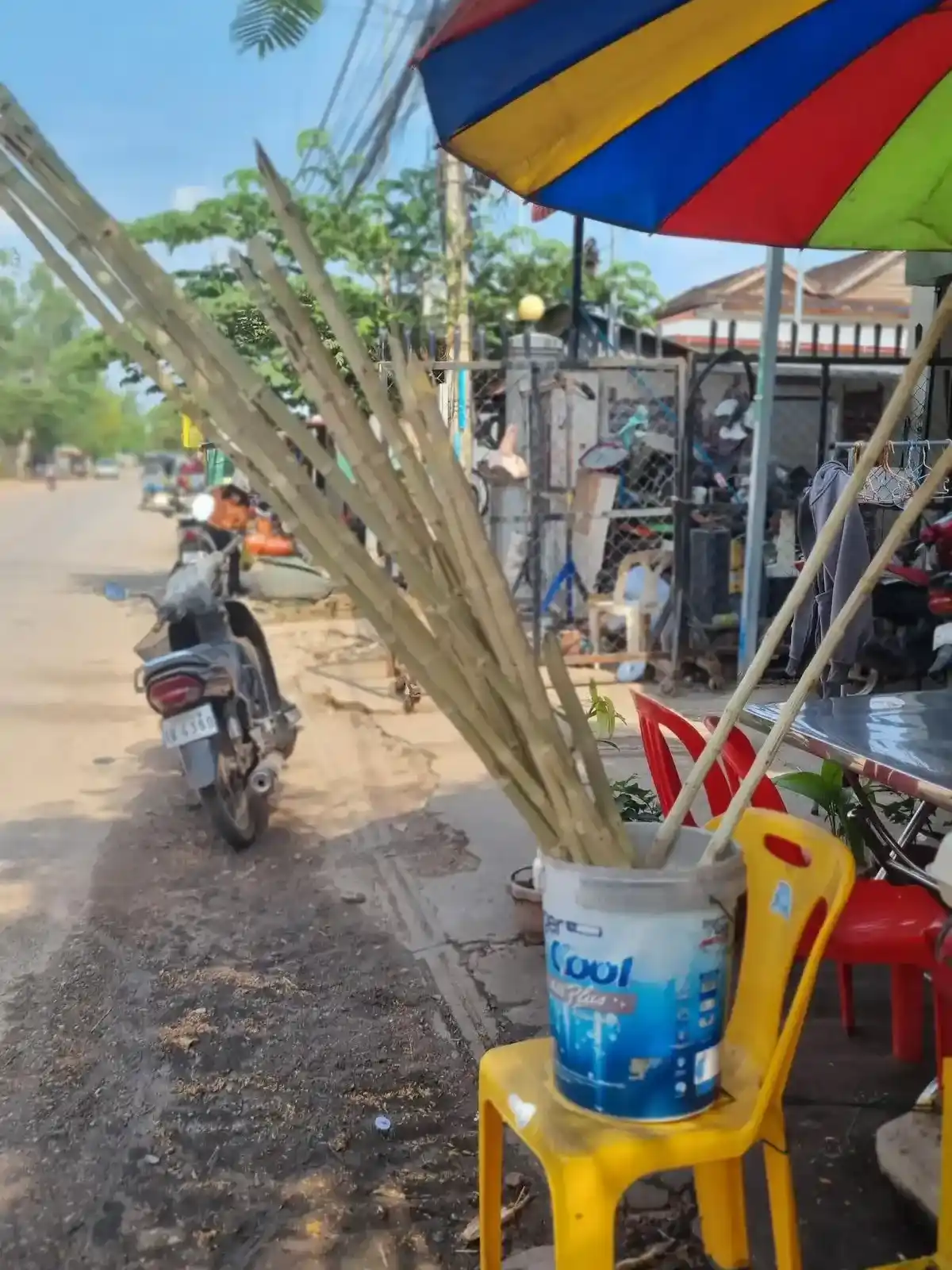
Several long sticks of sugarcane sticking out of a five gallon bucket. The bucket is on a chair next to the road in Cambodia. This is for making sugarcane juice.
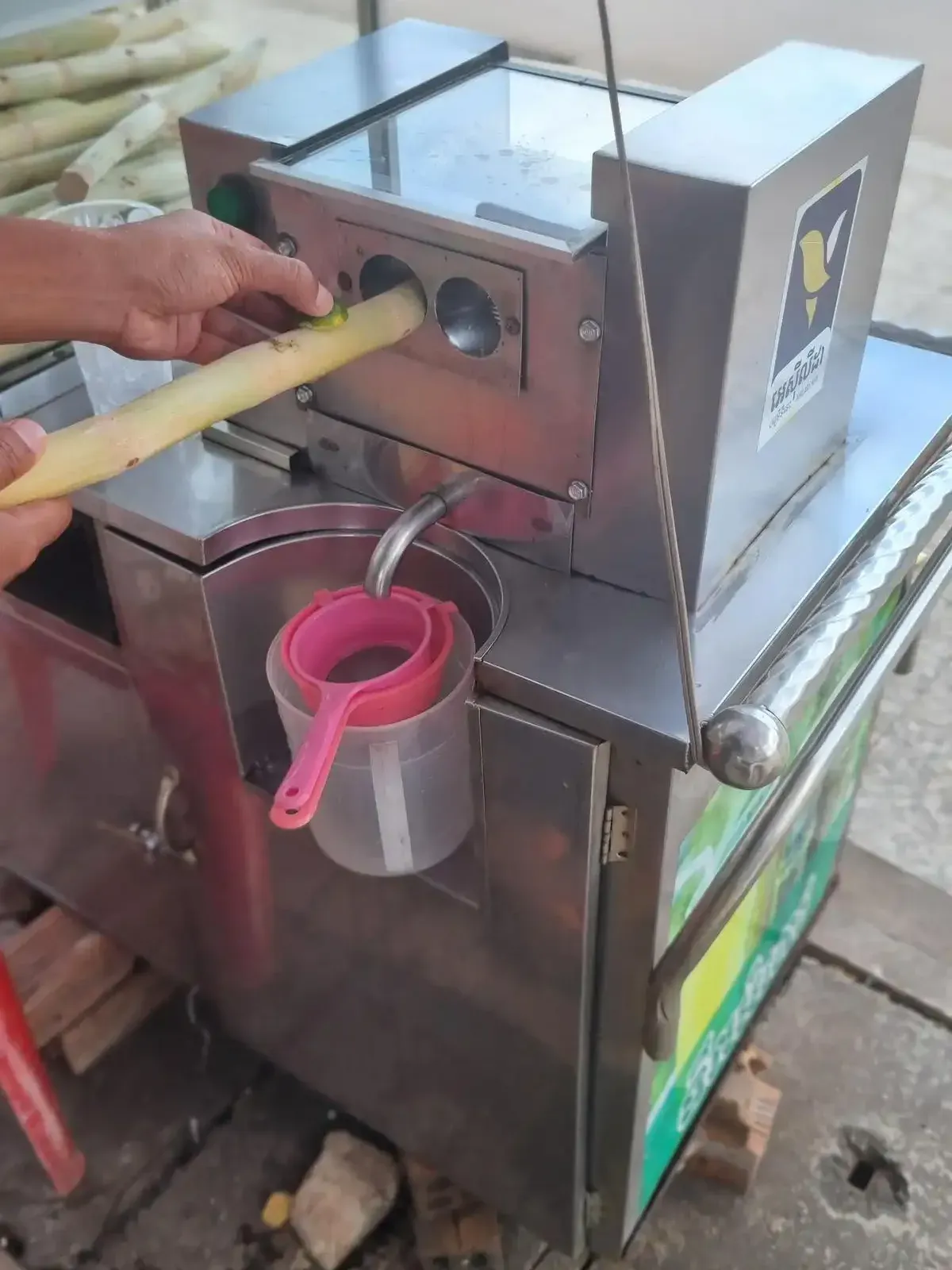
A worker using a machine to make sugarcane juice in Southeast Asia. They are actively feeding a lime and a stick of sugarcane through a machine with rollers than compress the sugarcane to squeeze the juice out of it.
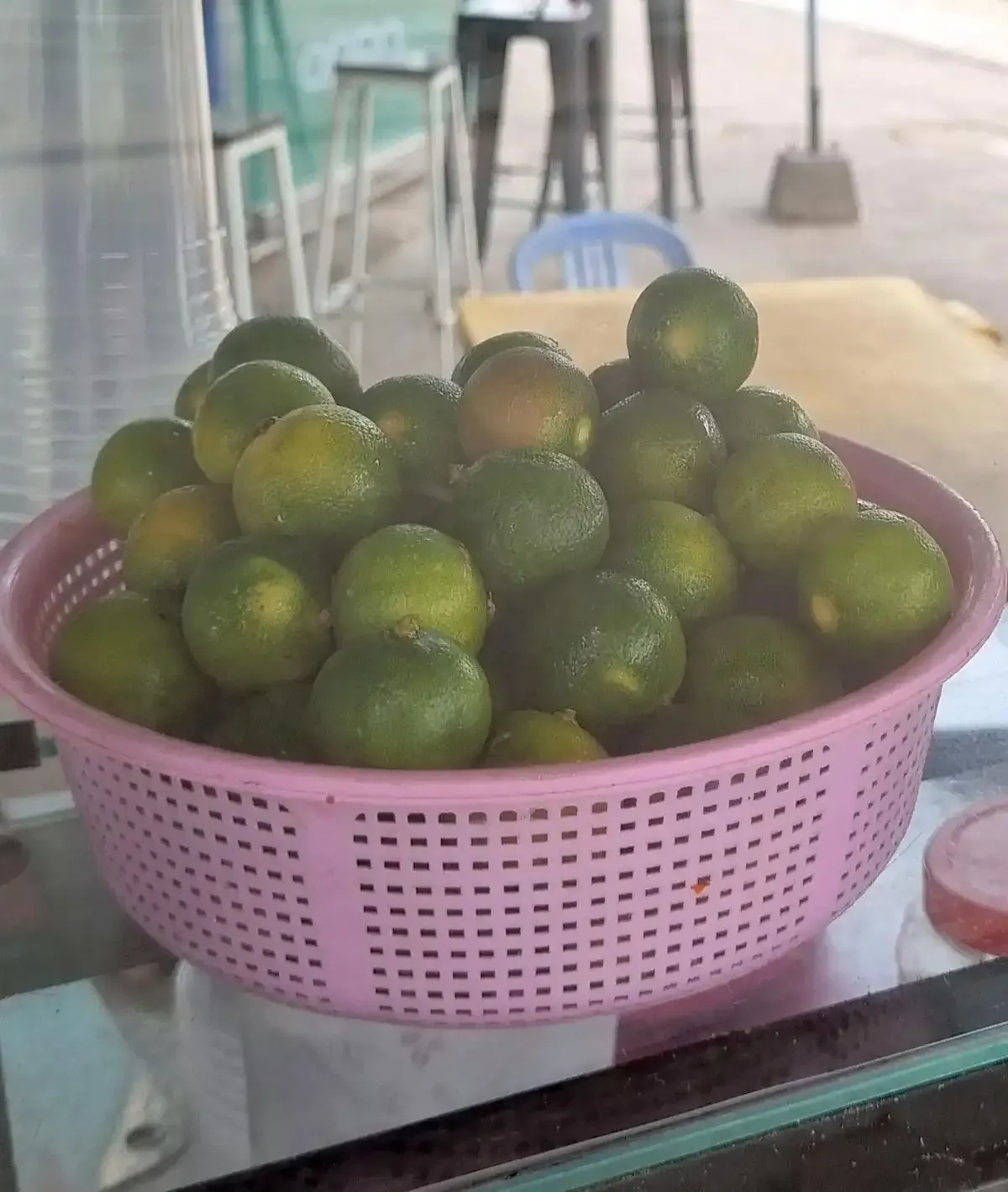
A small basket filled with fresh lime used, in part, for making sugarcane juice.
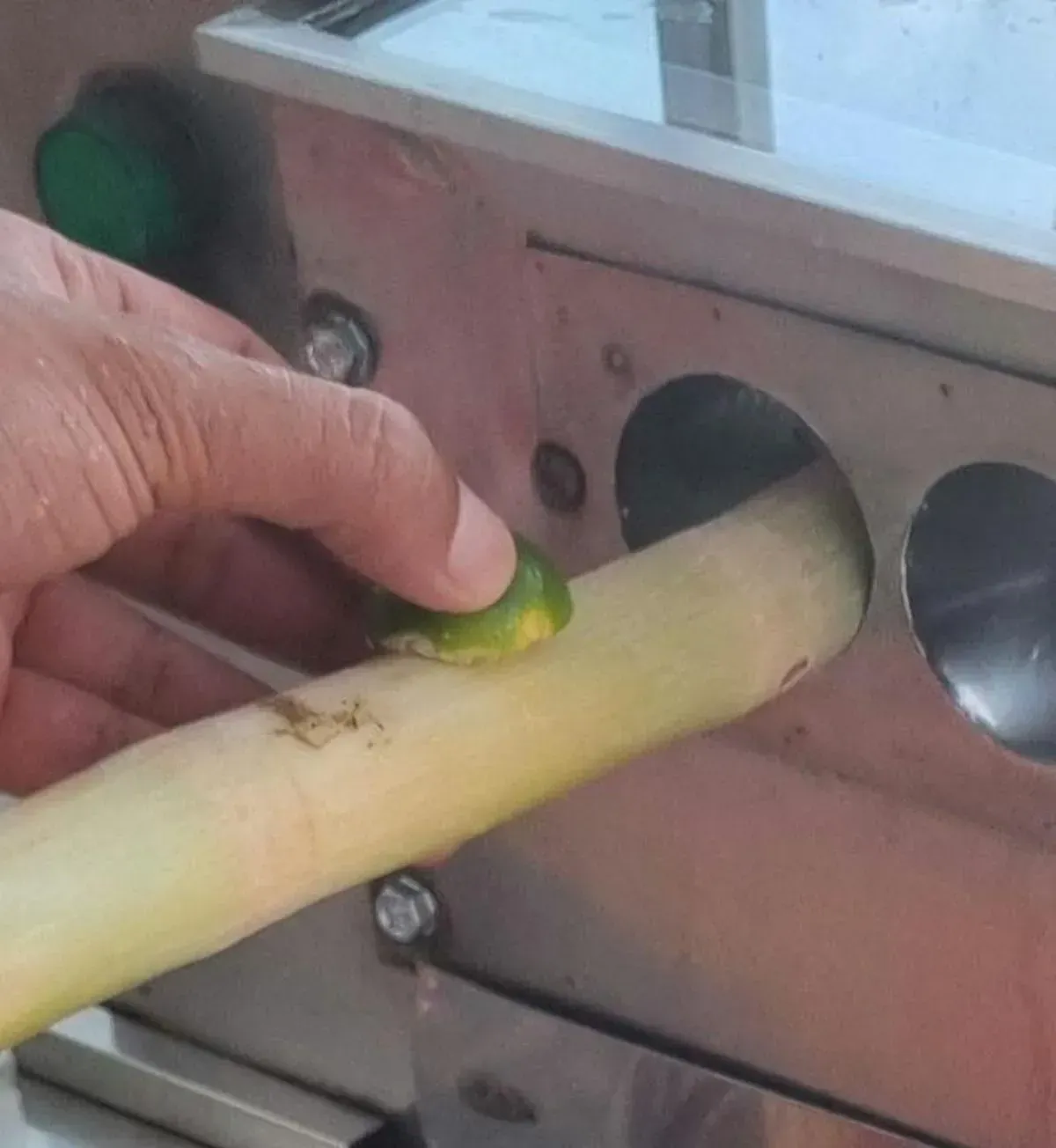
A close-up of worker using a machine to make sugarcane juice in Southeast Asia. They are actively feeding a lime and a stick of sugarcane through a machine with rollers than compress the sugarcane to squeeze the juice out of it.
Spent sticks of sugarcane coming out the exit of a machine to make sugarcane juice. The sticks are now flat, and this image shows how the rollers compress the sticks to squeeze out the juice.

Deserts Made With Bananas And Mango

Time to sweeten things up.  Just as regular ole’ fruit starts to get boring, we have the option of deserts made with banana or mango.  I know what you are thinking, fruit deserts are boring, too.  Trust us, these deserts in Southeast Asia are quite nice.

Mango Sticky Rice

Mango Sticky Rice is the best desert every!  Sticky rice kind of sounds a little weird, but it absolutely passes as a desert.  The sticky rice is soaked in coconut cream, paired with a ripe yellow sweet mango, and accompanied by extra coconut cream to pour all over the desert as you wish.  Crispy yellow mung beans are given for extra flavor and texture to be sprinkled on top of the desert.  Mango sticky rice comes to mind when people think about Thailand, and GemsOfTravel sincerely hopes that Mango Sticky Rice becomes imprinted into your mind and pallet, too.  When in Thailand, do not pass this desert up.  As a matter of fact, after you have it once you will never say no to it again – eating every single one you come across!  Hope you’re not a calorie counter.
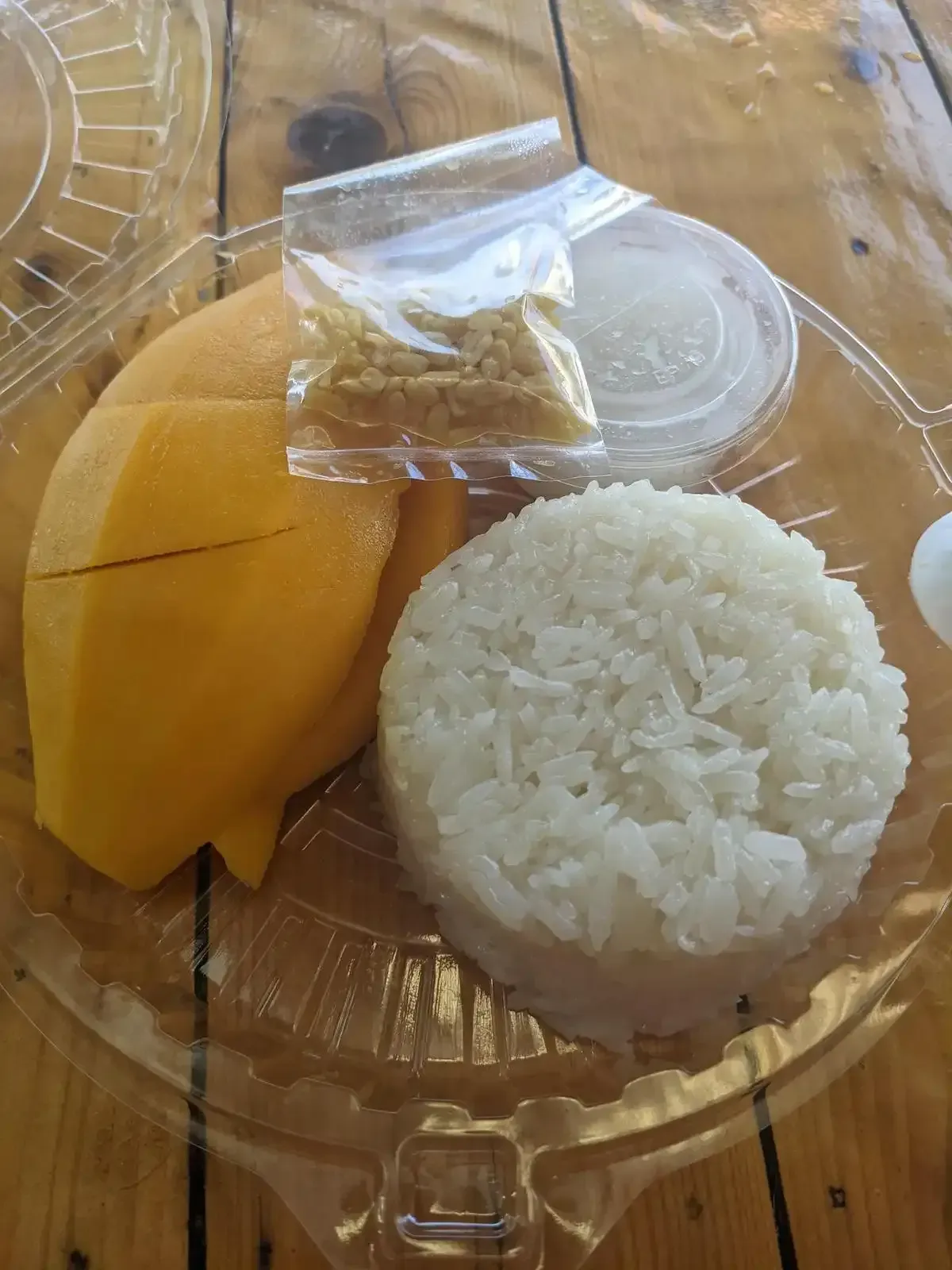
A serving of mango sticky rice, a popular desert in Thailand. It consists of a ripe and juicy mango that is fully pealed and ready to eat. There is a portion of sticky rice, a strain of rice that is litteraly sticky. Finally, there is some sweet coconut cream and a nut-like topping (it does not taste like nuts, though - not sure what to call it). Each ingredient is standalone and packaged for take-out (aka "to-go" or "take-away"). The person eating this will pour the coconut cream onto the mango and/or sticky rice, and the toping, and eat everything mixed together.
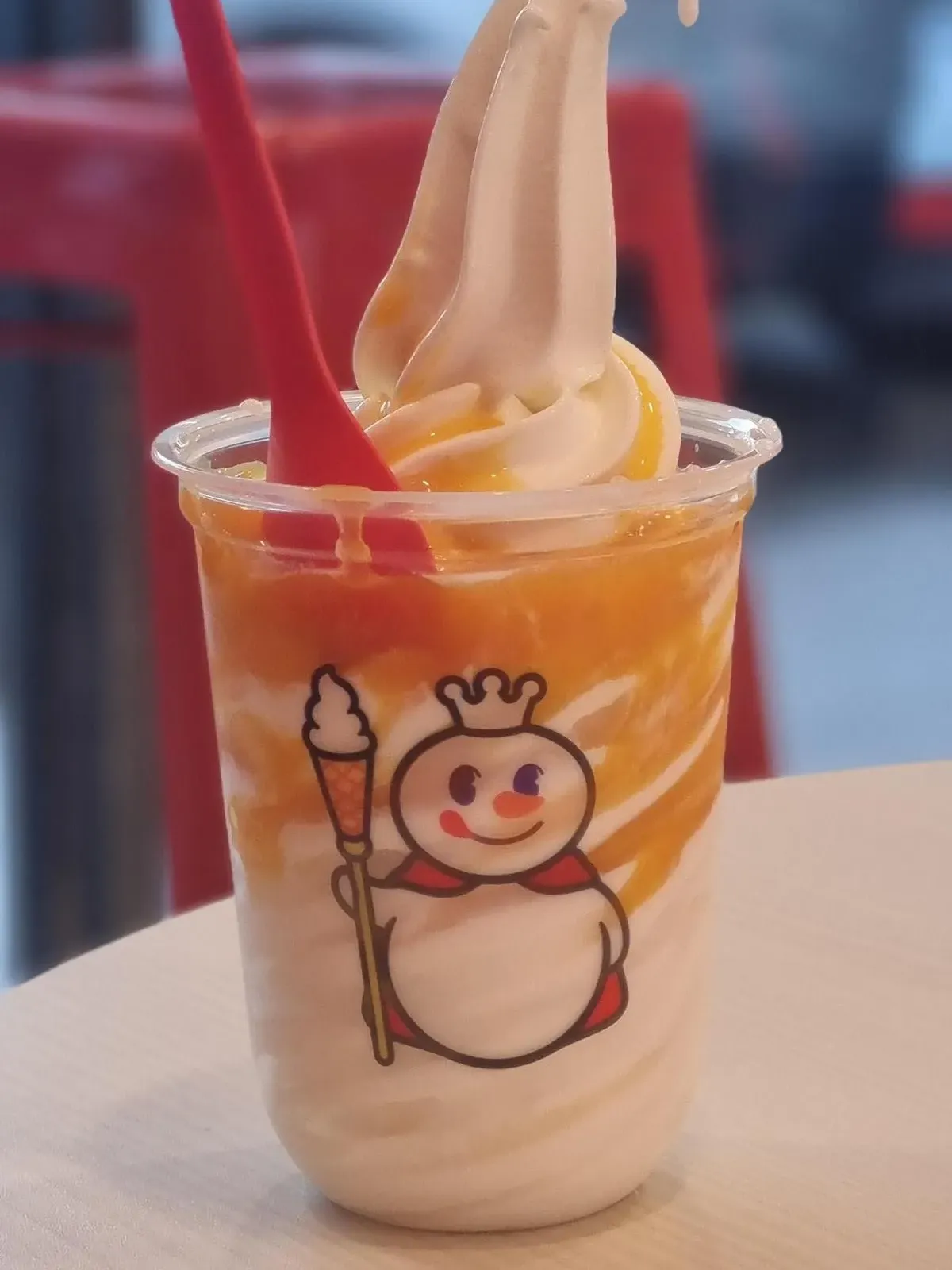
A serving of ice cream in the flavor of mango sticky rice, which is based on a popular desert in Thailand called mango sticky rice. This ice cream parlor is a Chinese chain throughout Southeast Asia called Mi Xue (pronounced "me shoe-eh"). Of course, Asians can be lactose intolerant, so do not expect "real" dairy-based ice cream.

Deep-fried Banana

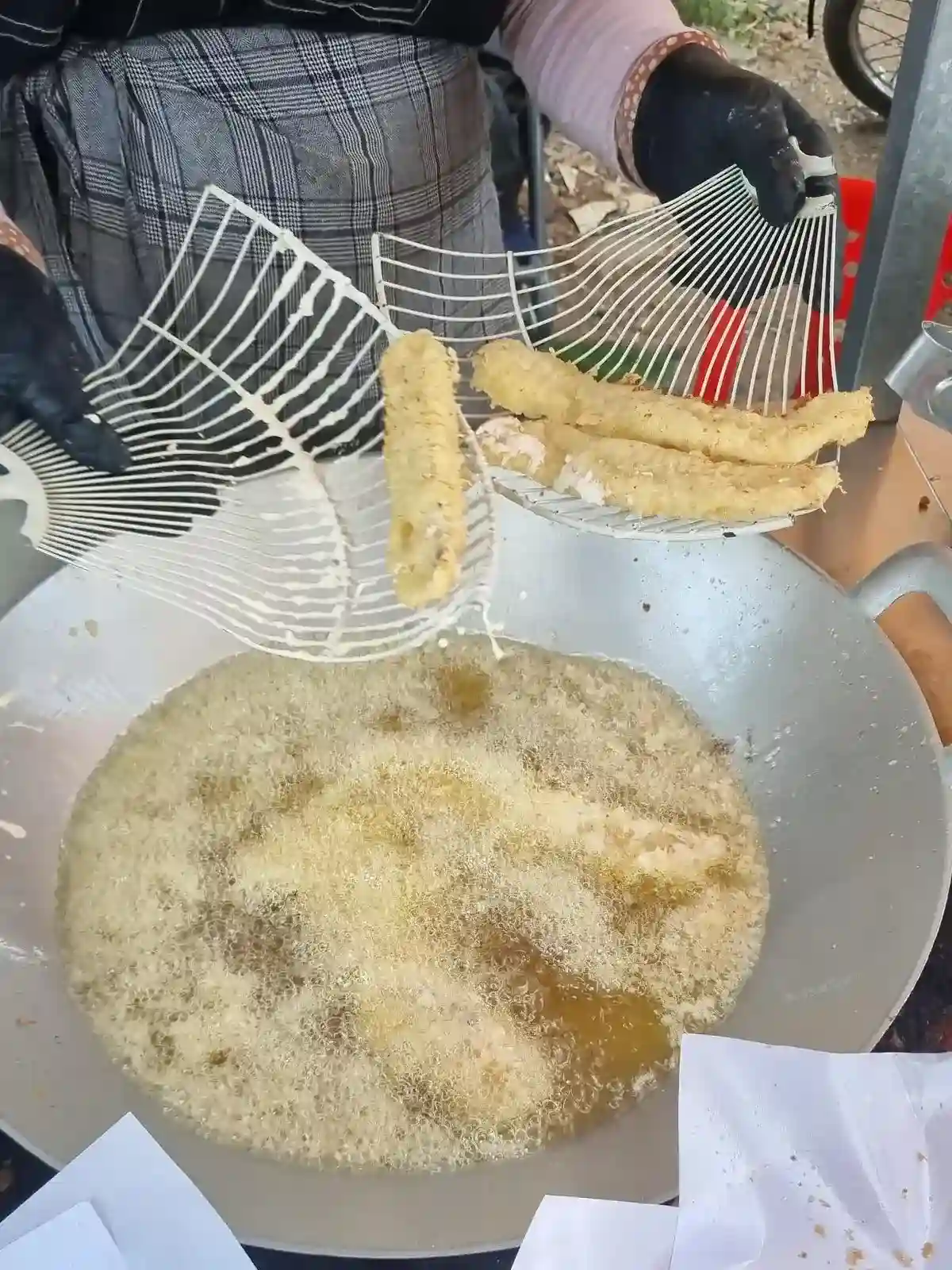
Malaysia, Thailand, Laos, Cambodia, and Vietnam enjoy this tasty treat.  You take something healthy, a banana, and deepfry it in special batter.  What else do you need to know?  Nothing.  Quit asking questions and let your taste buds ring with hums of “yum yum yum!”  Make a meal out of them, they are filling, and don’t feel guilty about it.  The banana strain is not exactly the same as a normal banana that you’d eat at home.  We can’t figure out the strain, but we don’t care – we just go buy some from a seller since they’ve got the magic touch for these deepfried delights.
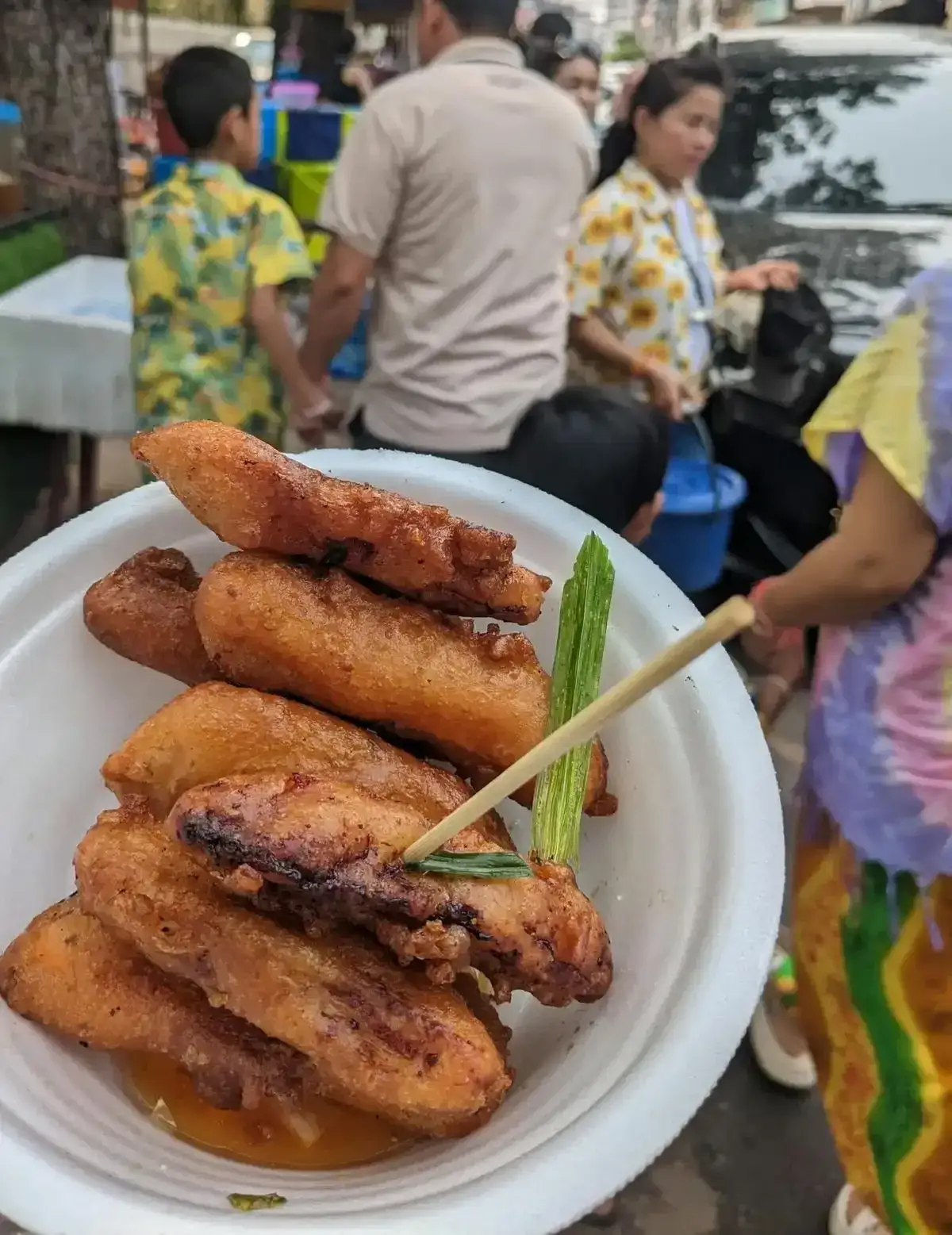
Deep fried bananas, the short and chunky variant. This a common snack throughout Southeast Asia. A wooden stick, like a large tooth pic, is stuck into one of the banana slices and used as a fork. Bananas are peeled, sliced, covered in a battered, and then deep fried. Deep fried bananas come in a few different variations. The ones in this image are the short, chunky, version. This image was taken in Laos during Songkran holiday, so in the background are local Laos people wearing festive Songkran shirts, in which are very similar to a Hawaiian shirt. This shirt is not a traditional local shirt, but has been made popular with the evermore commercialization of the Songkran holiday in Cambodia, Laos, Thailand, and globalized cities such as New York City.
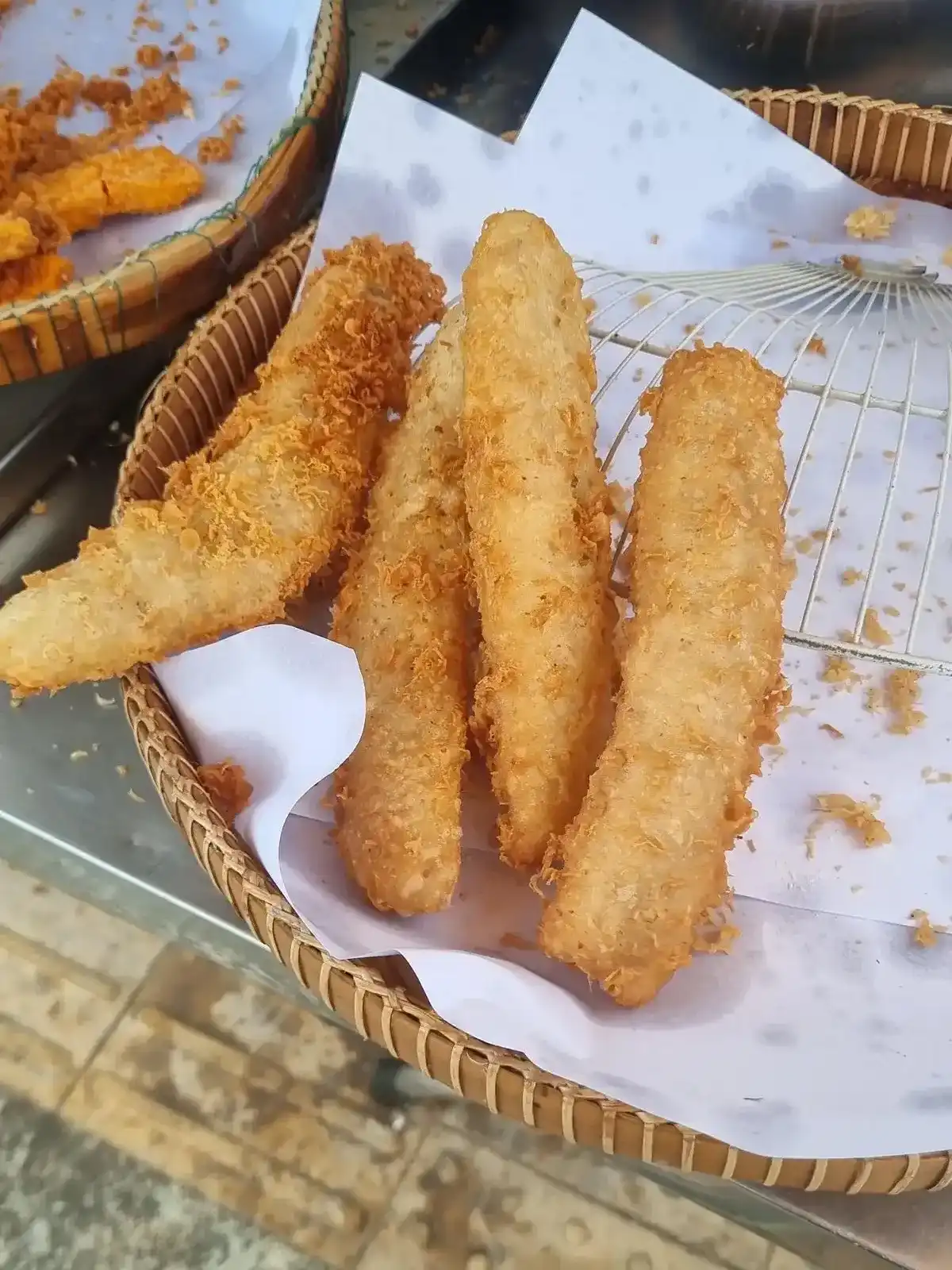
Deep fried bananas in a basket for sale in Cambodia, the long and flat variant. This is a common snack throughout Southeast Asia. Bananas are peeled, sliced, covered in a battered, and then deep fried. Deep fried bananas come in a few different variations. The ones in this image are the long and flat version.
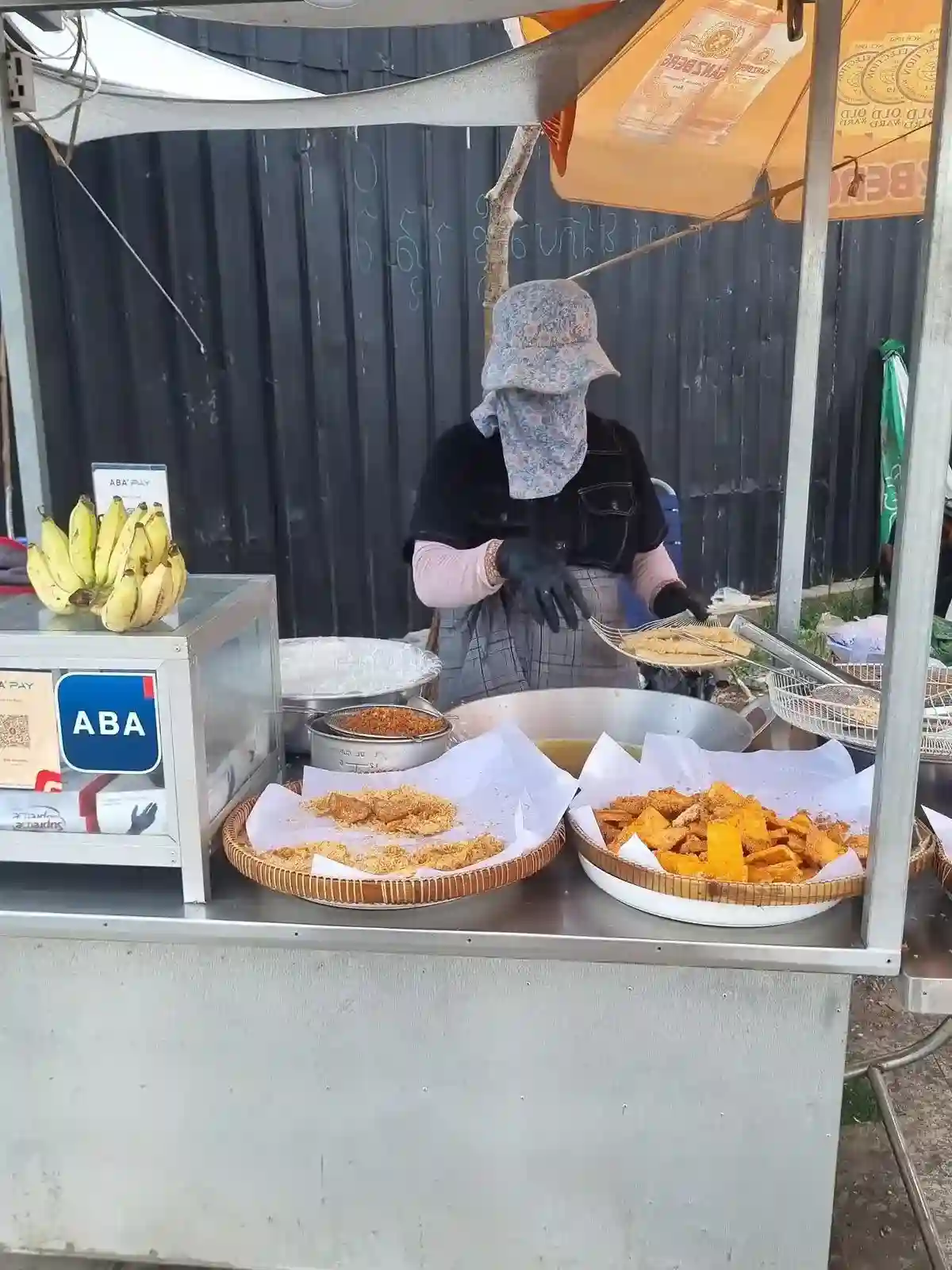
A food seller's kiosk along a road in Cambodia, in which they are preparing and have a display of deep fried bananas in a baskets for sale. This is a common snack throughout Southeast Asia. Bananas are peeled, sliced, covered in a battered, and then deep fried.
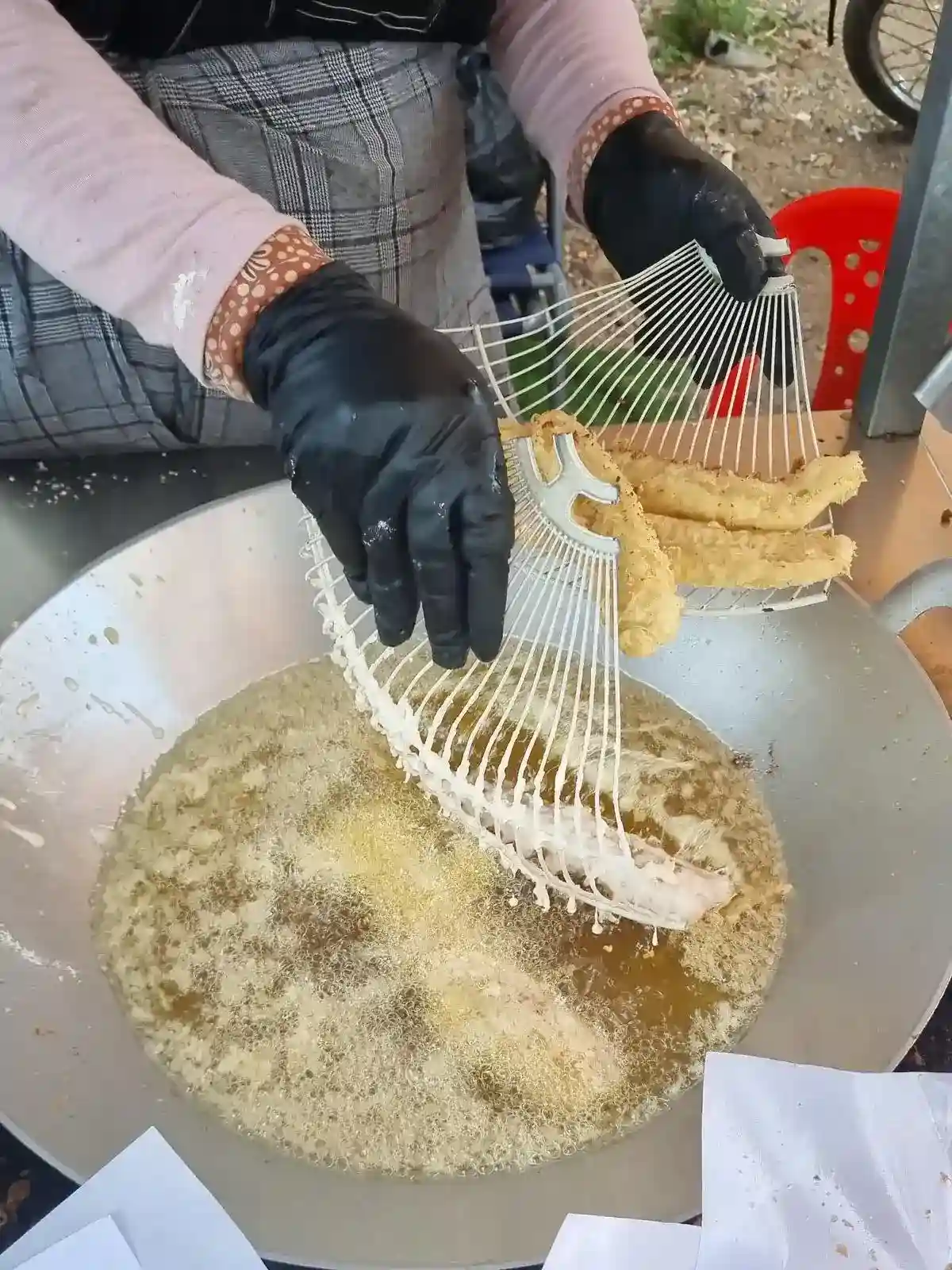
A food seller's kiosk along a road in Cambodia, in which they are preparing deep fried bananas. They are fishing-out the bananas out of a pan of oil using a tool. This is a common snack throughout Southeast Asia. Bananas are peeled, sliced, covered in a battered, and then deep fried.

Banana Covered With Gluttonous Sticky Rice

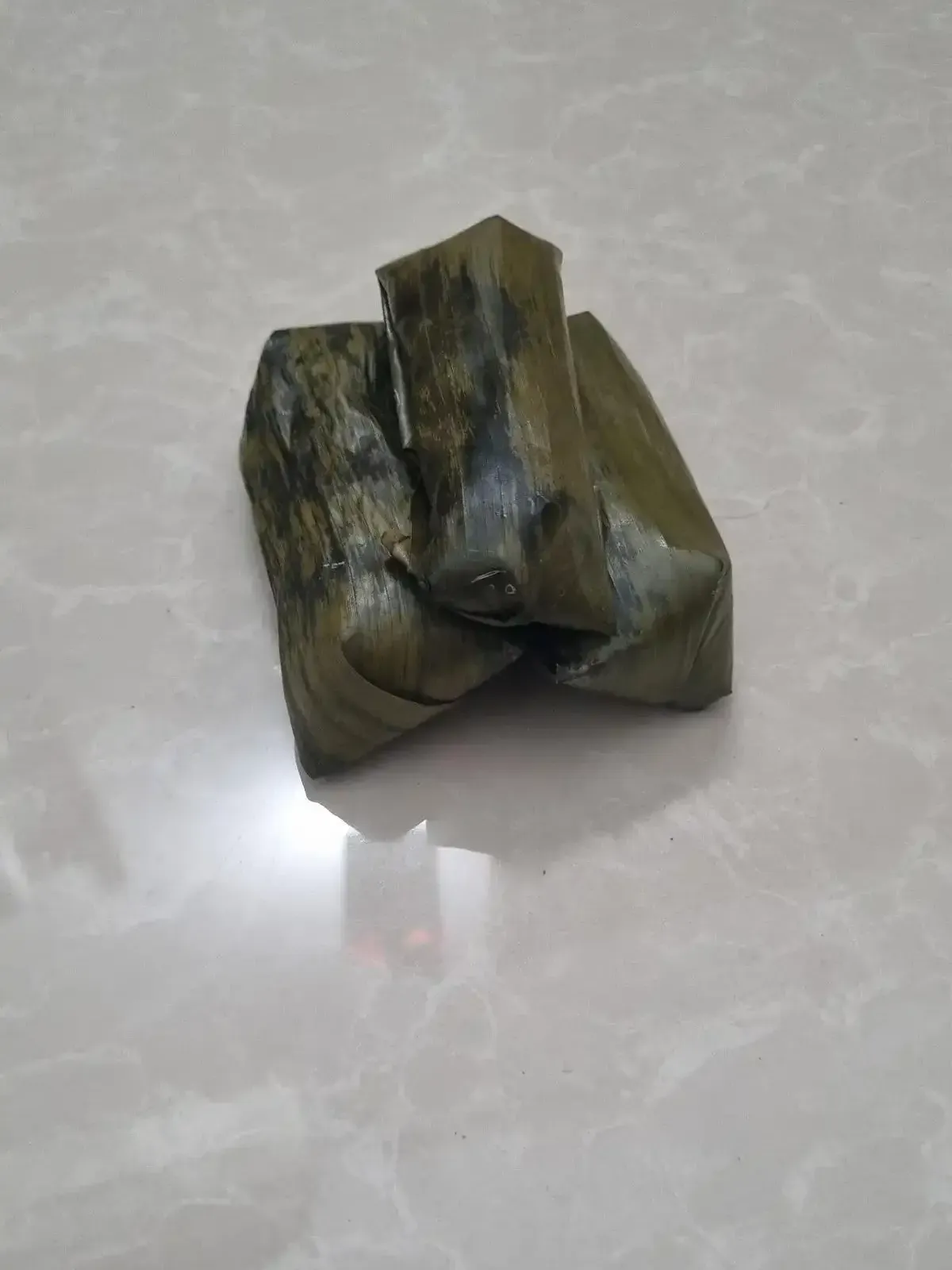
The desert is packaged in banana leaf, which has the desert inside, then steamed to cook it.  After cooling, they are sold as-is.

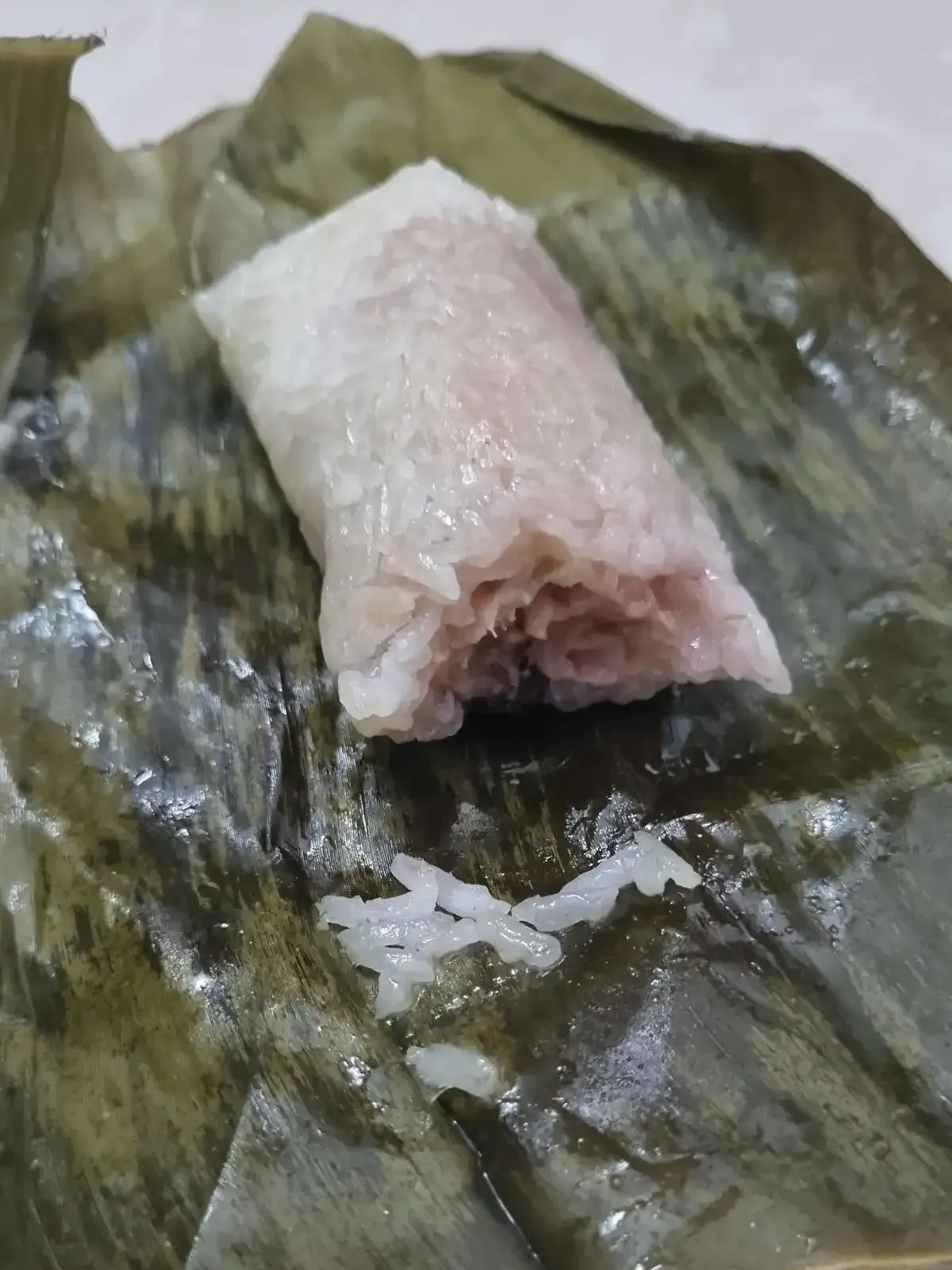
Unwrapping and removing the banana leaf (biodegradable – yay!), you will see the sticky rice.  Your first bite into the unknown reveals the banana flavor.  Overall, a wonderful pairing, unique to Southeast Asia.  Get two for $0.25 USD or so.  Write down “must try” on your bucketlist.
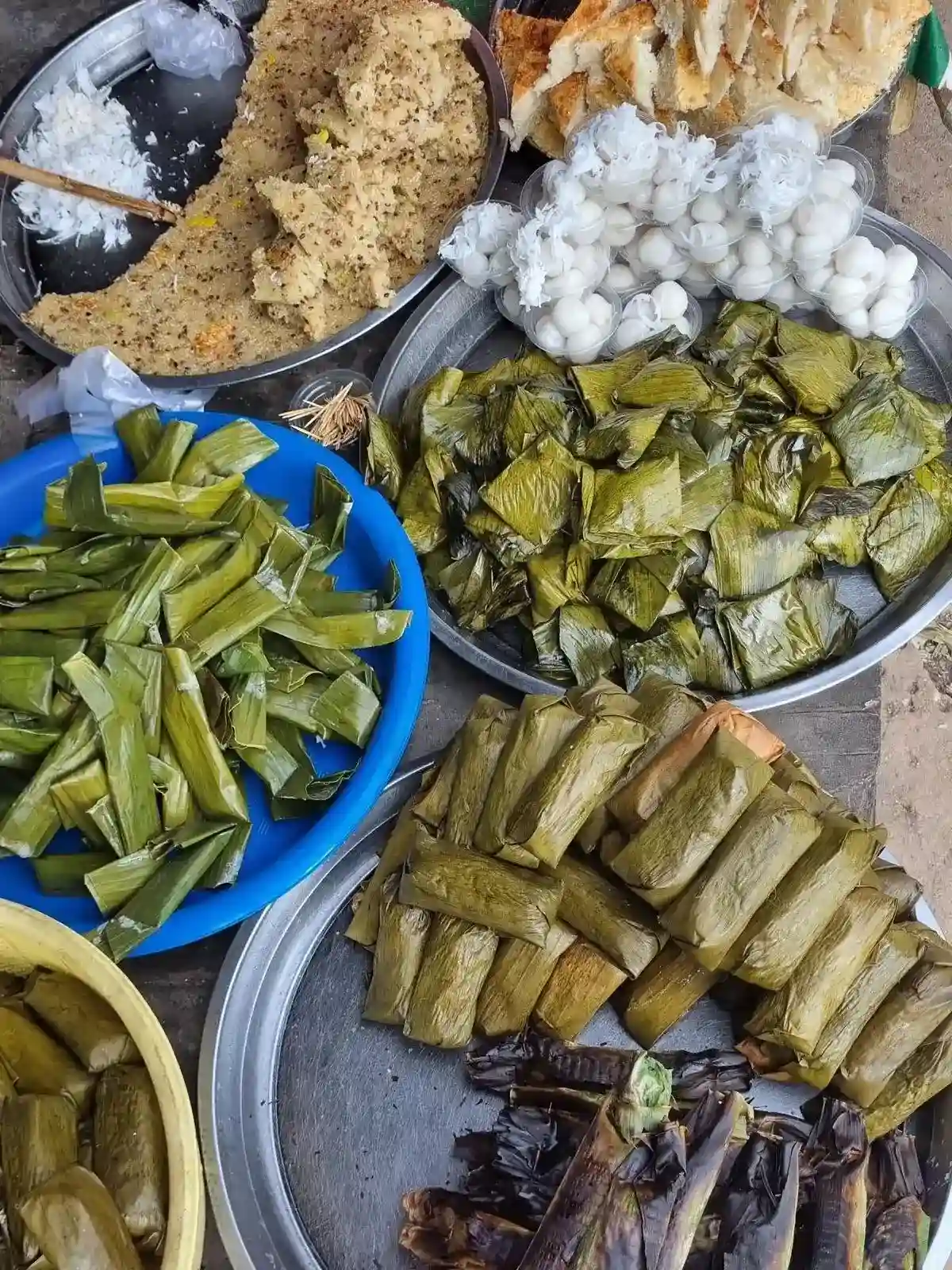
A variety of steamed and/or grilled gluttonous sticky rice covered banana snacks, each wrapped in banana leaf, for sale at a market in Southeast Asia. There are several variants of different shapes and banana types.
Three steamed gluttonous sticky rice covered banana snacks, each wrapped in banana leaf.
A steamed gluttonous sticky rice covered banana snacks with the banana leaf removed. A bite has been bitten into it, showing the banana in the middle, and wrapped with sticky rice.